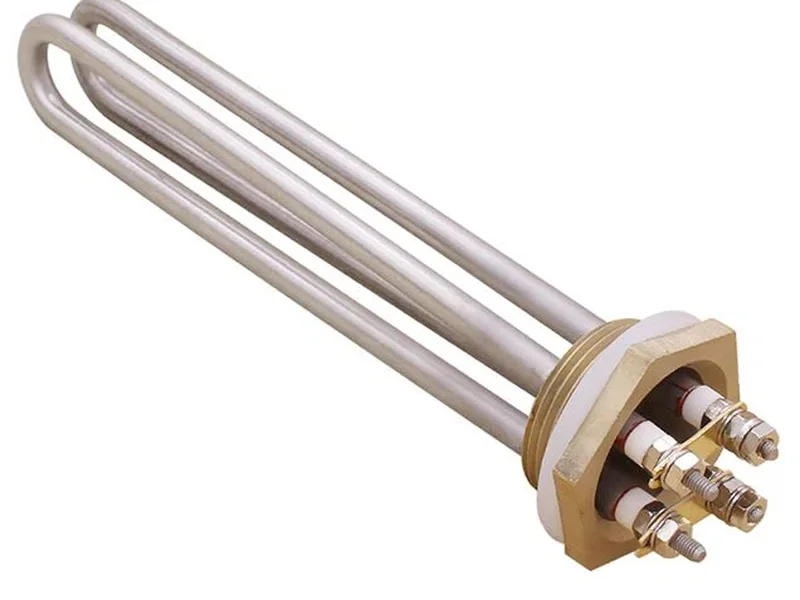
Daniel Island's master-planned villages — developed from the mid-1990s onward — hold water heaters that are aging into their first major electrical repairs. The island's electric units, typically in garages or conditioned utility closets, run on Mount Pleasant Waterworks supply and serve households where hot water reliability matters: busy families, home offices, guest rooms that get used. A heating element failure here usually arrives as an inconvenience with a schedule attached — the morning shower fading cold, the dishwasher's sanitize cycle underperforming, the reset button tripped again. The elements themselves are standard — upper and lower 4,500-watt loops — but island installations add modern wrinkles: electronic controls on newer units, recirculation systems in larger homes, and heaters approaching the age where thermostats fail alongside elements. Our technicians replace heating elements across the 29492 with clean, documented, verified service.
Modern Heaters, Modern Failure Modes
Daniel Island's electric heaters span two technology generations, and they fail differently. The 1990s-2000s units are classic dual-element mechanical-thermostat heaters: upper and lower 4,500W elements, bimetal thermostats, a manual high-limit reset. Their failures are textbook — element burnout from age and sediment, thermostat drift, tripped high-limits — and our diagnosis follows the standard multimeter sequence. These are honest, repairable machines, and element replacement on a sound tank is straightforward value.
Heaters from the 2010s onward increasingly carry electronic controls: digital thermostats, self-diagnostic error codes, sometimes WiFi connectivity. Their elements are the same resistive loops, but the control layer adds failure modes — a control board misreading a temperature sensor produces symptoms identical to element failure, and replacing the element without testing the electronics wastes the part. Our diagnosis on newer units includes the control system: error-code reading, sensor verification, board output checks. The element gets replaced only when the element is actually the problem.
Recirculation systems, common in the island's larger homes, add a third dimension. A recirc pump keeping hot water at distant taps means the heater cycles far more than a standard unit — more element on-time, more thermostat cycles, faster wear. When we service a recirc-equipped heater, we assess the whole loop: pump operation, check valve, timer or aquastat settings. An element failing early on a recirc system is often a system-tuning issue as much as a part failure.
Diagnosis: From Symptoms to Measurements
The symptom code applies on the island as everywhere: no hot water suggests the upper element or its thermostat; fast-fading hot water suggests the lower element; lukewarm throughout suggests scaling or thermostat drift; tripping breaker or popped reset suggests overheating or electrical fault; error codes on electronic units point at the control system's own diagnosis (which we verify independently — codes can mislead).
Our measurement sequence: power verified off at the breaker, element resistance tested (~12-13 ohms healthy for 4,500W), thermostats tested for calibration and switching behavior, high-limit switch checked, wiring and connections inspected. On electronic units, we add control-board diagnostics. On recirc systems, we verify pump and loop operation. The goal is the same as on every call: identify the exact failed component — element, thermostat, switch, sensor, board — before any part is recommended. Island homeowners appreciate this precision: with heaters often tucked into finished utility closets, opening panels twice is an annoyance we avoid by diagnosing completely the first time.
Mount Pleasant Waterworks' supply to the island is treated surface water of moderate hardness — gentler than well country, but sediment still accumulates over 15-20 unflushed years, and island heaters of that age carry real scale beds. We assess sediment during drain-down on every element job, because even moderate water buries lower elements given enough neglected years.
Clean Replacement in Finished Spaces
Daniel Island service calls happen in finished garages and conditioned utility rooms, and our work matches the setting: protection laid down, drain-down controlled to a suitable drain or exterior (never across finished floors), and the work area left spotless. The electrical procedure is full-standard: breaker off, dead verified at the heater with tester and multimeter, panels opened, wiring documented and disconnected, tank drained below the service point.
Part matching is exact — wattage, voltage, physical type — with new gaskets always, and thermostats plus high-limit tested while open. On electronic units, we handle the control components with appropriate care: sensors reseated correctly, boards protected from moisture during drain-down, error codes cleared and the system run through a full learning cycle where applicable. Recirc systems get their pump and controls verified as part of the job, since the element's workload depends on the loop's behavior.
The dry-fire prevention sequence is rigid: complete refill, air purged through hot taps (and through the recirc loop where present) until flow is solid, then power restored. Final verification cycles both elements through the thermostats, confirms the high-limit holds, tests the relief valve, sets 120 degrees, and — on electronic units — confirms the control system reports normal operation with no fault codes. Documentation of diagnosis, parts, and test results goes to you for your records. Hot water restored the same visit.
Planned Maintenance for Island Households
The highest-value move for a Daniel Island household is scheduled heater assessment rather than reactive repair. An annual check — element and thermostat condition, sediment level, anode status, and on electronic units, control-system health — catches elements in the drift stage, when replacement is a planned visit rather than a cold-shower morning. For households with home offices, guests, or rental components, that reliability planning has real value.
Annual flushing remains the core habit even on moderate water: it controls the sediment that shortens lower-element life and it provides the yearly look at anode condition and tank health. Keep thermostats at 120 degrees — hotter settings scale elements faster and waste energy. On recirc systems, verify the timer or aquastat is set sensibly; a recirc loop running 24/7 ages elements needlessly, while a well-tuned schedule delivers convenience without the wear.
Know your unit's generation: if your heater has electronic controls, learn what its error codes mean (the manual's troubleshooting page is worth ten minutes) and call at the first fault rather than resetting repeatedly. And keep the standard safety habits — CO detectors are less critical for electric units, but the electrical safety rules stand: a tripping breaker or any burning smell is an immediate call, and the breaker panel is never a DIY project. Planned care keeps island hot water boringly reliable, which is exactly the goal.
Local Insight
Daniel Island's 29492 is the master-planned island community between the Cooper and Wando rivers — villages like Daniel Island Park, Smythe Park, and Codner's Ferry developed from the mid-1990s through the 2010s, with construction to modern code on slab foundations. Water heaters here are typically electric units in garages or conditioned utility closets, served by Mount Pleasant Waterworks with treated surface water of moderate hardness. The housing stock's youth means heaters are hitting their first major component failures now, as a cohort — and the installations are the cleanest and most accessible in our service area.
Element service on the island reflects its modernity: two heater generations (mechanical-thermostat veterans and electronic-control newcomers) with different diagnostic needs, recirculation systems in larger homes that multiply element workload, and water gentle enough that failures skew toward age and cycle-wear rather than sediment burial — though twenty unflushed years still build real scale. Our Daniel Island element service is tuned accordingly: control-system diagnostics on electronic units, recirc-loop assessment where present, exact-spec parts with documented verification, and preventive programs for households that prefer planned maintenance to reactive mornings. Clean work, clear documentation, hot water without drama.