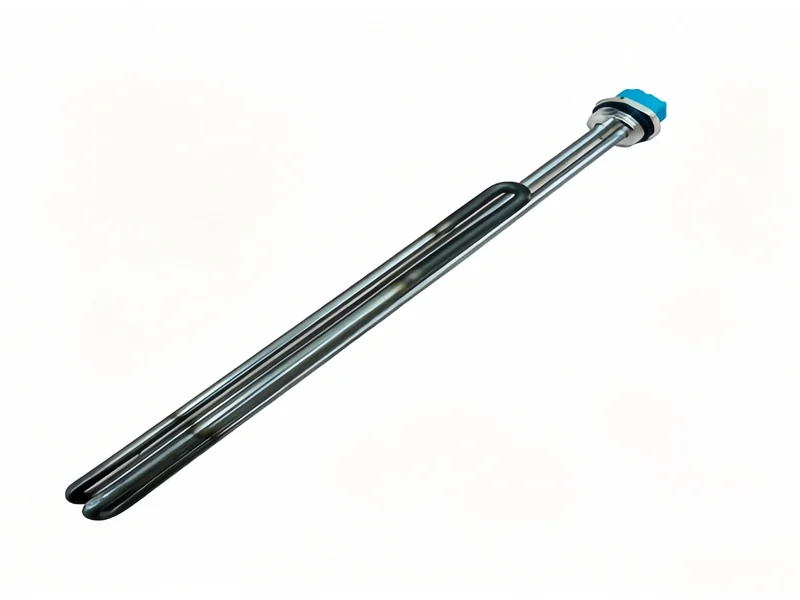
West Ashley's 29407 is brick-ranch country — 1950s through 1980s homes in Byrnes Downs, South Windermere, Avondale, and along Savannah Highway — and its electric water heaters are aging in place. Many of these homes run electric units in garages and laundry rooms: heaters installed in the 1990s and 2000s whose upper and lower elements are now reaching end of life on the Lowcountry schedule. The elements themselves are simple — resistive loops converting 240 volts into heat — but West Ashley gives them a specific workout: humid garage air corroding terminals, laundry-room lint and bleach fumes attacking components, and tanks that in many cases have never been flushed. When an element fails, the ranch house feels it immediately: showers fading fast, the breaker tripping, water that never quite gets hot. Our technicians replace heating elements across West Ashley with full electrical diagnosis and correct-spec parts.
The Ranch-House Element Killers
West Ashley's installation environments write the failure story. Garage heaters breathe outdoor air through every humidity swing the Lowcountry produces — summer condensation forming on element terminals and thermostat contacts, winter cold snaps making elements cycle harder. That moisture corrodes the electrical connections first: a corroded terminal drops voltage, the element runs hot at the connection, and eventually either the terminal or the element fails. We clean and inspect every connection during replacement because the new element inherits the old one's electrical environment.
Laundry-room installations add the chemical dimension. Dryer lint restricts the air around the heater and coats components; chlorine bleach fumes — the most corrosive common household chemical for water heater parts — attack element terminals, thermostat contacts, and the tank jacket alike. A laundry-room heater in a home that uses a lot of bleach ages visibly faster than the same heater in a garage. We note the environment during diagnosis and advise on simple separations: lidded bleach storage away from the heater, lint control, ventilation.
Sediment is the third killer, and in West Ashley it is purely a maintenance story. Charleston Water System's ~3.6 gpg hardness is moderate, but twenty years without flushing builds a real sediment bed over the lower element — insulating it, overheating it, and eventually burning it through. The lower-element burnout on an unflushed 15-year-old West Ashley tank is the single most common element call in the 29407, and it is entirely preventable with annual flushing.
Why the Lower Element Goes First — and What It Sounds Like
Sediment obeys gravity: it settles to the tank bottom, where the lower element lives, while the upper element works in clearer water above. As the sediment bed deepens on an unflushed tank, it progressively buries the lower element's sheath. Scale is an insulator — the element cannot shed its heat to water — so the resistive loop inside runs hotter and hotter delivering its rated wattage through the blanket. The failure announces itself in stages: first the rumbling or popping during heating (water trapped under sediment flashing to steam — the classic kettle sound), then lengthening recovery times, then lukewarm water, then the high-limit reset tripping as overheating peaks.
Homeowners often describe the rumbling as the heater "being about to explode." It is not about to explode — but it is telling you the lower element is being cooked. Calling at the rumbling stage usually means an element replacement plus a flush; waiting until the reset trips repeatedly can mean a burned element that has damaged the thermostat or wiring, turning a modest repair into a bigger one. The sound is the warning; heed it early.
When we replace a lower element in West Ashley, the sediment assessment is inseparable from the repair. We evaluate the bed depth during drain-down, flush the tank as part of the service, and show you what came out — because seeing a bucket of scale makes the annual-flushing habit stick in a way that advice alone never does.
Diagnosis and Replacement, Step by Step
Diagnosis is measurement-based: power verified off at the breaker, then element resistance with a multimeter — ~12-13 ohms for a healthy 4,500W element, open or shorted for a failed one — thermostats tested for calibration and switching, high-limit switch checked, and the electrical connections inspected for corrosion and tightness. Symptom history guides the testing: no hot water suggests upper, fast-fading hot water suggests lower, tripping breaker or popped reset suggests overheating or electrical fault, rusty water adds the anode and tank assessment.
Replacement follows the safe electrical sequence: breaker off and verified dead with tester and multimeter, access panels and insulation removed, wiring disconnected and documented, tank drained below the service point. Old element unthreaded, port cleaned, new element — exact wattage, voltage, and type match — installed with a new gasket, always. Thermostats and high-limit tested while open; marginal ones replaced rather than left to fail. Connections cleaned and tightened; corroded terminals renewed.
The dry-fire rule is absolute: tank refilled completely, air purged through hot taps until flow is solid, then power restored — an element energized in air burns out in seconds. Final verification cycles both elements through the thermostats, confirms the high-limit holds, tests the temperature-pressure relief valve, and sets 120 degrees. We review the sediment findings, the electrical condition, and the maintenance plan with you. Hot water restored the same visit, documentation in hand.
Repair or Replace: The Mid-Life Tank Decision
West Ashley's heaters cluster in the 12-to-20-year range — the zone where the valve-versus-replacement question from gas units has its electric equivalent: element or new heater? Our assessment covers the deciding factors: tank age and repair history, jacket rust and fitting condition, anode rod remaining life, sediment depth, thermostat and wiring condition, and the electrical circuit's health. The outcomes are straightforward and we present them with visible evidence.
Sound tank, failed element — under ~12 years, no rust, serviceable anode, manageable sediment: element replacement is the clear value, buying years for a fraction of replacement cost. This is the most common West Ashley outcome, and it is the right call economically. Tired tank, failed element — 15-plus years, anode gone, heavy sediment, early rust: we price both paths honestly. An element buys time, but the tank's remaining life is short, and the numbers should be yours to weigh.
Failing tank — active rust, weeping seams, structural corrosion: no element fixes a dying tank, and we will not pretend otherwise. The recommendation is replacement with the evidence shown. One more West Ashley note: laundry-room and garage heaters that have served 20 years in harsh environments sometimes look worse outside than they are inside — and sometimes the reverse. The assessment, not the appearance, decides.
Local Insight
West Ashley's 29407 is Charleston's mid-century suburb — Byrnes Downs and South Windermere's 1950s brick ranches under live oaks, Avondale's bungalow streets, the subdivisions stretching out Savannah Highway and Ashley River Road toward the Stono. Homes here are overwhelmingly slab or low-crawlspace ranches from the 1950s through the 1980s, with electric water heaters in garages and laundry rooms — many installed in the 1990s and 2000s and now hitting element-failure age as a cohort. Charleston Water System supplies the area at ~3.6 gpg hardness: moderate, but unforgiving over decades without flushing.
The 29407 element pattern is environmental rather than water-chemistry driven: humid garage air corroding terminals, laundry-room lint and bleach fumes attacking components, and the sediment beds of twenty unflushed years burying lower elements. Cohort aging means whole streets need elements in the same seasons. Our West Ashley service matches the pattern: environment-aware diagnosis that inspects connections and thermostats as well as elements, sediment assessment with every lower-element job, honest element-versus-replacement math for mid-life tanks, and maintenance guidance built for ranch-house realities — flushing, lint control, chemical separation. Unremarkable habits; remarkable difference in element life.