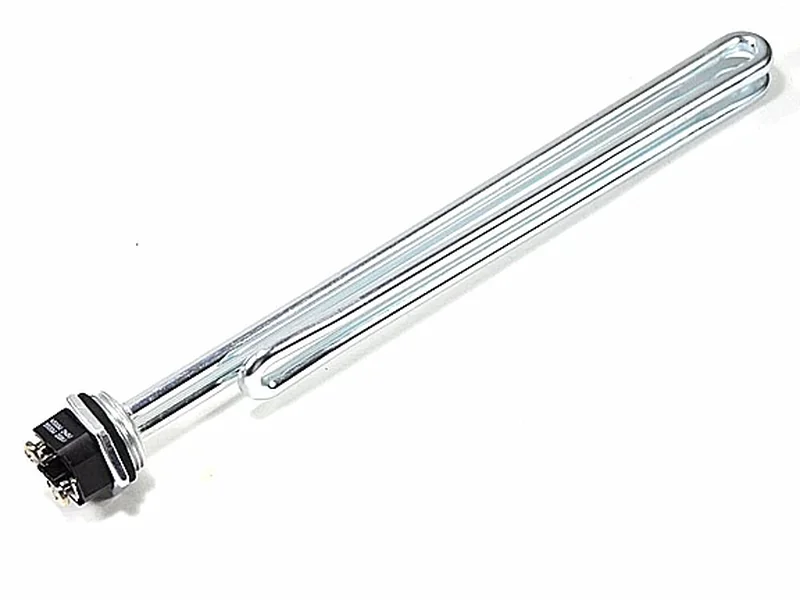
Bonneau's lake-country homes run their electric water heaters hard — and many run them on well water drawn from the same aquifers that feed Lake Moultrie. In the 29431 ZIP, heating elements face the classic well-water assault: mineral and iron sediment settling over the lower element, insulating it until it overheats and burns through. An electric heater's two elements — upper for quick recovery, lower for the bulk heating — are simple resistive loops, but they depend entirely on staying submerged in reasonably clean water. When the lower element scales over, recovery slows to a crawl; when the upper fails, the tank goes cold entirely. Bonneau homeowners notice it as showers that start hot and fade fast, breakers that trip, or the red reset button popping out. Our technicians replace heating elements across the Bonneau area with full electrical diagnosis, correct-spec parts, and the sediment assessment that keeps the new element alive.
Symptoms Decoded: What Your Electric Heater Is Telling You
Electric water heater symptoms are a diagnostic code, and Bonneau homeowners who learn it call at the right time. Hot water that starts strong but fades within minutes: the lower element has failed — the upper element heated its small top zone, handed off to a dead lower element, and the tank never finished heating. No hot water at all with the breaker on: the upper element or upper thermostat is down. Water that is consistently lukewarm: an element scaling over and losing heat-transfer efficiency, or a thermostat drifting out of calibration.
The breaker tripping or the red high-limit reset button popping out is the overheating signal — and in Bonneau it most often traces to a lower element buried in well-water sediment, running hot enough to trip the energy-cut-off. Do not just keep resetting it; the underlying overheat condition is damaging the element further with every cycle. Rumbling or popping during heating is sediment boiling — water trapped under the scale bed flashing to steam — which always means the lower element is suffering under insulation it was never designed for.
Rusty or discolored hot water adds a second storyline: the anode rod is likely exhausted and the tank itself beginning to corrode. Elements and anodes age together on well water, and a rusty-water call is as much a tank-health assessment as an element diagnosis. We test everything — element resistance, thermostat function, high-limit switch, anode condition — so the quote matches the actual failure, not a guess.
Why the Lower Element Fails First
Physics and plumbing conspire against the lower element. Sediment — calcium, magnesium, iron — is heavier than water, so it settles to the tank bottom, exactly where the lower element lives. The upper element sits above the sediment line in relatively clear water and typically lasts its full expectancy. The lower element sits in the sediment bed, and as that bed deepens year after year on unflushed well water, more and more of the element's sheath gets buried.
A buried element cannot shed heat to water — scale is an insulator — so the resistive loop inside runs progressively hotter trying to deliver its rated wattage through the blanket. The sheath eventually fails from thermal stress, or the loop burns through, or the localized overheating trips the high-limit switch first. In Bonneau we see lower elements failed at five to seven years on tanks never flushed, while the original upper element soldiers on — the most common split-failure pattern in well country.
This is also why element replacement without sediment assessment is incomplete service. Installing a pristine new lower element into inches of iron sediment just starts the countdown again — sometimes in as little as two to three years. Our replacement visits always include the sediment evaluation and the flushing conversation, because the element is the casualty and the sediment is the cause. Address both, and the new element reaches its real lifespan.
Safe Replacement: The Electrical Procedure
Heating element replacement is 240-volt electrical work, and our procedure treats it with full respect. Power off at the breaker, verified dead at the heater with both a non-contact tester and a multimeter — no assumptions, no shortcuts. Access panels and insulation come off, element wiring is disconnected and labeled, and the tank drains below the element being serviced (fully for lower-element work). The old element unthreads — screw-in or bolt-flange — and the tank port is cleaned and inspected.
Part matching is exact: same wattage, same voltage, same physical type as the original. A higher-wattage element on an undersized circuit and thermostat is a fire hazard; wrong voltage kills the element on first energizing. The gasket is always new — reused gaskets are the leading cause of post-repair seepage. While the panels are open, we test both thermostats and the high-limit switch, since these components share the element's environment and age together; replacing a burned element while ignoring a failing thermostat next to it is a guaranteed callback.
The step that destroys more replacement elements than any other error — including professional errors — is dry-firing: restoring power before the tank is completely full and purged of air. An energized element in air burns out in seconds. Our sequence is rigid: refill fully, purge air through hot taps until flow is solid, verify, then restore power. Final checks run both elements through thermostat cycling, confirm the high-limit holds, test the temperature-pressure relief valve, and set thermostats to 120 degrees. Same-visit hot water, documented results.
Repair or Replace? The Honest Tank Assessment
Every element call in Bonneau includes the tank-health question, because well water ages tanks as aggressively as elements. We assess the full picture: jacket rust and weeping fittings, the anode rod's remaining life, sediment depth, the tank's age and repair history, and water quality signs like rust tint or sulfur odor. The findings sort into three outcomes, and we present all three plainly.
Outcome one — sound tank, failed element: the tank is under 10-12 years old, no rust, anode still serviceable, sediment manageable. Element replacement is the clear value, buying years of service for a fraction of replacement cost. Outcome two — tired tank, failed element: 12-plus years, anode gone, heavy sediment, early rust. Here we price both paths honestly — element replacement buys time but the tank's remaining life is short, and you deserve the numbers for both before deciding.
Outcome three — failing tank: active rust, weeping seams, or structural corrosion. No element replaces a dying tank, and we will not sell you one as if it could. The recommendation is replacement, with the reasoning shown to you — the rust, the anode stub, the sediment depth — not just asserted. Bonneau homeowners dealing with well water deserve this transparency most of all, because well water makes the tank question urgent rather than theoretical.
Local Insight
Bonneau's 29431 is Lake Moultrie shoreline country — the small town and its spread-out rural surroundings where fishing cottages became year-round homes and manufactured homes sit on generous lots. Wells are the water standard off the town's core, drawing from the same aquifer system that feeds the Santee Cooper lakes, and that water runs harder and more iron-bearing than the municipal supplies downstream in Charleston. Electric water heaters dominate here — many homes never had gas service — and they sit in carports, utility rooms, and crawlspaces breathing lake humidity.
The well-water element pattern in Bonneau is among the most pronounced we service: heavy iron-mineral sediment burying lower elements, burnouts at five to seven years on unflushed tanks, anodes consumed aggressively, and rusty water arriving as the companion symptom. Lake humidity adds exterior corrosion to the electrical connections, and the housing mix — older cottages with original panels, manufactured homes with compact utility spaces — means every installation gets assessed individually for electrical capacity as well as element condition. Our Bonneau element service is calibrated for all of it: multimeter-exact diagnosis, correct-spec parts with new gaskets, sediment and anode assessment every visit, and the honest tank conversation that well water makes unavoidable.