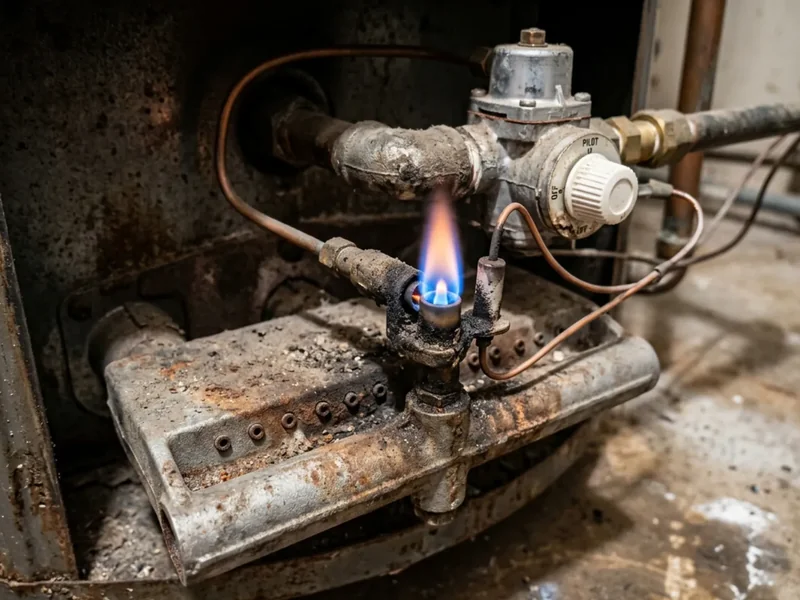
Saint Stephen is a small town on the north shore of Lake Moultrie — timber country and farmland in upper Berkeley County, where the 29479 ZIP holds some of the most rural homes in our service area. Gas water heaters here burn propane from exterior tanks; natural gas infrastructure never arrived, and likely never will. Heaters live in carports, sheds, and crawlspaces on large lots, working against well-water sediment, forest humidity, and long service distances. The gas control valve — metering fuel, proving the pilot, shutting down on failure — is the component most likely to end a heater's run, and when it fails in Saint Stephen, the household waits the longest for help. Our technicians cover the town and its surrounding country with propane expertise, stocked trucks, and the thorough verification rural gas work demands.
Lake-Country Rural: Why Saint Stephen Valves Fail
Saint Stephen's setting — Lake Moultrie's north shore, surrounding timber land, and farmland — creates the full set of rural valve killers. Lake-effect humidity keeps the air damp nearly year-round, condensing on valve bodies and burner assemblies in sheds and carports. Well water, the universal standard here, carries iron and minerals that build heavy tank sediment; that sediment insulates the burner zone, forcing over-firing that bakes the valve's thermostat components years ahead of schedule. Forest and field dust fouls pilot orifices, weakening the flame that proves the pilot to the valve.
Propane logistics add the supply-side dimension. Exterior tanks with weather-exposed regulators, long gas lines to the house, sediment traps collecting pipe scale — any weak link mimics valve failure at the burner. A regulator sagging under load produces short-cycling and yellow flame identical to a dying valve; a packed trap starves the burner the same way. Our Saint Stephen diagnostic always covers the fuel path from tank to valve, because replacing the valve against a failing supply is money wasted and a callback guaranteed.
Distance is the final factor. Saint Stephen is far from the metro core, and service here is scheduled with travel built in and trucks stocked for propane systems — common valve sizes, thermocouples, pilot assemblies, fittings. One-visit completion is the goal on every call, because the round trip for a forgotten part is measured in serious miles.
The Failure Arc and When to Call
Valve failure progresses the same way in Saint Stephen as everywhere: temperature drift first — the thermostat losing calibration, water unpredictable; pilot instability next — relights holding for shorter and shorter intervals; then complete failure to hold a pilot or fire the burner. Lake humidity accelerates the middle stage through pilot-assembly corrosion; well-water sediment accelerates it from inside through thermostat overheating. Catching it at the drift stage means a planned repair; waiting for complete failure means an emergency call from a household with no hot water miles from town.
Two symptoms override all scheduling. Propane odor — rotten eggs, noticed low since propane sinks — means leave the building, no switches, no phones inside, no relighting; call 911 and your propane supplier from a safe distance, then us once the leak is cleared. Soot — black at the burner door or flue — means shut the heater down and call us immediately; incomplete combustion elevates carbon monoxide, and a valve delivering wrong manifold pressure is a leading cause we confirm by gauge.
A Saint Stephen-specific note: heaters in outbuildings people rarely enter — pump houses, sheds at the back of the property — can fail silently for weeks. Check on outbuilding heaters deliberately each season: look for soot, listen for the burner's normal sound, note any odor. A five-minute seasonal check catches the failures that would otherwise announce themselves as emergencies.
Full-Path Diagnosis and Safe Replacement
Every Saint Stephen valve call starts with the complete fuel-path assessment: tank level and regulator condition, inlet pressure at the heater under burner load, sediment trap condition, then the valve itself — thermocouple millivolt output, manifold pressure against the data plate, pilot and burner inspection, flue draft check. The readings separate regulator problems (supplier's repair) from valve problems (ours) definitively, and we show you the evidence before recommending anything.
Confirmed valve failure moves through the safe sequence: gas off at the heater service valve, pilot verified out, tank drained below the valve port, connections separated, burner drawn out, old valve unthreaded with port threads cleaned and inspected. The replacement is propane-rated — matched to BTU input and model, fuel confirmed from the data plate and regulator setup. Gas-rated sealant, proper torque, burner reseated with the pilot engulfing the thermocouple tip, pilot assembly cleaned of dust and debris as part of the work.
Verification is the longest phase and the most important on propane: every joint leak-tested with solution and a combustible-gas detector including low-area sweeps for propane pooling, manifold pressure set to spec and confirmed under firing, burner cycled for clean blue combustion and correct thermostat operation, flue draft verified, relief valve tested, thermostat to 120 degrees. We review the results with you — valve, tank sediment level, regulator health — and brief the maintenance that protects the investment: annual flushing, vegetation clearance around tank and regulator, storm-season shutoff knowledge. Hot water restored the same visit, documentation in hand.
Living With a Propane System Far From Town
A Saint Stephen propane system rewards a little attention. Watch the tank gauge — running very low causes pressure inconsistency that mimics valve failure, especially in cold snaps; keep the supplier's number handy and schedule fills before the gauge gets critical. Keep vegetation cut back from the tank, regulator, and any exterior piping — clearance is what lets you and us inspect for damage, leaning, and corrosion.
Flush the tank annually. Well-water sediment is the dominant valve-killer here, and a yearly flush is the cheapest countermeasure available — we can do it during the valve visit while already set up, and show you how for future years. Keep chemicals and fuels stored away from the heater's air supply; in sheds and carports the temptation to store everything together is strong, and the corrosion and fire consequences are real.
Safety habits for country living: a carbon monoxide detector where people sleep, tested monthly; every adult knowing the heater's gas shutoff location before storm season; and the absolutes — gas odor means evacuate and call from outside, a submerged valve from any flooding means replacement never reuse, soot means shut down and call us. In lake country far from town, these habits are the service call you never need to make.
Local Insight
Saint Stephen's 29479 sits on the north shore of Lake Moultrie in upper Berkeley County — a small town surrounded by timber land, farmland, and the lake's northern reaches, among the most rural ZIPs in our service area. Housing is farmhouses on family land, manufactured homes on acreage, cottages near the lake, and the town's own modest street grid. Water heaters live in carports, sheds, and crawlspaces on large lots; propane from exterior tanks is the only gas option; well water is universal. Distances to metro services are the longest we cover.
Valve service here is defined by remoteness and the complete rural pattern: lake-effect humidity corroding pilot assemblies, hard well water building the sediment that overheats thermostats, dust fouling pilots, weather-exposed regulators that can mimic valve failure, and homeowners far from the next available technician. Our Saint Stephen approach is built for that reality — trucks stocked with propane-rated valves and rural fittings for one-visit completion, full fuel-path diagnosis from tank to burner so the right component gets replaced, environmental causes addressed alongside the part, and verification rigorous enough that callbacks (costly in miles for everyone) are not needed. Country propane systems demand the complete job; that is what we deliver.