North Charleston's 29406 is the city's broad northern sweep — from the Park Circle historic district to the neighborhoods around the airport and Boeing, spanning 1940s cottages to 1990s subdivisions. Gas water heaters across this ZIP are fed by long-established Dominion Energy mains, and they range just as widely in age: original-era heaters in Park Circle bungalows, 1970s-80s units in the ranch neighborhoods, newer systems near the airport corridor. The gas control valve — metering fuel to the burner, proving the pilot, shutting down on failure — is the component most likely to end a heater's run in every one of these generations. Our technicians replace gas control valves throughout the 29406 with diagnosis-first service: test the thermocouple, check the pressures, inspect the fuel path, and only then recommend the valve — verified safe before relight.
Park Circle to the Airport: A ZIP of Many Heater Generations
The 29406 ZIP contains multitudes. Park Circle's 1940s-50s cottages — built for shipyard and base workers — hold some of the oldest gas infrastructure in our service area: heaters tucked into tiny utility rooms and crawlspaces, fed by gas piping with three generations of modifications. Valves here fail from pure accumulated age, and they rarely fail alone — original shutoffs, corroded nipples, and packed sediment traps usually need attention in the same visit. Our Park Circle calls are fuel-path restorations as much as valve replacements.
The mid-century ranch neighborhoods — the streets built out through the 1960s, 70s, and 80s — hold heaters in the classic valve-failure cohort: 12-to-20-year-old natural gas units in garages and laundry rooms, failing on the Lowcountry schedule of humidity corrosion and sediment-driven thermostat wear. Diagnosis here is usually clean, parts matching straightforward, and the decision is the familiar valve-versus-tank math on mid-life units.
Near the airport and along the commercial corridors, newer construction and renovated properties carry younger heaters — but youth is no assurance. We see premature valve failures from boom-era installation shortcuts: tight closets starving burners of combustion air, unflushed tanks building sediment fast, marginal venting. The valve gets replaced, and the environmental cause gets corrected, so the new valve reaches its full life instead of repeating the old one's short one.
Diagnosis That Fits the Generation
Our diagnostic sequence does not change — thermocouple millivolt output, inlet and manifold pressure under load, pilot and burner inspection, flue draft check — but what we expect to find shifts by neighborhood. In Park Circle, we anticipate cumulative infrastructure wear and budget extra time for the fuel path: shutoffs that no longer close, piping that needs a section renewed, traps that need clearing. In the ranch neighborhoods, we anticipate the standard cohort failures: weak thermocouples, corroded pilot orifices, valves at end of life. Near the airport, we look hardest at installation quality and environment.
The pressure readings are the hinge of every diagnosis. Manifold pressure wrong with inlet correct condemns the valve; inlet sagging under load condemns something upstream — the shutoff, the supply, the regulator on propane. When the thermocouple tests strong yet the pilot keeps dropping, the fault lies in the valve's safety magnet; when the signal tests weak, the thermocouple is the culprit. We show you these readings because the recommendation should be obvious once the evidence is visible — and because a Park Circle homeowner with 1940s piping deserves to see exactly what is failing before authorizing work.
We also verify fuel type on every call, without exception. The 29406's long history means conversions, mixed-fuel properties, and heaters replaced under every code era. The valve must match the actual fuel — propane and natural gas valves are never interchangeable — confirmed from the data plate, not assumed from the neighborhood.
Replacement With the Fuel Path Restored
Once the valve is condemned by evidence, replacement runs the strict safe sequence: gas off at the service valve, pilot verified out, tank drained below the valve port, connections separated, burner drawn out, old valve unthreaded with port threads cleaned and inspected. The new valve matches fuel, BTU rating, and model dimensions exactly, sealed with gas-rated compound and torqued to specification, burner reseated with the pilot engulfing the thermocouple tip.
In the older neighborhoods, the companion work is where the job earns its keep: replacing a shutoff that will not close, renewing a corroded nipple, clearing a packed sediment trap — priced transparently in the quote, because a new valve downstream of failing infrastructure is incomplete work. In newer areas, the companion work is environmental: correcting combustion air, noting the sediment load, setting up the flushing habit that prevents premature failure.
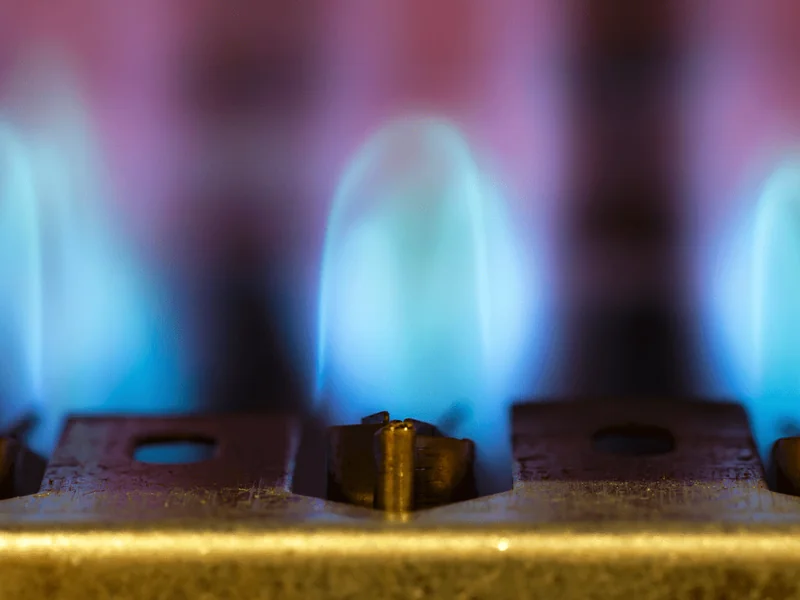
Verification closes every job identically: every disturbed joint leak-tested with solution and a combustible-gas detector, manifold pressure set to data-plate spec and confirmed under firing, burner cycled for clean blue combustion and correct thermostat operation, flue draft checked, temperature-pressure relief valve tested, thermostat set to 120 degrees. We review the full findings — valve, tank condition, fuel path, sediment level — and leave documentation of the diagnosis and test results. Hot water restored the same visit.
Safety Across the Generations
Gas safety does not vary by neighborhood, and neither do the rules. Gas odor — rotten eggs — means leave the building, do not operate switches or phones inside, do not attempt relighting; call 911 and Dominion Energy's gas emergency line from outside. In Park Circle's attached and closely spaced cottages, a leak is a neighborhood matter, not just a household one — treat it with corresponding urgency.
Soot — black staining at the burner door or flue — means shut the heater down and call us. Incomplete combustion elevates carbon monoxide, and older heaters with aging burners produce it more readily. A carbon monoxide detector on every level, tested monthly, is the non-negotiable companion to any gas appliance, oldest and newest alike.
The flood rule applies across the ZIP: any gas valve that has been submerged must be replaced, never dried and reused. Low-lying streets in parts of the 29406 pond in tropical downpours, and crawlspace and garage heaters in those areas have taken water. If your heater has ever sat in water, tell us before diagnosis — we treat the valve as compromised and assess the burner, flue, and tank as a set. Know your heater's gas shutoff location before storm season, and confirm the shutoff turns; the oldest ones seize, and storm preparation is the wrong time to discover it.
Local Insight
North Charleston's 29406 is the city's geographic and generational sweep — Park Circle's 1940s-50s planned community of cottages built for the Navy Yard workforce, the mid-century ranch neighborhoods that filled in through the 1980s, and the airport-area growth with its newer construction and commercial corridors. Few ZIP codes in the Lowcountry contain such a span of housing ages, and the gas infrastructure spans with it: from Park Circle piping with three generations of modifications to modern subdivision gas systems. Dominion Energy natural gas mains serve the ZIP thoroughly.
That generational span is the whole story for gas valve service here. Park Circle calls are fuel-path restorations — valves failing from pure age alongside shutoffs, nipples, and traps that need renewal in the same visit. The ranch neighborhoods are the classic cohort pattern — 12-to-20-year-old heaters failing on the Lowcountry schedule, with the standard valve-versus-tank decision. The newer areas show premature failures from installation shortcuts and unflushed tanks. Our 29406 service flexes across all three: extra time and piping renewal for the oldest systems, efficient cohort diagnosis for the middle generation, environment-correcting replacement for the youngest — with identical verification standards on every job.