Ladson sits at the tri-county crossroads along I-26 — working-class Berkeley, Charleston, and Dorchester County neighborhoods of 1970s through 1990s slab ranch homes, many built for the workforce of the region's industrial corridor. In the 29456 ZIP, water heaters are workhorses: often 12 to 20 years old, tucked in garages and laundry rooms, running on Dominion Energy natural gas or, in some pockets, on electricity. When a gas unit's control valve fails — and at this housing age, they fail regularly — the household feels it immediately: pilot that will not stay lit, water that will not get hot, a burner gone silent. Our technicians serve Ladson with the approach working families deserve: diagnose first so you never pay for a part you do not need, price the repair honestly against replacement, and verify every gas joint before relight.
Honest Math: When a Valve Makes Sense and When It Doesn't
In Ladson, the valve-versus-replacement decision is a household budget decision, and we treat it that way. The math is straightforward: a gas control valve replacement costs a fraction of a new water heater installation. If your tank is under 10-12 years old, rust-free, with a sound burner and flue, the valve is the smart money — it buys five or more years of service for a fraction of replacement cost. We will show you the tank's condition and explain why the valve is the right call.
If the tank is 15-plus years old with rust streaking the jacket, a weeping relief valve, or a burner assembly corroded thin, we will tell you plainly that a new valve is throwing good money after bad — and we will price the replacement option so you can compare real numbers. What we will not do is sell you a valve on a dying tank just to get the ticket, or push a new heater when a valve would serve you for years. Ladson customers refer their neighbors when the math is honest; that is worth more to us than any single upsell.
There is a middle ground worth naming: the 12-to-14-year-old tank in decent shape with a failed valve. Here the decision turns on the tank's internals — sediment load, anode condition, prior repair history. We assess all of it during the diagnostic visit and give you a recommendation with the reasoning visible, not just the conclusion. You make the call with full information; that is the entire point.
What Actually Fails: Valve, Thermocouple, or Supply
Before any valve recommendation, we test the cheaper suspects — because in Ladson's aging housing stock, they fail often. The thermocouple is first: a consumable part with a finite life, tested by its millivolt output under load. A weak thermocouple produces pilot dropouts identical to valve failure and costs a fraction to replace. The pilot orifice is second: decades of humid air corrode and narrow it, weakening the flame that heats the thermocouple. A cleaning sometimes solves the whole problem.
The gas supply path is third, and Ladson's older homes make it a frequent find. Original-era shutoff valves that no longer pass full pressure, sediment traps packed with pipe scale, and in some homes, gas piping with decades of interior corrosion — any of these starves the burner in ways that look exactly like a failed valve. We measure inlet pressure under load with a manometer; if the supply is the problem, the fix may be a shutoff replacement or a utility call, not a valve. We follow the evidence wherever it leads.
Only when thermocouple output is strong, inlet pressure is correct, the pilot and burner are clean, and the pilot still will not hold — or the burner will not regulate temperature — do we condemn the valve. We walk you through each reading in plain language. A Ladson homeowner who understands why the valve failed is a homeowner who can prevent the next failure, and that education is part of the service.
The Replacement: Safe, Verified, Same-Day
Confirmed valve failure gets the full safe sequence: gas off at the heater's service valve, pilot verified out, tank drained below the valve port, gas union / pilot tube / thermocouple lead disconnected, burner assembly drawn out, old valve unthreaded with port threads cleaned and inspected. On Ladson's older tanks we work threads patiently — forcing a port on a 15-year-old tank can end the repair prematurely, and care here is professionalism.
The new valve is matched to fuel type (natural gas for most of Ladson; we confirm from the data plate, never assume), BTU rating, and model dimensions, sealed with gas-rated thread compound and torqued to specification. The burner is reseated with the pilot positioned to fully engulf the thermocouple tip — the alignment detail that determines whether the pilot stays lit for years. If we found supply-side issues during diagnosis — a failing shutoff, a packed sediment trap — we address them in the same visit and price them transparently.
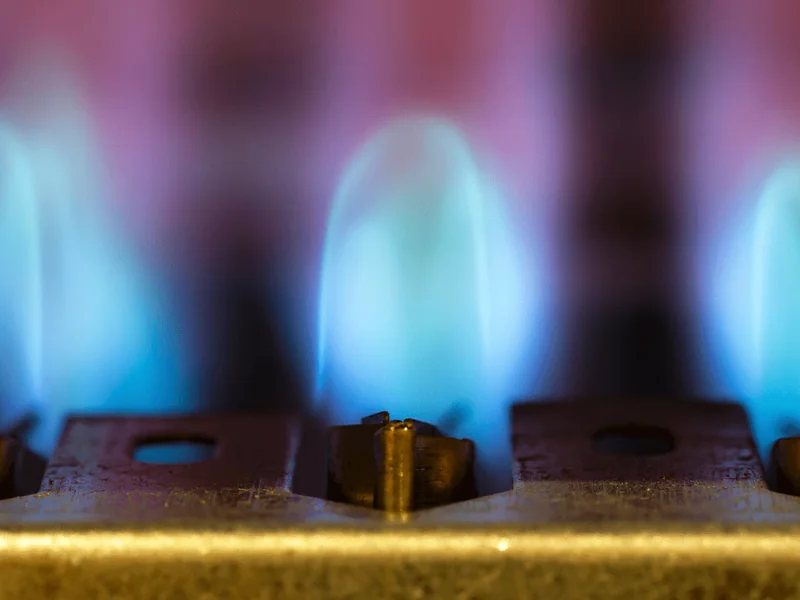
Verification is non-negotiable: every disturbed joint leak-tested with detection solution and a combustible-gas detector, manifold pressure set to data-plate specification and confirmed under firing, burner cycled for clean blue combustion and accurate thermostat cut-in/cut-out, flue draft checked, temperature-pressure relief valve tested, thermostat set to 120 degrees. We review the work and the tank's overall condition with you, note the sediment level, and explain the annual flushing that extends the new valve's life. Hot water back the same visit, paperwork clear, no surprises.
Stretching Every Dollar: Maintenance That Prevents the Next Repair
The cheapest water heater repair is the one you prevent. Annual tank flushing tops the list: Ladson's municipal water is only moderately hard, but over a decade without flushing, even moderate hardness builds the sediment blanket that forces burners to over-fire and cooks valve thermostats prematurely. A yearly flush with a garden hose takes minutes and adds years to both valve and tank — we can show you how during our visit.
Keep the heater's environment working for it, not against it. Garage installations need combustion air kept clear of storage; laundry rooms need lint control and bleach fumes kept away from the heater; crawlspace installations benefit hugely from a ground moisture barrier against the Lowcountry damp that corrodes everything metal. None of this costs much; all of it extends component life measurably.
Build the free safety habits: a carbon monoxide detector on each level, tested monthly — a failing valve can elevate CO through incomplete combustion, and the detector is your only warning. Know where the heater's gas shutoff is before you need it in a hurry. And learn the two stop-everything signals: gas odor means evacuate and call 911 and the gas utility from outside, no switches, no relighting; soot at the burner means shut down and call us. In a working family's home, these habits protect what matters most at zero cost.
Local Insight
Ladson's 29456 straddles three counties along the I-26 corridor — the neighborhoods that housed the workforce of the region's industrial growth: 1970s and 1980s slab ranch homes off Ladson Road and the surrounding streets, 1990s infill, and the commercial strip that serves them all. Charleston Southern University sits nearby, and the area's identity is unpretentious and practical. Water heaters here are predominantly natural gas units from Dominion Energy mains, installed in garages and laundry rooms, and mostly 12 to 20 years old — squarely in the valve-failure cohort.
What defines gas valve service in Ladson is the economics of the decision. These are households where the difference between a valve replacement and a full heater replacement matters, and where being sold a part that was not needed — or a heater that was not needed — breaks trust permanently. Our Ladson approach is built for that reality: diagnosis that checks the cheap fixes first, valve-versus-replacement math presented with real numbers and visible evidence, and repair work verified to the same standard we would apply anywhere. The wear factors are ordinary Lowcountry — humidity, sediment from unflushed tanks, aging shutoffs — not coastal extremes, which means honest maintenance goes a long way here. A flushed tank, a clear combustion-air path, and a call at the first pilot problem will keep a Ladson heater running years past its expected life.