James Island's 29412 ZIP is classic Lowcountry suburbia with a marshy edge — 1960s through 1990s ranch and two-story homes along Folly Road and the neighborhood streets behind it, many backing up to tidal creeks and marsh. Gas water heaters are standard here, fed by Dominion Energy natural gas mains, and they typically live in garages or laundry rooms where marsh humidity works on them steadily. The gas control valve — the component that meters fuel to the burner, proves the pilot flame, and shuts down on failure — lasts 8 to 12 years in these conditions, and much of James Island's housing stock is now on second- or third-generation heaters hitting that window. When the valve fails, you get the familiar progression: temperamental temperature, a pilot that drops out, then no hot water. Our technicians replace gas control valves across James Island with diagnosis-first service, correct parts, and complete leak verification.
Marsh-Edge Moisture and the Life of a Gas Valve
James Island's defining feature is water — tidal creeks finger through the neighborhoods, the marsh breathes twice a day, and the ambient humidity rarely drops below punishing. For a gas control valve living in a garage or laundry room, that means a constant diet of damp air condensing on cool metal. The thermocouple connections oxidize, the pilot orifice collects corrosion, and the valve body's internal components pit — all of which degrade the millivolt flame-proving signal the valve depends on to stay open. Island valves fail from the outside in as much as from wear.
Homes closest to the creeks and marsh — the streets off Harbor View Road, the neighborhoods along James Island Creek — see the fastest corrosion. We can often predict a valve's remaining life by its installation's exposure: a garage two blocks from the marsh with the door open all day ages a valve years faster than an interior utility closet. During our visit we assess the environment alongside the part, because replacing a valve without addressing a chronically damp installation just restarts the clock.
Sediment plays its usual supporting role. James Island's municipal water is moderately hard, and in tanks that have never been flushed — common in homes where the heater is out of sight in the garage — sediment blankets the burner zone and forces over-firing that cooks the valve's thermostat from below. The combination of marsh humidity outside and sediment inside is why island valves so often fail ahead of schedule, and why our diagnosis always includes a sediment assessment.
What Fails, In Order: Reading Your Heater's Signals
Valve failure announces itself in stages, and James Island homeowners who act at stage one save money. Stage one is temperature drift: the thermostat loses calibration, water runs unpredictable, and the instinct is to nudge the dial hotter — which masks the problem while the valve degrades. Stage two is pilot trouble: occasional dropouts, then dropouts every few days, each relight holding for less time. Marsh humidity accelerates this stage by corroding the pilot assembly. Stage three is complete failure: the pilot will not stay lit or the burner will not fire, and there is no hot water.
Not every symptom is the valve, which is why we diagnose rather than assume. A weak thermocouple produces identical pilot symptoms and costs far less. A clogged pilot orifice from corrosion mimics both. Low inlet pressure from an aging upstream shutoff starves the burner like a failed valve. Our visit tests each link — thermocouple millivolts, inlet and manifold pressure, pilot and burner condition, flue draft — and the valve gets recommended only when the evidence isolates it. You see the readings; the recommendation explains itself.
Two symptoms bypass the schedule entirely. Gas odor — rotten eggs — means leave the house, no switches, call 911 and Dominion Energy from outside. Soot — black staining at the burner door or flue — means shut the heater down and call us immediately; incomplete combustion elevates carbon monoxide, and a valve delivering wrong pressure is a prime suspect we confirm with gauge readings.
The Replacement Visit, Done Properly
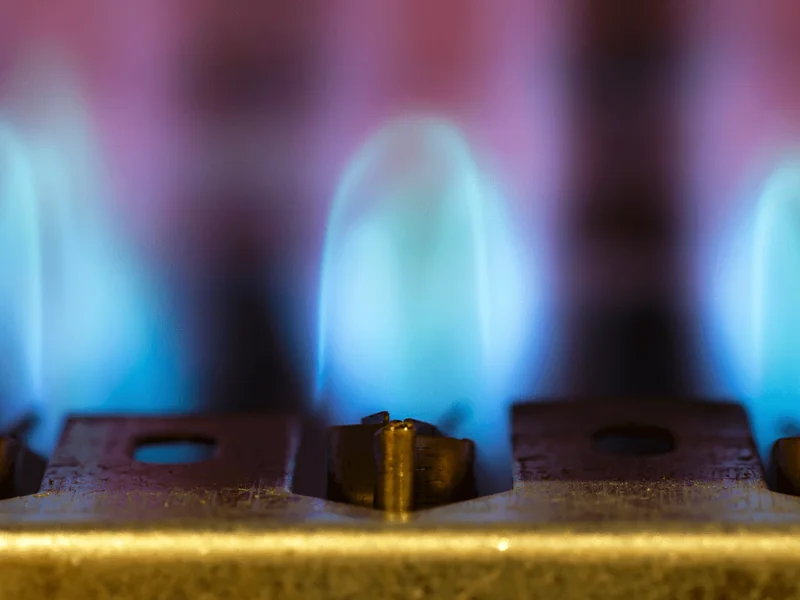
Once diagnosis confirms the valve, we run the strict safe sequence: gas off at the heater's service valve, pilot verified out, tank drained below the valve port, gas union / pilot tube / thermocouple lead disconnected, burner assembly drawn out, old valve unthreaded with the tank port threads cleaned and inspected. The replacement matches your fuel — natural gas across nearly all of James Island — plus BTU rating and model dimensions, sealed with gas-rated thread compound and torqued to specification. We reseat the burner assembly with the pilot flame aligned to surround the thermocouple tip on all sides.
James Island's older installations sometimes need companion attention we handle in the same visit: original-era gas shutoffs that no longer fully close, sediment traps full of pipe scale, flues with years of debris. A new valve downstream of a failing shutoff is incomplete work, so we inspect the fuel path we disturb and bring it to a safe standard. We discuss anything additional before doing it — no surprises on the invoice.
Verification closes the job: every joint leak-tested with solution and a combustible-gas detector, manifold pressure set to data-plate spec and confirmed under firing, burner cycled for clean blue combustion and correct thermostat operation, flue draft checked, temperature-pressure relief valve tested, thermostat set to 120 degrees. We review the findings with you — including the tank's sediment level and overall condition — and advise on the annual flushing that gives the new valve its full life. Hot water restored the same visit.
Protecting the New Valve in a Marsh Climate
A new valve on James Island lasts longest when its environment gets a little help. Ventilation is first: garage installations need their combustion air path kept clear — not blocked by storage — and laundry rooms need lint control plus separation from bleach fumes, which corrode burner components aggressively. If your heater sits in the dampest corner of the garage, even repositioning storage to improve airflow around it helps.
Moisture control is second. You cannot dehumidify the marsh, but you can reduce what reaches the heater: gutters that move roof water away, grading that slopes from the foundation, and for the dampest garages, simply keeping the big door closed during the most humid hours rather than open all day. Small changes in the moisture load produce real changes in corrosion rate on gas components.
The maintenance rhythm is simple: annual tank flushing to control sediment, monthly carbon monoxide detector tests on every level, and a call at the first sign of pilot trouble rather than after the third failed relight. Know where the heater's gas shutoff is before storm season, and remember the flood rule — James Island has low streets that pond in tropical downpours, and any submerged gas valve must be replaced, never dried and reused. A little vigilance converts the island's climate from a valve-killer into background conditions.
Local Insight
James Island's 29412 is the island suburb — the neighborhoods stretching from the Wappoo Creek bridges down Folly Road toward the county park: Harbor View, Riverland Terrace with its 1940s-50s cottages, the 1960s-80s ranch subdivisions in the island's middle, and the newer infill near the connector. Tidal creeks — James Island Creek, Wappoo Creek, the marshes along the Stono — thread through nearly every neighborhood, keeping humidity high and the water table higher. Housing is overwhelmingly slab or low-crawlspace construction from the 1960s through the 1990s, with water heaters in garages and laundry rooms.
Natural gas from Dominion Energy serves the island thoroughly, so fuel matching is straightforward — but the environment is the story. Marsh-edge moisture corrodes pilot assemblies and valve connections ahead of inland schedules, unflushed tanks build the sediment that overheats thermostats, and the housing cohort effect means whole streets of heaters reach valve-failure age together. Our James Island service is tuned to that pattern: environment-aware diagnosis that looks at where the heater lives as well as what's wrong with it, honest valve-versus-tank math for mid-life units, and maintenance guidance built for a marsh climate rather than generic advice.