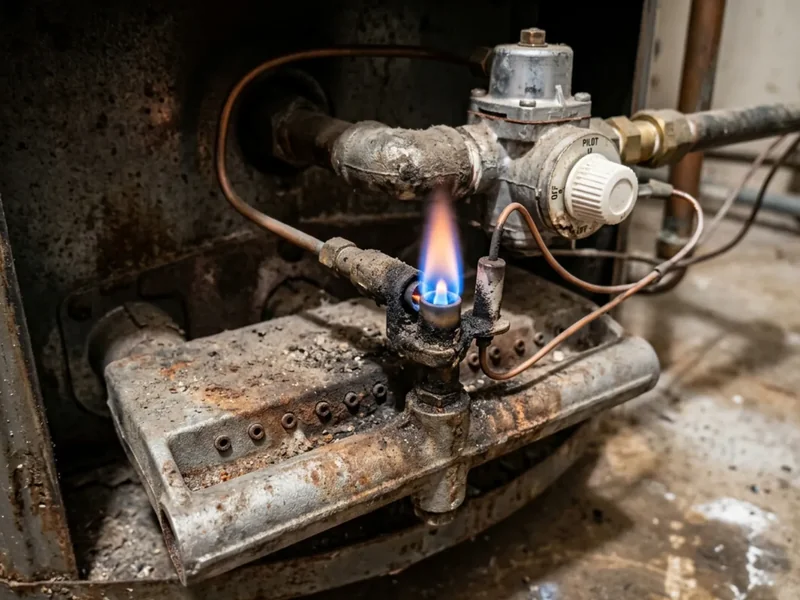
Folly Beach — the Edge of America — is a barrier island where houses stand on pilings, salt air eats metal for breakfast, and water heaters often live in outdoor enclosures or ground-level utility rooms beneath elevated homes. Gas control valves have a brutal life here: corrosive ocean air attacks every exposed fitting, storm surge and king tides threaten low installations, and many heaters serve vacation rentals where problems go unnoticed between guest stays. When a Folly Beach gas valve fails, the signs are familiar — pilot that will not stay lit, burner that will not fire, water that runs cold — but the causes skew coastal: corrosion, flood exposure, and burner assemblies rusted by salt. Our technicians replace gas control valves across the 29439 ZIP with marine-environment awareness, correct fuel-matched parts, and the leak testing that gas work demands.
Salt Air: The Barrier Island's Valve Killer
On Folly Beach, corrosion is not a possibility — it is a schedule. Salt-laden air infiltrates every outdoor and semi-outdoor installation on the island, and the gas control valve's exposed fittings, pilot assembly, and burner components corrode far faster than identical parts ten miles inland. We routinely find Folly Beach valves with green-oxidized thermocouple connections, rust-pitted burner assemblies, and pilot orifices narrowed by corrosion — each one degrading the millivolt flame-proving signal or the gas flow the valve depends on. A valve that might last twelve years in Summerville can fail in seven on the island, and outdoor enclosures accelerate the timeline further.
The failure pattern here starts with the pilot. Salt corrosion weakens the thermocouple connection first, so the pilot begins dropping out — often after storms, when wind-driven salt spray has had a direct shot at the installation. Homeowners relight, it holds for a while, then drops again. Each cycle pits the valve's internal safety magnet a little more. By the time the pilot will not hold at all, the valve usually needs replacement along with the corroded pilot assembly components around it. We address the full assembly, not just the valve, because a new valve connected to a rusted-out pilot tube is a comeback waiting to happen.
Burner corrosion is the companion problem. A rusted burner distributes flame unevenly, producing hot spots and incomplete combustion — which shows up as soot, yellow flame, and elevated carbon monoxide. When we replace a Folly Beach valve, the burner gets a hard inspection, and if it is compromised we will tell you plainly. Gas safety on a barrier island leaves no room for optimistic assessments of rusted components.
Flood Zones, Elevated Homes, and the Submersion Rule
Folly Beach sits almost entirely in FEMA flood zones — AE and VE across most of the island — and ground-level utility rooms beneath elevated homes are exactly where floodwater goes first. The industry rule governing this situation is absolute: any gas control valve that has been submerged must be replaced, never dried out and reused. Floodwater — especially salt water — infiltrates the valve body and destroys the internal safety shutoff mechanism invisibly. A valve that appears to work after drying can stick open or fail to shut off gas weeks or months later. There are no exceptions and no judgment calls here.
This matters enormously for island rental properties, where a storm-season flooding event might go unnoticed if it happens between guest stays. If you own or manage a Folly Beach rental and there is any chance water reached the heater — high-water marks on the enclosure, debris lines, a neighbor's report — tell us before we diagnose. We will treat the valve as compromised and evaluate the burner, flue, and tank for silt and salt contamination as a set. Relighting a flooded gas heater without this assessment risks the house and everyone in it.
For elevated homes, heater placement itself is part of the conversation. Ground-level enclosures under pilings are convenient but maximally exposed; some island homeowners have relocated heaters to higher enclosed space during renovations. While we are on site for a valve replacement, we can advise on whether your installation's elevation and enclosure meet current flood-zone practice — practical guidance, not a sales pitch, aimed at preventing the next storm from destroying the next valve.
Diagnosis and Replacement in Coastal Conditions
Our Folly Beach diagnostic follows the same disciplined sequence as everywhere — thermocouple millivolt output, inlet and manifold gas pressure, pilot and burner inspection, flue draft check — but with coastal expectations. We assume corrosion until proven otherwise: every electrical connection in the flame-proving circuit gets inspected, the pilot orifice gets checked for salt-crystal and corrosion blockage, and the burner is evaluated for rust-through, not just surface rust. Flood history is part of the intake questions, because a submerged valve changes the entire diagnostic — there is nothing to diagnose; it gets replaced.
When replacement is confirmed, the procedure is standard but the parts selection is coastal-aware: the valve is matched to fuel type, BTU rating, and model, and we give the surrounding pilot assembly and gas connections the same corrosion scrutiny as the valve itself. We seal with gas-rated thread compound, torque to specification, and reseat the burner so the pilot flame wraps the thermocouple tip completely. In outdoor enclosures we take extra care with the gas union and sediment trap — the fittings most exposed to salt air.
Verification is doubled down on the island. Every joint leak-tested with solution and a combustible-gas detector, manifold pressure confirmed against the data plate, burner fired through full cycles for clean blue combustion and correct thermostat operation, flue draft checked, temperature-pressure relief valve tested, thermostat set to 120 degrees. We also verify the enclosure's ventilation is adequate — a salt-corroded vent screen can silently starve a burner of combustion air, and a new valve cannot fix that. You get hot water back the same visit, with documentation of what the salt air had done and what we did about it.
Rental Properties: Keeping Island Heaters Reliable Between Guests
A large share of Folly Beach water heaters serve vacation rentals, which creates a distinctive maintenance challenge: problems develop silently between stays, and a failed valve announces itself via an angry message from weekend guests, not a gradual warning you notice at home. The most valuable thing a rental owner can do is schedule an annual heater check before peak season — we inspect the valve, pilot assembly, burner, flue, and anode, flush sediment, and catch the corrosion and wear that would otherwise become a mid-rental emergency.
Give your property manager or cleaner a simple instruction: if guests report no hot water or a gas smell, the response protocol is fixed. No hot water means call for service — do not let guests attempt pilot relighting. Any gas smell means evacuate, no switches, call 911 and the gas utility from outside. Post the heater's gas shutoff location in your owner's closet information; in an emergency, a manager who knows where the shutoff is can make the situation safe before we arrive.
Consider the economics honestly: a valve replacement on a mid-life tank is far cheaper than a mid-rental water heater failure that costs you a refund, a bad review, and an emergency weekend replacement at premium pricing. Preventive replacement of a valve showing early failure signs — pilot getting fussy, temperature drifting — during the off-season is one of the highest-ROI maintenance moves an island rental owner can make. We will give you a straight assessment of where your heater stands and what the next twelve months likely hold.
Local Insight
Folly Beach is a six-mile barrier island where the housing stock is defined by elevation and exposure: classic beach cottages raised on pilings after Hurricane Hugo's 1989 devastation, newer elevated construction built to modern flood codes, and a large vacation-rental inventory that turns over weekly in season. Water heaters here live in ground-level enclosures beneath elevated homes, in outdoor utility closets, or in small ground-floor rooms — nearly all of them breathing salt air and sitting inside FEMA AE or VE flood zones. It is the most corrosive, most flood-exposed service environment in our coverage area.
Gas service on the island is a mix: Dominion Energy natural gas serves parts of Folly, while other properties run propane or all-electric — and many beach cottages were built all-electric originally, so every gas heater here deserves fuel-type confirmation before parts are ordered. The island's defining valve-killers are salt-air corrosion (which attacks pilot assemblies and burner components years ahead of inland schedules), storm-surge and king-tide flooding (which triggers the mandatory submersion-replacement rule), and rental-property neglect (where failures go unnoticed between guests). Our Folly Beach service is built for all three: corrosion-honest diagnosis, flood-history intake on every call, rental-owner preventive programs, and verification thorough enough for a barrier island.