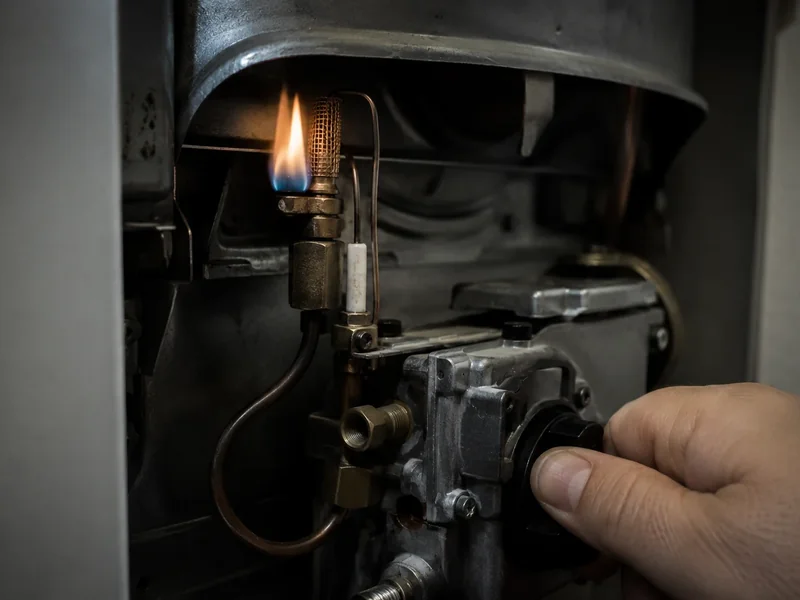
Downtown Charleston's 29401 ZIP is unlike anywhere else in the Lowcountry: homes built from the 1700s through the early 1900s, narrow lots, raised foundations and crawlspaces, and gas piping that in some houses predates the water heater by decades. Gas water heaters are everywhere on the peninsula — tucked under piazzas, in basement-level utility rooms, in carriage-house conversions — and their gas control valves work harder here than in newer suburbs. Age, humidity rising off a high water table, and occasional street flooding all conspire against the valve that meters fuel to your burner and guards the pilot flame. When it begins to fail, you will notice the pilot dropping out, water that never reaches temperature, or a burner that roars and quits. Our technicians know peninsula houses: the tight access, the old iron gas lines, the flood-zone realities. We replace gas control valves with fuel-matched, code-conscious workmanship and verify every joint before relight.
Historic Homes, Aging Gas Lines: The 29401 Challenge
Replacing a gas control valve in a downtown Charleston home is rarely just about the valve. Many peninsula houses still carry sections of old black-iron gas piping installed generations ago, with threaded joints that have seen a century of humid air. When we disconnect a heater to swap its valve, we inspect that piping as a matter of course — because a new valve threaded onto a compromised gas line is not a completed repair. Corroded nipples, ancient shutoff valves that no longer fully close, and missing sediment traps are common finds in 29401 utility rooms, and we address them as part of the job rather than pretending the valve lives in isolation.
The placement of peninsula water heaters adds its own difficulty. Under-piazza installations, low crawlspaces with barely two feet of clearance, basement rooms reachable only through narrow Bilco-style doors — our technicians work in all of them regularly. Tight access does not change the procedure, but it demands patience: the burner assembly must come out straight without damaging the pilot tube, the old valve must be unthreaded without stressing the tank port, and every connection must still be fully leak-tested. We bring the right low-profile tools and the time to use them properly.
High water table is the peninsula's quiet enemy. Even without a named storm, heavy summer downpours can push water into low utility spaces south of Broad and in the East Side's lower elevations. Any gas valve that has been submerged — even briefly — must be replaced under manufacturer safety rules; floodwater infiltrates the valve body and silently destroys the internal shutoff mechanism. If your heater has ever sat in water, tell us before we begin diagnosis. We will treat the valve as compromised and evaluate the burner and flue for silt contamination at the same time.
How a Failing Valve Behaves — and When It Becomes Dangerous
A gas control valve gives progressive warnings as it wears out. Early on, the thermostat function degrades: the burner fires longer than it should or cuts out too soon, and your hot water becomes unpredictable — scalding one morning, lukewarm the next. Homeowners often nudge the temperature dial in response, which masks the problem while the valve deteriorates further. The next stage is pilot instability. The pilot lights, burns weakly, and drops out; relighting works for shorter and shorter intervals until it will not hold at all. At this point many people assume the thermocouple is bad — sometimes it is — but a valve whose safety magnet has weakened produces identical symptoms, which is why we test rather than guess.
The behavior that should stop you cold is any smell of gas. The odorant added to natural gas is unmistakable — rotten eggs — and a valve that seeps fuel past its seals has failed in its most basic duty. On the peninsula, where homes share party walls and gas can migrate through old chases and crawlspaces, a leak is never a private problem. Leave the building, avoid operating switches or phones inside, and call 911 and Dominion Energy's gas emergency line from outside. Do not attempt to relight the heater yourself.
Soot is the other red flag. Black staining around the burner access door or on the flue means incomplete combustion — the valve is delivering the wrong gas pressure, or the burner is compromised. Incomplete combustion elevates carbon monoxide production, and in a small peninsula utility room with marginal ventilation, that is a serious hazard. Shut the heater down and call for service. A valve replacement, done correctly with manifold pressure verified against the data plate, restores clean blue combustion and safe operation.
What Our Replacement Visit Covers, Step by Step
Every gas valve call in 29401 starts with diagnosis, because the valve is the most expensive of the usual suspects. We test thermocouple or thermopile output, measure inlet and manifold gas pressure with a manometer, inspect the pilot assembly and burner for corrosion and blockage, and check the flue for proper draft. Peninsula heaters often surprise us — a pilot orifice clogged with a century of humid-air corrosion, a flue partially blocked by debris, a shutoff valve upstream that no longer passes full pressure. We fix what is actually broken, and we show you the test results so the recommendation is transparent.
When the valve is the confirmed failure, we shut off gas at the heater's service valve and verify the pilot is out. The tank drains below the valve port, the gas union, pilot tube, and thermocouple lead are disconnected, the burner assembly is removed, and the old valve is unthreaded. In older homes we take extra care here: tank ports on aging heaters can be stubborn, and forcing threads on a 15-year-old tank helps no one. The replacement valve is matched to your fuel type, BTU rating, and model, sealed with gas-rated thread compound, and torqued to specification.
Reassembly and verification close the job. The burner goes back in with the pilot positioned to fully engulf the thermocouple tip, every joint is leak-tested with solution and a combustible-gas detector, manifold pressure is set to the data plate value, and the burner is fired through complete cycles to confirm clean combustion and accurate thermostat shutoff. We check the draft, test the temperature-pressure relief valve, and set the thermostat to 120 degrees. In historic homes we also take a final look at the accessible gas piping we disturbed — because on the peninsula, the line feeding the valve deserves the same scrutiny as the valve itself.
Keeping a Peninsula Gas Heater Healthy After Replacement
A new gas control valve in a 29401 home will last longest with a little attention to its environment. Ventilation matters most: many peninsula utility rooms were enclosed long after the house was built, sometimes with barely adequate combustion air. A gas burner needs a steady supply of fresh air; starve it and you get soot, carbon monoxide, and a valve working outside its design conditions. If your heater room has been sealed up with weatherstripping and new doors over the years, we can advise on proper combustion-air openings during our visit.
Moisture is the second factor. The peninsula's high water table means crawlspaces and low utility rooms breathe damp air year-round, and that moisture condenses on the valve body and burner assembly daily. A ground moisture barrier in the crawlspace, gutters that actually move roof water away from the foundation, and grading that slopes away from the house all reduce the corrosive load on gas components. These are not cosmetic improvements — they directly extend the life of everything metal in that space.
Finally, build storm-season awareness into your routine. Know where your heater's gas shutoff is before a hurricane threatens, and understand the submersion rule: if floodwater reaches the burner compartment, the valve must be replaced before the heater is used again, no exceptions. Keep a carbon monoxide detector on every level with a gas appliance and test it monthly. A little preparation turns the peninsula's challenges — age, water, weather — from valve-killers into manageable conditions.
Local Insight
The 29401 ZIP covers the Charleston peninsula south of the Crosstown — South of Broad's grand historic homes, the French Quarter, Harleston Village, Cannonborough, Elliottborough, and the East Side. Much of this housing stock predates 1940, and a meaningful share predates 1900. Water heaters here were retrofitted into houses never designed for them, which is why you find them in such varied locations: under piazzas, in former coal cellars, in carriage houses, in closets carved from old floor plans. Gas service from Dominion Energy (the successor to SCE&G) reaches essentially the whole peninsula, and many homes also run gas ranges, fireplaces, and lanterns off the same aging interior piping.
Three local realities dominate gas valve work downtown. First, the piping: old black-iron lines with decades of humid-air exposure, where every disconnection is an opportunity to discover the next weak joint. Second, the water: a high water table and FEMA flood zones across much of the peninsula mean heaters in low spaces face both chronic dampness and acute storm flooding — and the submersion-replacement rule for gas valves gets invoked here more than anywhere else in our service area. Third, the access: narrow stairwells, low crawlspaces, and utility rooms that require moving through finished historic interiors demand technicians who work cleanly and patiently. Our approach to 29401 is built around all three — inspect the old piping, respect the flood history, and leave the historic fabric undisturbed.