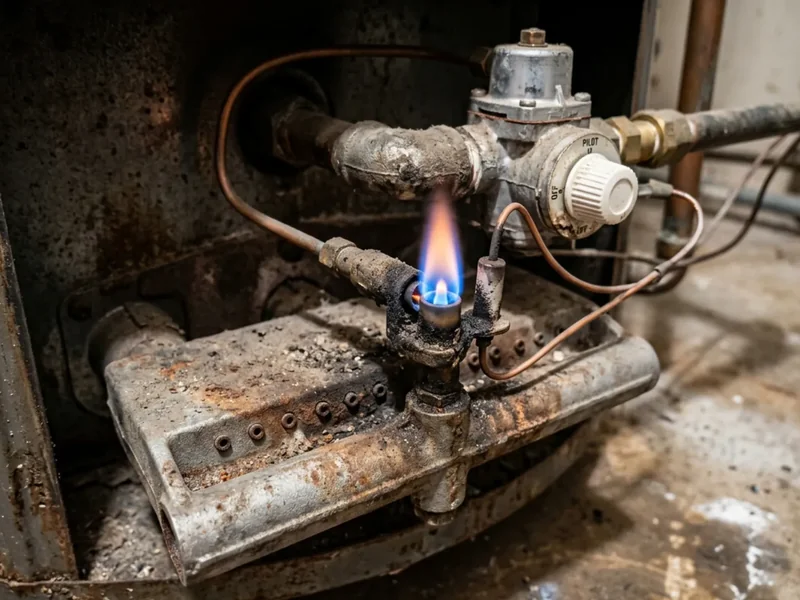
Bonneau sits right on the edge of Lake Moultrie, and its homes tell the story of a lake town: older fishing cottages and weekend camps converted to full-time residences, manufactured homes on generous lots, and newer builds spreading out along the rural roads of Berkeley County. Gas water heaters are common here, and most of them run on propane — natural gas mains are thin in the 29431 ZIP — which puts extra importance on the gas control valve, the component that meters fuel, supervises the pilot flame, and shuts everything down if something goes wrong. When the valve wears out, the symptoms are hard to miss: a pilot that keeps going out, water that runs lukewarm no matter how high you set the dial, or a burner that fires and dies. Our technicians serve Bonneau with full gas valve diagnosis and replacement, matching the new valve to your exact fuel type and tank rating, leak-testing every joint, and verifying safe operation before we leave your property.
Warning Signs Your Gas Control Valve Is Failing
The gas control valve rarely dies without warning — it usually complains for weeks first, and Bonneau homeowners who recognize the complaints save themselves a cold-water surprise. The most common early sign is pilot trouble: you relight the pilot, it burns for a while, then mysteriously goes out. Once or twice might be a draft or a weak thermocouple, but a pattern of dropouts points at the valve's internal safety magnet losing its grip. A related symptom is the burner that lights, runs for a few minutes, and shuts down long before the water is hot — the thermostat side of the valve is misreading tank temperature.
On propane systems, which dominate the 29431 ZIP, watch the flame itself. A healthy propane burner burns blue with a tight, even pattern. If yours burns lazy and yellow, lifts off the burner, or leaves black soot around the flue and access door, the valve may be delivering the wrong manifold pressure — either starving or flooding the burner. Soot is never cosmetic; it signals incomplete combustion, which means carbon monoxide is being produced at higher levels than the venting was designed to handle. Shut the unit down and call for service rather than running a sooting burner.
The symptom that overrides all scheduling is the smell of gas. Propane's rotten-egg odorant is your early warning system, and because propane sinks, you may notice it low — near the floor, in a utility closet, or outside near the tank. If you smell it, do not relight anything, do not flip electrical switches, leave the building, and call 911 and your propane supplier from a safe distance. A valve that seeps gas when it should be sealed shut has failed in the most dangerous way it can fail, and replacement cannot wait.
Why Lake-Area Conditions Wear Out Gas Valves Faster
Bonneau's position on Lake Moultrie shapes how water heaters age here. The lake moderates temperatures but keeps humidity high nearly year-round, and many Bonneau heaters live in carports, enclosed porches, or utility sheds rather than conditioned space. That constant damp air works on the gas control valve from the outside in: the steel burner assembly rusts, the pilot orifice collects corrosion, and moisture creeps into the valve's electrical connections where the thermocouple signal must pass cleanly. A thermocouple generates only millivolts — it takes very little corrosion to interrupt a signal that small, and once the valve cannot "see" the pilot, it does its job and shuts the gas off.
Well water, common in the 29431 ZIP, attacks from the inside. Mineral-heavy water drops sediment that blankets the bottom of the tank right over the burner zone. That sediment layer insulates the tank bottom, so the burner has to fire longer and the flue gases run hotter to push the same heat through — the thermostat probe on the valve endures repeated overheating, and the valve's internal components age years in months. Annual tank flushing breaks this cycle, and it is the single best thing a Bonneau homeowner can do between service visits.
Then there is storm season. Low-lying lots near the lake and its feeder creeks can take on water in tropical systems, and the industry rule is non-negotiable: a gas control valve that has been submerged must be replaced, never dried and reused. Floodwater carries silt and contaminants into the valve body where they corrode the safety shutoff mechanism invisibly. If water ever reaches your heater's burner compartment, treat the valve as done and call us before attempting to relight — we will assess the valve, burner, and flue as a set.
Diagnosis First: Valve, Thermocouple, or Gas Supply?
A fair number of the "bad valve" calls we run in Bonneau end with a different, cheaper repair — which is exactly why we diagnose before we quote. The thermocouple (or thermopile, on units with electronic ignition) is the usual suspect when a pilot will not stay lit: it is a consumable part with a finite life, and replacing it costs a fraction of a valve. We test its millivolt output under load; if it is weak, a new thermocouple often solves the whole problem. We also inspect the pilot orifice, which in humid lake-country air can clog with corrosion and produce a weak flame that never properly heats the thermocouple tip.
Gas supply problems can mimic valve failure too. On propane systems we check the exterior regulator and the sediment trap on the gas line — a regulator failing under load or a trap full of pipe scale will starve the burner and produce the same short-cycling and yellow flame as a bad valve. We measure manifold pressure at the valve with a manometer and compare it to the data plate specification. If inlet pressure is low, the fix belongs to your propane supplier or, for natural gas customers, to Dominion Energy — and we will tell you that straight rather than installing a part that cannot fix a supply problem.
Only when the tests isolate the valve — good thermocouple signal, correct inlet pressure, clean pilot and burner, yet the pilot will not hold or the burner will not regulate — do we recommend replacement. We will walk you through the readings in plain language so the recommendation makes sense before any work begins. That diagnostic discipline is what separates a proper gas service call from a parts-guessing visit.
What a Professional Valve Replacement Includes
Replacing a gas control valve is methodical work, and every step exists for safety. We start by shutting off the gas at the heater's service valve and confirming the pilot and burner are fully out. The tank is drained down below the valve port — the valve threads directly into the tank wall, so water must drop beneath that point. Then the gas line union, pilot tube, and thermocouple lead are disconnected, the burner assembly is drawn out, and the old valve is unthreaded and the tank port threads cleaned and inspected.
The new valve must match three things: your fuel (propane or natural gas — never interchangeable), your tank's BTU input rating, and the physical thread and shank length for your model. We use valves built to the original equipment specification, sealed with thread compound rated for gas service. Reassembly reverses the teardown: valve in, burner assembly seated, pilot and thermocouple reconnected with correct positioning so the pilot flame fully engulfs the thermocouple tip.
Verification is where the job is truly finished. We leak-test every disturbed joint with detection solution and a combustible-gas detector — twice on propane systems, since propane pools low and hides. The pilot is lit, manifold pressure is confirmed against the data plate, and the burner is fired through a full cycle to verify clean blue combustion, proper thermostat shutoff, and correct draft at the flue. We finish by checking the temperature-pressure relief valve and setting the thermostat to a safe 120 degrees. You get hot water back the same visit, with documentation of what was replaced and the test results.
Local Insight
Bonneau is a true lake town — small, spread out, and oriented around Lake Moultrie and the Santee Cooper lakes system that defines this part of Berkeley County. Housing here ranges from mid-century fishing cottages that became year-round homes, to manufactured homes on multi-acre lots, to newer construction along Black Oak Road and the Highway 6 corridor. Water heaters in these homes are often tucked into carports, enclosed porches, or outdoor utility closets — locations that expose gas valves to lake-effect humidity and, in low spots, to standing water after heavy rains.
Fuel reality in the 29431 ZIP is overwhelmingly propane. Natural gas mains serve only limited corridors, so most gas water heaters draw from an exterior propane tank with its own regulator. That setup works fine but demands respect: propane's higher pressure and heavier-than-air behavior mean leak testing and regulator checks are not optional extras. Well water is also the norm off the main roads, bringing iron and minerals that accelerate tank sediment — the hidden driver behind many Bonneau valve failures, as sediment forces burners to overwork and cooks the valve's thermostat components. Our service approach here is built around that local pattern: confirm fuel type, check the regulator and sediment trap, flush-aware diagnosis, and a valve matched exactly to the system in front of us.