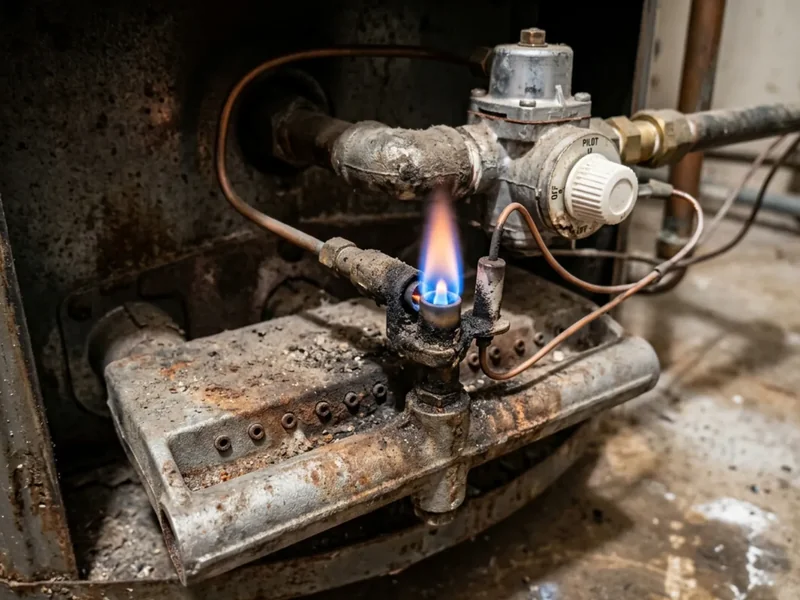
Living out along Highway 17 North in Awendaw means your home runs a little more independently than a house in town — and that includes your water heater. Many Awendaw homes sit on large wooded lots near the Francis Marion National Forest where natural gas mains never reached, so gas water heaters here often run on propane with an exterior tank, while others tie into Dominion Energy service along the highway corridor. Either way, the gas control valve is the brain of the unit: it meters fuel to the burner, holds the pilot, and shuts everything down if the flame goes out or the tank overheats. When that valve starts failing, you get the classic symptoms — a pilot that will not stay lit, water that never quite gets hot, or a burner that cycles on and off. Because Awendaw is rural, a failed valve is more than an inconvenience; a service delay can mean days without hot water. Our technicians replace gas control valves on propane and natural gas water heaters across the 29429 ZIP, testing every connection for leaks before we relight and leave.
How the Gas Control Valve Fails on Rural Lowcountry Water Heaters
The gas control valve on your water heater is a single brass-bodied unit that does three jobs at once: it regulates gas flow to the main burner, it manages the pilot flame through a thermocouple or thermopile safety circuit, and it carries the thermostat and the energy-cut-off (ECO) switch that kills the gas if the tank overheats. In Awendaw, where many heaters sit in vented crawlspaces or detached utility sheds on big lots, that valve lives a harder life than the manufacturer imagined. Humid air blowing under a raised Lowcountry home condenses on the valve body and burner assembly, and over eight to twelve years that moisture pits the internal diaphragm and corrodes the electrical contacts that prove the pilot flame.
Failure usually announces itself in stages. First the pilot becomes fussy — you relight it, it holds for a day or a week, then drops out again. Many homeowners blame the thermocouple, and sometimes they are right, but a valve whose internal safety magnet has weakened will not hold the pilot no matter how many thermocouples you install. Next comes temperature trouble: the thermostat side of the valve stops metering correctly, so the burner short-cycles and the tank never reaches temperature, or it overshoots and trips the ECO. On propane units, which are common in the 29429 ZIP, an under-firing burner leaves soot on the flue and a lazy yellow flame instead of a crisp blue one.
The most serious failure is a valve that will not fully close. If you smell gas near the heater — the rotten-egg odor of added mercaptan — treat it as an emergency, not a repair appointment. Leave the house, do not flip switches, and call 911 and your gas provider from outside. A valve replacement is never a do-it-yourself job on a gas appliance; the new unit must be rated for your fuel type, since propane and natural gas valves are not interchangeable, and every threaded joint must be leak-tested with a proper solution or electronic detector before the burner is relit.
Propane vs. Natural Gas: What Awendaw Homeowners Should Know
Awendaw sits at an interesting split in fuel infrastructure. Homes along the Highway 17 corridor and in newer pockets may have Dominion Energy natural gas service, while homes tucked down dirt roads toward the forest, Bulls Bay, or the marshes almost always run on propane delivered to an exterior tank. This matters enormously when a gas control valve fails, because the replacement valve must be built and orificed for the exact fuel in use. A natural gas valve installed on a propane system will over-fire dangerously; a propane valve on natural gas will starve the burner. Our technicians confirm the fuel type from the data plate, the supply piping, and the regulator setup before ordering or installing any part.
Propane adds a few Awendaw-specific wrinkles. Because propane is heavier than air, any leak pools low — in a crawlspace, a utility pit, or along the floor of a shed — instead of dissipating upward the way natural gas does. That makes leak testing after a valve replacement even more critical, and it is why we test every joint twice and check the burner compartment with a combustible-gas detector. Propane systems also run at higher pressure, so the sediment trap (drip leg) on the gas line deserves inspection while we are there; a trap full of pipe scale can starve the new valve and mimic the same symptoms you called about.
For homes on Dominion Energy natural gas, the gas meter and exterior regulator belong to the utility, and we never disturb them. If we find the problem is low inlet pressure rather than a bad valve — more common after storms or in older sections of pipe — we will tell you plainly and point you to the utility rather than selling you a part you do not need. Honest diagnosis is the whole point of the visit: a thermocouple costs far less than a valve, and a valve costs far less than a new water heater, and you deserve to know which one your situation actually calls for.
What Happens During a Gas Valve Replacement Visit
When our technician arrives at your Awendaw home, the first step is diagnosis, not parts-swapping. We check the pilot behavior, measure manifold gas pressure with a manometer, test the thermocouple or thermopile output in millivolts, and inspect the burner and flue for soot, rust, or blockage. A surprising number of "dead valve" calls turn out to be a weak thermocouple, a clogged pilot orifice, or a flue choked with debris — all cheaper fixes. Only when the tests point at the valve itself do we recommend replacement, and we will show you the readings so you can see why.
Replacement starts with safety: the gas supply is shut off at the heater's service valve, and the pilot and burner are confirmed out. The water is drained down below the valve port — the valve threads directly into the tank, so the water level must drop beneath it. We disconnect the gas line, the pilot tube, and the thermocouple lead, unthread the old valve, and clean the tank port threads. The new valve, matched to your fuel type and tank BTU rating, is threaded in with proper sealant rated for gas service, and the burner assembly, pilot, and thermocouple are reconnected.
Then comes the part that matters most: verification. Every gas joint is leak-tested, the pilot is lit and its flame is checked for proper engulfment of the thermocouple, manifold pressure is confirmed against the data plate, and the burner is fired to verify a clean blue flame and correct thermostat cycling. We also check the draft at the flue and confirm the temperature-pressure relief valve operates. Before leaving, we walk you through what was done, what to watch for, and how to relight the pilot safely if it ever goes out — though with a new valve, it should stay lit for years.
Protecting Your New Valve From Lowcountry Humidity and Storms
Awendaw's setting — pine woods, tidal creeks, and some of the heaviest summer humidity in the state — is rough on gas appliances. Once your new control valve is in, a few habits will help it reach its full lifespan. First, keep the area around the heater dry and ventilated. Heaters in enclosed crawlspaces suffer the most; if your crawlspace holds standing water after rains, that moisture is condensing on the valve and burner every single day. A simple moisture barrier on the ground and vents that actually breathe make a measurable difference to how long gas components last.
Second, respect hurricane season. The Lowcountry rule for gas controls is absolute: any gas valve that has been submerged in floodwater must be replaced, not dried out and reused. Water infiltrates the valve body, corrodes the internal safety mechanisms invisibly, and can cause the valve to stick open or fail to shut off — a delayed-action hazard. If storm surge or creek flooding ever reaches your water heater, call us before relighting anything. We will also check the flue and burner for mud and debris, because a flooded burner that looks fine can still back-draft carbon monoxide.
Third, flush sediment from the tank once a year. Awendaw well water in many pockets carries iron and minerals that settle into a thick blanket over the burner area. That blanket insulates the bottom of the tank, forcing the burner to run longer and hotter, which cooks the thermostat side of the valve and shortens its life. Annual flushing is the cheapest life-extension your water heater will ever get. Finally, keep a carbon monoxide detector near any gas appliance and test it monthly — it is the one device that watches the burner while you sleep.
Local Insight
Awendaw is the gateway to the Francis Marion National Forest, and its housing reflects that rural character: raised homes on wooded acreage, older farmhouses along Highway 17, fish camps and cottages near the water, and newer builds tucked down long driveways. Many of these homes were built from the 1970s through the 2000s with water heaters placed wherever space allowed — vented crawlspaces, carports converted to utility rooms, and detached sheds. Those locations expose gas valves to exactly the conditions that kill them: damp air, temperature swings, and in low spots, periodic flooding from tidal creeks and summer downpours.
Fuel infrastructure here is genuinely mixed. The Highway 17 corridor has pockets of Dominion Energy natural gas, but large stretches of the 29429 ZIP — toward McClellanville, the forest boundary, and the marshes — never got gas mains, so propane rules. Well water is common off the main roads, and it tends to run harder and carry more iron than Charleston's municipal supply, which accelerates tank sediment and burner-area scale. When we service Awendaw heaters, we routinely find the combination that shortens valve life: a propane unit in a humid crawlspace on well water. Knowing that pattern is why our diagnosis starts with the full picture — fuel, water, and placement — before we touch a wrench.