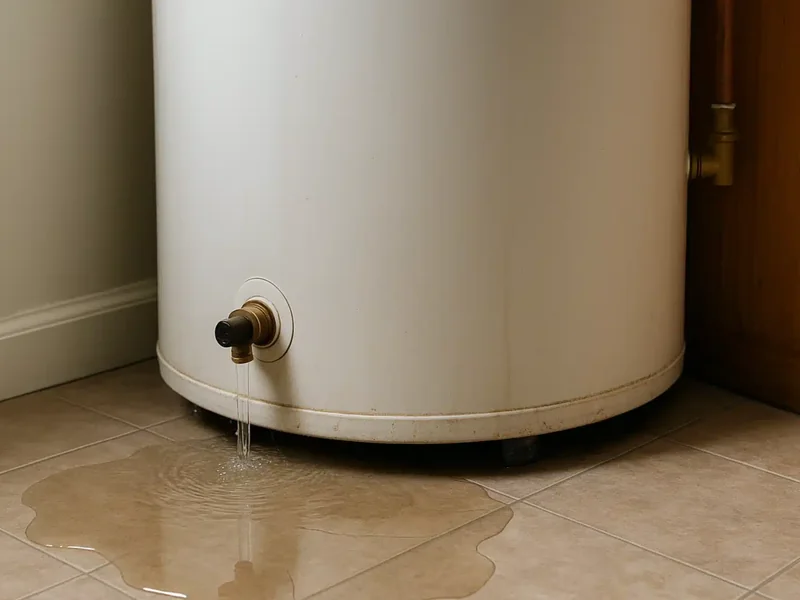
Water on the floor around your water heater is one of those problems that gets worse every single minute. In North Charleston, SC 29420, our emergency line at (833) 713-2101 is answered 24 hours a day, 7 days a week, because a failed tank at 2 a.m. can't wait until morning. Modest mid-century homes and rentals, with heaters often original to 1970s–80s builds, sitting in utility rooms and carports. — and we've worked on all of it.
The first thing we'll do when you call is talk you through the shutoff: the cold-water valve above the heater, the gas control or the breaker, and how to keep the water from reaching anything valuable. Then we come to you — serving North Charleston and the surrounding Lowcountry communities
Below is the full playbook: your first-minute steps, how we trace a leak to its real source, and the straight answer on when a heater can be saved versus when replacement is the only honest fix.
What to Do in the First Minutes of a Water Heater Leak in North Charleston
If your heater runs on gas, turn the gas control knob on the unit to the OFF or PILOT position once the water is stopped. For electric heaters, switch off the dedicated breaker in your panel — never touch a breaker panel while standing in water. These two steps remove the two things that make a leak dangerous: pressure feeding it and energy heating an emptying tank.
Contain what has already escaped. Towels and buckets around the base buy time, and moving boxes, electronics, and anything stored near the heater takes minutes now versus a ruined afternoon later. If you can safely attach a garden hose to the drain valve at the tank's base and run it to a floor drain or outside, you can lower the water level — but only if the valve opens easily. Never force a corroded plastic valve; a snapped valve turns a leak into a geyser.
Take thirty seconds to note where the water is coming from: the top of the tank, the bottom, a steady stream, or a slow weep. That detail, given to us at (833) 713-2101, tells the technician what to bring and how urgent the dispatch needs to be. A drip from a fitting and a rupture at the tank seam are two very different emergencies.
After the water is off, open a hot-water tap somewhere in the house — a laundry sink is ideal. This relieves pressure in the lines and lets the tank drain down faster if we need to work on it. It also confirms the shutoff actually worked: if hot water keeps flowing strongly, the valve you closed wasn't the right one.
In North Charleston, rental-heavy blocks mean tenants often don't know the shutoff locations. Landlords should post the main shutoff location inside the utility area where a panicked tenant can find it.
Where Emergency Water Heater Leaks Actually Start
Our on-site diagnosis follows a fixed sequence: confirm the water and fuel are safely off, dry the tank and fittings completely, restore pressure in a controlled way, and watch exactly where water reappears. That methodical trace is what separates a lasting repair from a guess — and it's why we can usually give you a firm answer, repair or replace, within the first half hour on site.
The temperature-and-pressure relief valve — the T&P valve on the side or top of the tank with a pipe running down toward the floor — is one of the most common leakers. When it drips or streams, it usually means thermal expansion pressure has nowhere to go, or the valve's spring has weakened with age. A T&P discharge is the tank telling you something upstream needs attention, and it is replaceable without replacing the heater.
The drain valve at the base of the tank weeps more often than most homeowners realize. Factory plastic drain valves corrode, crack, and clog with sediment until they either drip constantly or seize shut. In the Lowcountry's mineral-heavy water, we've seen drain valves fail years before the tank itself gives out — a straightforward emergency fix that buys a heater more life.
Inlet and outlet fittings at the top of the tank are prime leak points, especially where dissimilar metals meet. Dielectric unions and nipples corrode from the inside, and in salt-air zones the corrosion attacks from the outside too. These leaks often start as a faint green-white crust on the fitting and graduate to an active drip during the night.
The North Charleston factor: Aging infrastructure is the theme: many heaters are past expected service life with heavy sediment from decades without a single flush. That chemistry decides which failure mode you get — sediment-heavy water clogs and cooks tanks from below, while corrosive air and constant moisture attack fittings from outside. During diagnosis we weight those local odds, which is how we find the real source fast instead of working through a generic checklist.
Repair or Replace? The Honest Call at 2 A.M.
Our workmanship is backed after we leave. If a fitting we serviced weeps or a valve we installed fails, you call (833) 713-2101 and we come back and make it right. That promise is simple and in writing on every invoice — because emergency work done in the dark should be held to the same standard as work done at noon.
Age is the first honest input. A heater under about eight years old with a leaking fitting, T&P valve, or drain valve is almost always worth repairing — the tank itself likely has years left. Past ten to twelve years, especially with rust at the base or rust-colored hot water, the math flips: every dollar into fittings is a dollar toward a tank that's already failing from the inside.
Rust-colored hot water and a rumbling, popping tank are the two sounds and sights of a heater cooking itself in sediment. Sediment blankets the bottom of the tank, the burner or elements overheat that layer, and the steel fatigues. When we open a drain valve and get grit instead of water on an old unit, we'll show it to you — that visual makes the replace recommendation obvious.
Sometimes the right emergency answer is 'stabilize tonight, replace tomorrow.' If a fitting can be safely capped and the water stopped, we'll secure the situation so your home is dry and safe, then return in daylight with the correctly sized replacement — proper venting, proper gas or electrical connections, and a full test. You sleep without water running; we do the heavy work when it's safe and thorough.
In North Charleston, the housing stock sets the odds. Modest mid-century homes and rentals, with heaters often original to 1970s–80s builds, sitting in utility rooms and carports. On heaters in that kind of stock, our repair-or-replace calls follow the same honest rules above — but the starting age is often older than homeowners guess, because Lowcountry conditions age tanks faster than the sticker suggests. We'll give you the tank's real condition, not its birth year, as the basis for the decision.
Why North Charleston Homes Call Us After Midnight
Hurricane season adds its own failure mode: pressure fluctuations, power surges, and storm-driven moisture all punish aging heaters. Every August through October we see a spike in T&P valve discharges and fitting leaks as systems cycle through outages and restarts. If your heater is over ten years old going into storm season, a pre-season check is cheap insurance.
Vacation-rental density turns small leaks into big ones on the barrier islands and resort corridors. A weeping fitting that's a $200 fix on day one becomes soaked subfloor and a mold remediation project when it runs unnoticed between guests for two weeks. Rental owners who schedule annual heater checks almost never meet us at 2 a.m.
The Lowcountry's humid subtropical climate is quietly brutal on water heaters. Garages, crawlspaces, and utility sheds here stay damp most of the year, and steel tanks, fittings, and valves corrode far faster in constant moisture than they do in drier regions. A heater that might last twelve years inland can start weeping at nine here — and the failure usually announces itself at night, when hot-water demand drops and the tank sits cooling.
Sandy soil and a high water table mean many Lowcountry homes shift subtly with the seasons. That movement stresses rigid pipe connections at the top of the tank — the exact fittings most prone to night-time drips. Homes on crawlspaces feel it most, where the heater's plumbing runs through damp, unconditioned air year-round.
Zooming in on North Charleston 29420: The 29420 ZIP covers North Charleston's industrial riverfront and port districts along the Ashley and Cooper rivers — working neighborhoods beside terminals and rail yards. Rental-heavy blocks mean tenants often don't know the shutoff locations. Landlords should post the main shutoff location inside the utility area where a panicked tenant can find it.
Local Insight
The 29420's rental-heavy blocks produce a specific failure: tenants who don't know where the shutoff is, heaters past their expected life, and leaks discovered by neighbors, not occupants. Landlords, this one's on you — post the main shutoff location and the heater's valve location inside the utility area, in writing, where a panicked tenant can find it at midnight. The housing stock here is honest and hardworking but old; many heaters are running five years past their design life on sediment and hope. A planned replacement beats a tenant's 2 a.m. discovery every time.
What surprises most homeowners is how fast water travels once a tank lets go at the seam — forty to fifty gallons don't puddle politely, they seek every low point in the house. That's why the first-minute shutoff matters more than anything we do after we arrive. Learn your valves on a calm day, and the emergency becomes a service call instead of a renovation.