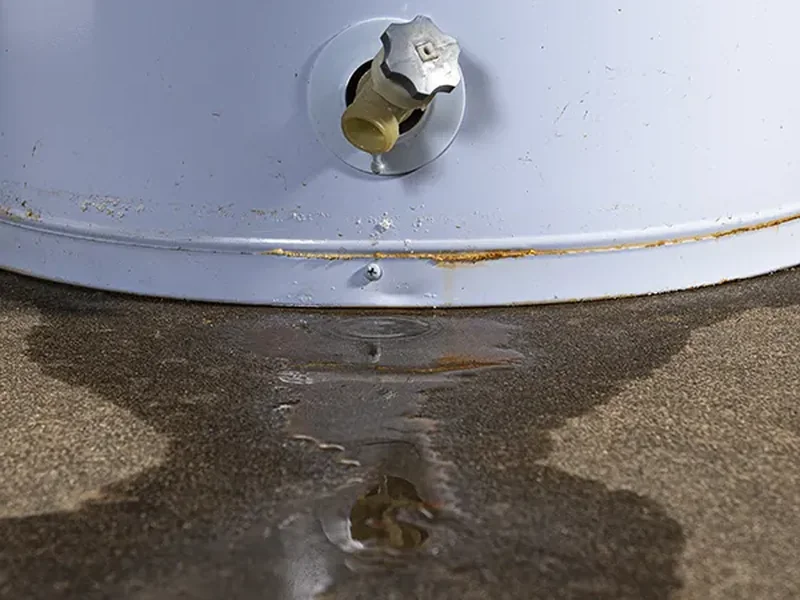
A leaking water heater never waits for business hours — and in North Charleston, SC 29406, neither do we. Whether your tank sits in a pier-house crawlspace or utility room, water spreading across the floor at midnight is an emergency, and every minute it keeps running, the damage grows. Our emergency team answers around the clock at (833) 713-2101, and our technicians know North Charleston homes — 1920s–60s bungalows and ranches on crawlspaces and piers, many mid-renovation with old and new plumbing mixed together. — along with the plumbing quirks that come with them.
When you call, we walk you through shutting off the water and the fuel supply right there on the phone, then dispatch a technician to you. Most emergency calls across the North Charleston area get a technician on-site quickly, because we stage for the Lowcountry instead of driving in from across the state.
This page covers exactly what to do in the first minutes of a leak, where these leaks actually start, and how we make the honest call — on the spot — between an emergency repair and a replacement.
What to Do in the First Minutes of a Water Heater Leak in North Charleston
Contain what has already escaped. Towels and buckets around the base buy time, and moving boxes, electronics, and anything stored near the heater takes minutes now versus a ruined afternoon later. If you can safely attach a garden hose to the drain valve at the tank's base and run it to a floor drain or outside, you can lower the water level — but only if the valve opens easily. Never force a corroded plastic valve; a snapped valve turns a leak into a geyser.
Take thirty seconds to note where the water is coming from: the top of the tank, the bottom, a steady stream, or a slow weep. That detail, given to us at (833) 713-2101, tells the technician what to bring and how urgent the dispatch needs to be. A drip from a fitting and a rupture at the tank seam are two very different emergencies.
After the water is off, open a hot-water tap somewhere in the house — a laundry sink is ideal. This relieves pressure in the lines and lets the tank drain down faster if we need to work on it. It also confirms the shutoff actually worked: if hot water keeps flowing strongly, the valve you closed wasn't the right one.
Don't attempt to repair pressurized fittings, solder joints, or the gas line yourself. Water heater emergencies reward speed in shutting things down and patience in letting a professional handle the rest. Call (833) 713-2101 as soon as the water is stopped — the sooner we roll, the less drying-out your home needs.
In North Charleston, pier-and-crawlspace bungalows put heaters in tight, damp crawlspaces. A headlamp and a clear access path make emergency diagnosis dramatically faster.
Where Emergency Water Heater Leaks Actually Start
Not every puddle is a leak. In humid Lowcountry garages and crawlspaces, a cold tank can sweat with condensation, especially in summer — and a nearby washing machine or AC condensate line gets blamed on the heater regularly. Part of our emergency diagnosis is ruling out the impostors: we dry everything, watch, and trace the water to its actual origin before quoting anything.
Our on-site diagnosis follows a fixed sequence: confirm the water and fuel are safely off, dry the tank and fittings completely, restore pressure in a controlled way, and watch exactly where water reappears. That methodical trace is what separates a lasting repair from a guess — and it's why we can usually give you a firm answer, repair or replace, within the first half hour on site.
The temperature-and-pressure relief valve — the T&P valve on the side or top of the tank with a pipe running down toward the floor — is one of the most common leakers. When it drips or streams, it usually means thermal expansion pressure has nowhere to go, or the valve's spring has weakened with age. A T&P discharge is the tank telling you something upstream needs attention, and it is replaceable without replacing the heater.
The drain valve at the base of the tank weeps more often than most homeowners realize. Factory plastic drain valves corrode, crack, and clog with sediment until they either drip constantly or seize shut. In the Lowcountry's mineral-heavy water, we've seen drain valves fail years before the tank itself gives out — a straightforward emergency fix that buys a heater more life.
The North Charleston factor: Older neighborhoods carry legacy galvanized and cast iron that shed rust and scale straight into water heaters. That chemistry decides which failure mode you get — sediment-heavy water clogs and cooks tanks from below, while corrosive air and constant moisture attack fittings from outside. During diagnosis we weight those local odds, which is how we find the real source fast instead of working through a generic checklist.
Repair or Replace? The Honest Call at 2 A.M.
Age is the first honest input. A heater under about eight years old with a leaking fitting, T&P valve, or drain valve is almost always worth repairing — the tank itself likely has years left. Past ten to twelve years, especially with rust at the base or rust-colored hot water, the math flips: every dollar into fittings is a dollar toward a tank that's already failing from the inside.
Rust-colored hot water and a rumbling, popping tank are the two sounds and sights of a heater cooking itself in sediment. Sediment blankets the bottom of the tank, the burner or elements overheat that layer, and the steel fatigues. When we open a drain valve and get grit instead of water on an old unit, we'll show it to you — that visual makes the replace recommendation obvious.
Sometimes the right emergency answer is 'stabilize tonight, replace tomorrow.' If a fitting can be safely capped and the water stopped, we'll secure the situation so your home is dry and safe, then return in daylight with the correctly sized replacement — proper venting, proper gas or electrical connections, and a full test. You sleep without water running; we do the heavy work when it's safe and thorough.
What we carry on emergency calls covers the common saves: T&P valves, full-port brass drain valves, dielectric unions, flex connectors, and pans. A full tank swap is a scheduled job, not a trunk-stock job, because sizing, venting, code clearances, and gas-line capacity all deserve daylight attention. We'll never improvise a same-night tank install that cuts corners on safety.
In North Charleston, the housing stock sets the odds. 1920s–60s bungalows and ranches on crawlspaces and piers, many mid-renovation with old and new plumbing mixed together. On heaters in that kind of stock, our repair-or-replace calls follow the same honest rules above — but the starting age is often older than homeowners guess, because Lowcountry conditions age tanks faster than the sticker suggests. We'll give you the tank's real condition, not its birth year, as the basis for the decision.
Why North Charleston Homes Call Us After Midnight
Sandy soil and a high water table mean many Lowcountry homes shift subtly with the seasons. That movement stresses rigid pipe connections at the top of the tank — the exact fittings most prone to night-time drips. Homes on crawlspaces feel it most, where the heater's plumbing runs through damp, unconditioned air year-round.
Water chemistry does the slow damage. Mineral-heavy and sediment-laden water — from both municipal systems and private wells — settles into a thick blanket at the tank's bottom. The burner or elements then overheat that insulated layer, the steel fatigues, and tanks fail from the bottom up. Regular flushing prevents it; almost nobody does it until the rumbling starts.
Housing age concentrates the risk. Neighborhoods built in the 1960s through the 1980s are full of heaters on their second or third replacement cycle, and many of those replacements are now 10 to 15 years old — right at the failure window. When whole subdivisions were built at once, their water heaters tend to fail at once, too.
Hurricane season adds its own failure mode: pressure fluctuations, power surges, and storm-driven moisture all punish aging heaters. Every August through October we see a spike in T&P valve discharges and fitting leaks as systems cycle through outages and restarts. If your heater is over ten years old going into storm season, a pre-season check is cheap insurance.
Zooming in on North Charleston 29406: ZIP 29406 covers Park Circle and the surrounding mid-century neighborhoods of North Charleston — bungalows, brick ranches, and new infill near the old Navy Yard. Pier-and-crawlspace bungalows put heaters in tight, damp crawlspaces. A headlamp and a clear access path make emergency diagnosis dramatically faster.
Local Insight
Park Circle's pier-and-beam bungalows put heaters in the dampest spot in the house: low crawlspaces with poor ventilation, where steel sweats and rusts year-round. These are the heaters that fail youngest in our coverage area — we've replaced nine-year-old tanks from 29406 crawlspaces that looked fifteen. Bungalow owners: the crawlspace is not a place to ignore. A headlamp check twice a year, looking for base rust and weeping fittings, catches most of these before they become emergencies. And keep that access opening clear — we can't fix what we can't reach.
What surprises most homeowners is how fast water travels once a tank lets go at the seam — forty to fifty gallons don't puddle politely, they seek every low point in the house. That's why the first-minute shutoff matters more than anything we do after we arrive. Learn your valves on a calm day, and the emergency becomes a service call instead of a renovation.