A leaking water heater never waits for business hours — and in Ladson, SC 29456, neither do we. Whether your tank sits in a garage or utility closet, water spreading across the floor at midnight is an emergency, and every minute it keeps running, the damage grows. Our emergency team answers around the clock at (833) 713-2101, and our technicians know Ladson homes — 1970s–90s ranch and split-level homes, many with original or aging-replacement heaters in garages and utility closets. — along with the plumbing quirks that come with them.
When you call, we walk you through shutting off the water and the fuel supply right there on the phone, then dispatch a technician to you. Most emergency calls across the Ladson area get a technician on-site quickly, because we stage for the Lowcountry instead of driving in from across the state.
This page covers exactly what to do in the first minutes of a leak, where these leaks actually start, and how we make the honest call — on the spot — between an emergency repair and a replacement.
What to Do in the First Minutes of a Water Heater Leak in Ladson
If your heater runs on gas, turn the gas control knob on the unit to the OFF or PILOT position once the water is stopped. For electric heaters, switch off the dedicated breaker in your panel — never touch a breaker panel while standing in water. These two steps remove the two things that make a leak dangerous: pressure feeding it and energy heating an emptying tank.
Contain what has already escaped. Towels and buckets around the base buy time, and moving boxes, electronics, and anything stored near the heater takes minutes now versus a ruined afternoon later. If you can safely attach a garden hose to the drain valve at the tank's base and run it to a floor drain or outside, you can lower the water level — but only if the valve opens easily. Never force a corroded plastic valve; a snapped valve turns a leak into a geyser.
Take thirty seconds to note where the water is coming from: the top of the tank, the bottom, a steady stream, or a slow weep. That detail, given to us at (833) 713-2101, tells the technician what to bring and how urgent the dispatch needs to be. A drip from a fitting and a rupture at the tank seam are two very different emergencies.
After the water is off, open a hot-water tap somewhere in the house — a laundry sink is ideal. This relieves pressure in the lines and lets the tank drain down faster if we need to work on it. It also confirms the shutoff actually worked: if hot water keeps flowing strongly, the valve you closed wasn't the right one.
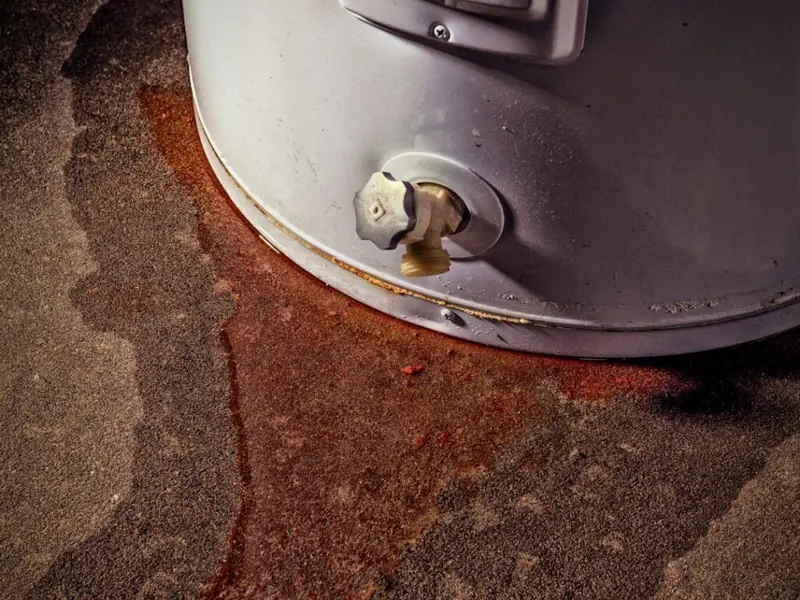
In Ladson, aging heaters in Ladson garages often leak at the base where rust hides behind stored boxes. Pull storage away from the heater so a leak becomes visible early instead of spreading silently.
Where Emergency Water Heater Leaks Actually Start
The drain valve at the base of the tank weeps more often than most homeowners realize. Factory plastic drain valves corrode, crack, and clog with sediment until they either drip constantly or seize shut. In the Lowcountry's mineral-heavy water, we've seen drain valves fail years before the tank itself gives out — a straightforward emergency fix that buys a heater more life.
Inlet and outlet fittings at the top of the tank are prime leak points, especially where dissimilar metals meet. Dielectric unions and nipples corrode from the inside, and in salt-air zones the corrosion attacks from the outside too. These leaks often start as a faint green-white crust on the fitting and graduate to an active drip during the night.
A rupture in the tank body itself is the emergency that ends the heater's life. It shows up as water seeping from under the tank jacket with no visible fitting leak, often with rust-colored water or a damp ring that keeps returning. Once the steel tank wall rusts through, no sealant or tightening fixes it — the honest move is replacement, and we'll tell you so plainly on the spot.
Not every puddle is a leak. In humid Lowcountry garages and crawlspaces, a cold tank can sweat with condensation, especially in summer — and a nearby washing machine or AC condensate line gets blamed on the heater regularly. Part of our emergency diagnosis is ruling out the impostors: we dry everything, watch, and trace the water to its actual origin before quoting anything.
The Ladson factor: Municipal supply, but a huge share of Ladson heaters are 10 to 15 years old and living on borrowed time. That chemistry decides which failure mode you get — sediment-heavy water clogs and cooks tanks from below, while corrosive air and constant moisture attack fittings from outside. During diagnosis we weight those local odds, which is how we find the real source fast instead of working through a generic checklist.
Repair or Replace? The Honest Call at 2 A.M.
What we carry on emergency calls covers the common saves: T&P valves, full-port brass drain valves, dielectric unions, flex connectors, and pans. A full tank swap is a scheduled job, not a trunk-stock job, because sizing, venting, code clearances, and gas-line capacity all deserve daylight attention. We'll never improvise a same-night tank install that cuts corners on safety.
You'll get an upfront, flat-rate price before any work begins — even at 3 a.m. Emergency doesn't mean mystery pricing with us. We quote the repair or the replacement, you approve it, and then we work. If the honest answer is that the heater is done, the quote covers the full replacement scope so there are no morning-after surprises.
Our workmanship is backed after we leave. If a fitting we serviced weeps or a valve we installed fails, you call (833) 713-2101 and we come back and make it right. That promise is simple and in writing on every invoice — because emergency work done in the dark should be held to the same standard as work done at noon.
Age is the first honest input. A heater under about eight years old with a leaking fitting, T&P valve, or drain valve is almost always worth repairing — the tank itself likely has years left. Past ten to twelve years, especially with rust at the base or rust-colored hot water, the math flips: every dollar into fittings is a dollar toward a tank that's already failing from the inside.
In Ladson, the housing stock sets the odds. 1970s–90s ranch and split-level homes, many with original or aging-replacement heaters in garages and utility closets. On heaters in that kind of stock, our repair-or-replace calls follow the same honest rules above — but the starting age is often older than homeowners guess, because Lowcountry conditions age tanks faster than the sticker suggests. We'll give you the tank's real condition, not its birth year, as the basis for the decision.
Why Ladson Homes Call Us After Midnight
Hurricane season adds its own failure mode: pressure fluctuations, power surges, and storm-driven moisture all punish aging heaters. Every August through October we see a spike in T&P valve discharges and fitting leaks as systems cycle through outages and restarts. If your heater is over ten years old going into storm season, a pre-season check is cheap insurance.
Vacation-rental density turns small leaks into big ones on the barrier islands and resort corridors. A weeping fitting that's a $200 fix on day one becomes soaked subfloor and a mold remediation project when it runs unnoticed between guests for two weeks. Rental owners who schedule annual heater checks almost never meet us at 2 a.m.
The Lowcountry's humid subtropical climate is quietly brutal on water heaters. Garages, crawlspaces, and utility sheds here stay damp most of the year, and steel tanks, fittings, and valves corrode far faster in constant moisture than they do in drier regions. A heater that might last twelve years inland can start weeping at nine here — and the failure usually announces itself at night, when hot-water demand drops and the tank sits cooling.
Sandy soil and a high water table mean many Lowcountry homes shift subtly with the seasons. That movement stresses rigid pipe connections at the top of the tank — the exact fittings most prone to night-time drips. Homes on crawlspaces feel it most, where the heater's plumbing runs through damp, unconditioned air year-round.
Zooming in on Ladson 29456: Ladson straddles US Highway 78 and I-26 between Summerville and North Charleston — a working-class suburb built around the rail and interstate corridors. Aging heaters in Ladson garages often leak at the base where rust hides behind stored boxes. Pull storage away from the heater so a leak becomes visible early instead of spreading silently.
Local Insight
Ladson has one of the oldest average heater fleets in our service area — block after block of 1970s–90s homes with tanks in the 10-to-15-year danger zone. The pattern we see: garage heaters leaking at the base, hidden behind years of stored boxes, discovered only when water reaches the drywall or the garage door. Pull the storage back from your heater twice a year and look at the base with a flashlight. In Ladson, that thirty-second check is the difference between a planned replacement and a midnight emergency.
The pattern we see across the Lowcountry is consistent: the emergencies that cost the most are the ones discovered late. A water alarm beside the heater, a twice-yearly flashlight check of the base and fittings, and knowing your shutoff locations by touch will prevent the majority of midnight disasters. None of it takes more than an hour a year, and all of it beats mopping at 2 a.m.