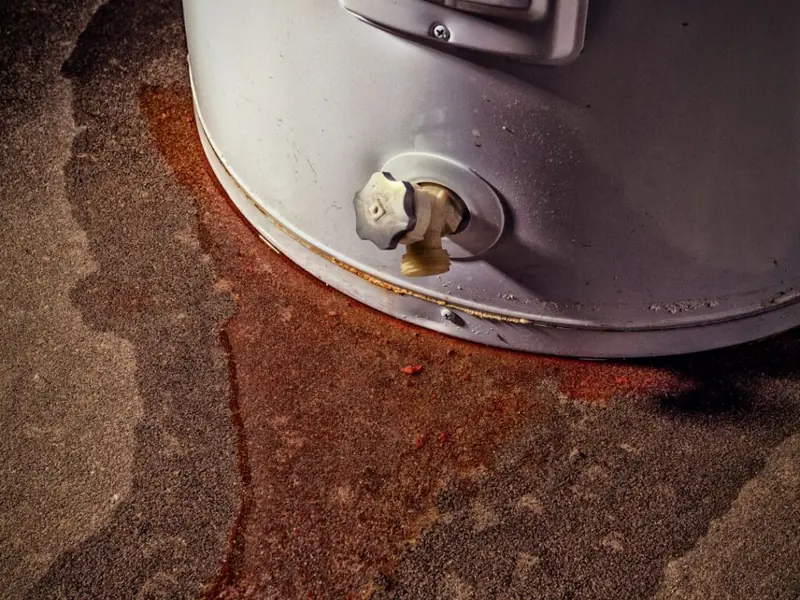
Water on the floor around your water heater is one of those problems that gets worse every single minute. In Charleston, SC 29407, our emergency line at (833) 713-2101 is answered 24 hours a day, 7 days a week, because a failed tank at 2 a.m. can't wait until morning. Brick ranch homes from the 1950s through the 1970s dominate, most on crawlspaces or slabs, with original or second-generation water heaters common in utility closets and garages. — and we've worked on all of it.
The first thing we'll do when you call is talk you through the shutoff: the cold-water valve above the heater, the gas control or the breaker, and how to keep the water from reaching anything valuable. Then we come to you — serving Charleston and the surrounding Lowcountry communities
Below is the full playbook: your first-minute steps, how we trace a leak to its real source, and the straight answer on when a heater can be saved versus when replacement is the only honest fix.
What to Do in the First Minutes of a Water Heater Leak in Charleston
Take thirty seconds to note where the water is coming from: the top of the tank, the bottom, a steady stream, or a slow weep. That detail, given to us at (833) 713-2101, tells the technician what to bring and how urgent the dispatch needs to be. A drip from a fitting and a rupture at the tank seam are two very different emergencies.
After the water is off, open a hot-water tap somewhere in the house — a laundry sink is ideal. This relieves pressure in the lines and lets the tank drain down faster if we need to work on it. It also confirms the shutoff actually worked: if hot water keeps flowing strongly, the valve you closed wasn't the right one.
Don't attempt to repair pressurized fittings, solder joints, or the gas line yourself. Water heater emergencies reward speed in shutting things down and patience in letting a professional handle the rest. Call (833) 713-2101 as soon as the water is stopped — the sooner we roll, the less drying-out your home needs.
Find the cold-water shutoff valve on the pipe entering the top of your water heater and turn it clockwise until it stops. That single valve cuts the water feeding the tank, which is what turns a flood into a puddle. If the valve is seized — common on heaters that haven't been touched in a decade — go straight to your home's main shutoff instead, usually near the street meter box or where the water line enters the house.
In Charleston, flood-zone homes should never wade into standing water around an electric heater. West Ashley's older gate-type main shutoffs often won't budge — many households need a meter key at the street box instead.
Where Emergency Water Heater Leaks Actually Start
The drain valve at the base of the tank weeps more often than most homeowners realize. Factory plastic drain valves corrode, crack, and clog with sediment until they either drip constantly or seize shut. In the Lowcountry's mineral-heavy water, we've seen drain valves fail years before the tank itself gives out — a straightforward emergency fix that buys a heater more life.
Inlet and outlet fittings at the top of the tank are prime leak points, especially where dissimilar metals meet. Dielectric unions and nipples corrode from the inside, and in salt-air zones the corrosion attacks from the outside too. These leaks often start as a faint green-white crust on the fitting and graduate to an active drip during the night.
A rupture in the tank body itself is the emergency that ends the heater's life. It shows up as water seeping from under the tank jacket with no visible fitting leak, often with rust-colored water or a damp ring that keeps returning. Once the steel tank wall rusts through, no sealant or tightening fixes it — the honest move is replacement, and we'll tell you so plainly on the spot.
Not every puddle is a leak. In humid Lowcountry garages and crawlspaces, a cold tank can sweat with condensation, especially in summer — and a nearby washing machine or AC condensate line gets blamed on the heater regularly. Part of our emergency diagnosis is ruling out the impostors: we dry everything, watch, and trace the water to its actual origin before quoting anything.
The Charleston factor: Neighborhoods near the Ashley River and tidal creeks sit in flood zones with high water tables, and older copper and galvanized distribution piping is typical. That chemistry decides which failure mode you get — sediment-heavy water clogs and cooks tanks from below, while corrosive air and constant moisture attack fittings from outside. During diagnosis we weight those local odds, which is how we find the real source fast instead of working through a generic checklist.
Repair or Replace? The Honest Call at 2 A.M.
What we carry on emergency calls covers the common saves: T&P valves, full-port brass drain valves, dielectric unions, flex connectors, and pans. A full tank swap is a scheduled job, not a trunk-stock job, because sizing, venting, code clearances, and gas-line capacity all deserve daylight attention. We'll never improvise a same-night tank install that cuts corners on safety.
You'll get an upfront, flat-rate price before any work begins — even at 3 a.m. Emergency doesn't mean mystery pricing with us. We quote the repair or the replacement, you approve it, and then we work. If the honest answer is that the heater is done, the quote covers the full replacement scope so there are no morning-after surprises.
Our workmanship is backed after we leave. If a fitting we serviced weeps or a valve we installed fails, you call (833) 713-2101 and we come back and make it right. That promise is simple and in writing on every invoice — because emergency work done in the dark should be held to the same standard as work done at noon.
Age is the first honest input. A heater under about eight years old with a leaking fitting, T&P valve, or drain valve is almost always worth repairing — the tank itself likely has years left. Past ten to twelve years, especially with rust at the base or rust-colored hot water, the math flips: every dollar into fittings is a dollar toward a tank that's already failing from the inside.
In Charleston, the housing stock sets the odds. Brick ranch homes from the 1950s through the 1970s dominate, most on crawlspaces or slabs, with original or second-generation water heaters common in utility closets and garages. On heaters in that kind of stock, our repair-or-replace calls follow the same honest rules above — but the starting age is often older than homeowners guess, because Lowcountry conditions age tanks faster than the sticker suggests. We'll give you the tank's real condition, not its birth year, as the basis for the decision.
Why Charleston Homes Call Us After Midnight
Hurricane season adds its own failure mode: pressure fluctuations, power surges, and storm-driven moisture all punish aging heaters. Every August through October we see a spike in T&P valve discharges and fitting leaks as systems cycle through outages and restarts. If your heater is over ten years old going into storm season, a pre-season check is cheap insurance.
Vacation-rental density turns small leaks into big ones on the barrier islands and resort corridors. A weeping fitting that's a $200 fix on day one becomes soaked subfloor and a mold remediation project when it runs unnoticed between guests for two weeks. Rental owners who schedule annual heater checks almost never meet us at 2 a.m.
The Lowcountry's humid subtropical climate is quietly brutal on water heaters. Garages, crawlspaces, and utility sheds here stay damp most of the year, and steel tanks, fittings, and valves corrode far faster in constant moisture than they do in drier regions. A heater that might last twelve years inland can start weeping at nine here — and the failure usually announces itself at night, when hot-water demand drops and the tank sits cooling.
Sandy soil and a high water table mean many Lowcountry homes shift subtly with the seasons. That movement stresses rigid pipe connections at the top of the tank — the exact fittings most prone to night-time drips. Homes on crawlspaces feel it most, where the heater's plumbing runs through damp, unconditioned air year-round.
Zooming in on Charleston 29407: West Ashley's 29407 stretches from the Ashley River bridges out past Sam Rittenberg Boulevard — post-war suburbs built on former farmland and marsh edges. Flood-zone homes should never wade into standing water around an electric heater. West Ashley's older gate-type main shutoffs often won't budge — many households need a meter key at the street box instead.
Local Insight
West Ashley's ranch neighborhoods give us the classic midnight call: a 1970s heater in a garage utility closet, original gate valve seized solid, and water heading for the slab. The flood-zone streets near the Ashley River add a real safety dimension — never wade through standing water to reach an electric heater's breaker. Many West Ashley homes need a meter key at the street box because the in-house main is decorative at this point. Buy the key, test the street valve on a dry Saturday, and you'll never have to learn this at 2 a.m.
One more Lowcountry-specific note: hurricane season punishes aging heaters. Pressure fluctuations during outages, surge-driven moisture, and systems cycling through restarts all find weak fittings. If your heater is past ten years old going into August, a pre-season inspection costs far less than an October emergency call — and it lets you replace on your schedule instead of the storm's.