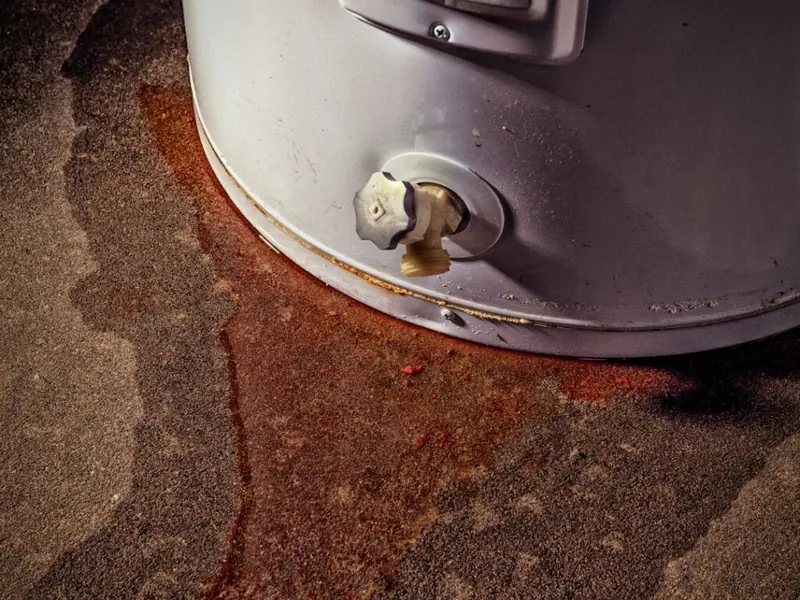
A leaking water heater never waits for business hours — and in Charleston, SC 29401, neither do we. Whether your tank sits in a tight historic crawlspace or a low utility nook, water spreading across the floor at midnight is an emergency, and every minute it keeps running, the damage grows. Our emergency team answers around the clock at (833) 713-2101, and our technicians know Charleston homes — Many homes date to the 1800s and early 1900s, with tight crawlspaces, additions layered over generations, and plumbing that mixes original galvanized pipe with newer copper and PEX. — along with the plumbing quirks that come with them.
When you call, we walk you through shutting off the water and the fuel supply right there on the phone, then dispatch a technician to you. Most emergency calls across the Charleston area get a technician on-site quickly, because we stage for the Lowcountry instead of driving in from across the state.
This page covers exactly what to do in the first minutes of a leak, where these leaks actually start, and how we make the honest call — on the spot — between an emergency repair and a replacement.
What to Do in the First Minutes of a Water Heater Leak in Charleston
Don't attempt to repair pressurized fittings, solder joints, or the gas line yourself. Water heater emergencies reward speed in shutting things down and patience in letting a professional handle the rest. Call (833) 713-2101 as soon as the water is stopped — the sooner we roll, the less drying-out your home needs.
Find the cold-water shutoff valve on the pipe entering the top of your water heater and turn it clockwise until it stops. That single valve cuts the water feeding the tank, which is what turns a flood into a puddle. If the valve is seized — common on heaters that haven't been touched in a decade — go straight to your home's main shutoff instead, usually near the street meter box or where the water line enters the house.
If your heater runs on gas, turn the gas control knob on the unit to the OFF or PILOT position once the water is stopped. For electric heaters, switch off the dedicated breaker in your panel — never touch a breaker panel while standing in water. These two steps remove the two things that make a leak dangerous: pressure feeding it and energy heating an emptying tank.
Contain what has already escaped. Towels and buckets around the base buy time, and moving boxes, electronics, and anything stored near the heater takes minutes now versus a ruined afternoon later. If you can safely attach a garden hose to the drain valve at the tank's base and run it to a floor drain or outside, you can lower the water level — but only if the valve opens easily. Never force a corroded plastic valve; a snapped valve turns a leak into a geyser.
In Charleston, peninsula emergencies contend with one-way streets and limited parking, plus original gate valves that haven't turned in decades. Know your main shutoff location before a crisis — downtown is the wrong place to go hunting for it at 2 a.m.
Where Emergency Water Heater Leaks Actually Start
A rupture in the tank body itself is the emergency that ends the heater's life. It shows up as water seeping from under the tank jacket with no visible fitting leak, often with rust-colored water or a damp ring that keeps returning. Once the steel tank wall rusts through, no sealant or tightening fixes it — the honest move is replacement, and we'll tell you so plainly on the spot.
Not every puddle is a leak. In humid Lowcountry garages and crawlspaces, a cold tank can sweat with condensation, especially in summer — and a nearby washing machine or AC condensate line gets blamed on the heater regularly. Part of our emergency diagnosis is ruling out the impostors: we dry everything, watch, and trace the water to its actual origin before quoting anything.
Our on-site diagnosis follows a fixed sequence: confirm the water and fuel are safely off, dry the tank and fittings completely, restore pressure in a controlled way, and watch exactly where water reappears. That methodical trace is what separates a lasting repair from a guess — and it's why we can usually give you a firm answer, repair or replace, within the first half hour on site.
The temperature-and-pressure relief valve — the T&P valve on the side or top of the tank with a pipe running down toward the floor — is one of the most common leakers. When it drips or streams, it usually means thermal expansion pressure has nowhere to go, or the valve's spring has weakened with age. A T&P discharge is the tank telling you something upstream needs attention, and it is replaceable without replacing the heater.
The Charleston factor: The peninsula's high water table and tidal influence keep crawlspaces damp year-round, and long plumbing runs through unconditioned space accelerate corrosion. That chemistry decides which failure mode you get — sediment-heavy water clogs and cooks tanks from below, while corrosive air and constant moisture attack fittings from outside. During diagnosis we weight those local odds, which is how we find the real source fast instead of working through a generic checklist.
Repair or Replace? The Honest Call at 2 A.M.
Rust-colored hot water and a rumbling, popping tank are the two sounds and sights of a heater cooking itself in sediment. Sediment blankets the bottom of the tank, the burner or elements overheat that layer, and the steel fatigues. When we open a drain valve and get grit instead of water on an old unit, we'll show it to you — that visual makes the replace recommendation obvious.
Sometimes the right emergency answer is 'stabilize tonight, replace tomorrow.' If a fitting can be safely capped and the water stopped, we'll secure the situation so your home is dry and safe, then return in daylight with the correctly sized replacement — proper venting, proper gas or electrical connections, and a full test. You sleep without water running; we do the heavy work when it's safe and thorough.
What we carry on emergency calls covers the common saves: T&P valves, full-port brass drain valves, dielectric unions, flex connectors, and pans. A full tank swap is a scheduled job, not a trunk-stock job, because sizing, venting, code clearances, and gas-line capacity all deserve daylight attention. We'll never improvise a same-night tank install that cuts corners on safety.
You'll get an upfront, flat-rate price before any work begins — even at 3 a.m. Emergency doesn't mean mystery pricing with us. We quote the repair or the replacement, you approve it, and then we work. If the honest answer is that the heater is done, the quote covers the full replacement scope so there are no morning-after surprises.
In Charleston, the housing stock sets the odds. Many homes date to the 1800s and early 1900s, with tight crawlspaces, additions layered over generations, and plumbing that mixes original galvanized pipe with newer copper and PEX. On heaters in that kind of stock, our repair-or-replace calls follow the same honest rules above — but the starting age is often older than homeowners guess, because Lowcountry conditions age tanks faster than the sticker suggests. We'll give you the tank's real condition, not its birth year, as the basis for the decision.
Why Charleston Homes Call Us After Midnight
Water chemistry does the slow damage. Mineral-heavy and sediment-laden water — from both municipal systems and private wells — settles into a thick blanket at the tank's bottom. The burner or elements then overheat that insulated layer, the steel fatigues, and tanks fail from the bottom up. Regular flushing prevents it; almost nobody does it until the rumbling starts.
Housing age concentrates the risk. Neighborhoods built in the 1960s through the 1980s are full of heaters on their second or third replacement cycle, and many of those replacements are now 10 to 15 years old — right at the failure window. When whole subdivisions were built at once, their water heaters tend to fail at once, too.
Hurricane season adds its own failure mode: pressure fluctuations, power surges, and storm-driven moisture all punish aging heaters. Every August through October we see a spike in T&P valve discharges and fitting leaks as systems cycle through outages and restarts. If your heater is over ten years old going into storm season, a pre-season check is cheap insurance.
Vacation-rental density turns small leaks into big ones on the barrier islands and resort corridors. A weeping fitting that's a $200 fix on day one becomes soaked subfloor and a mold remediation project when it runs unnoticed between guests for two weeks. Rental owners who schedule annual heater checks almost never meet us at 2 a.m.
Zooming in on Charleston 29401: ZIP 29401 covers the historic peninsula south of the Crosstown — South of Broad mansions, Rainbow Row, and dense blocks of 19th-century homes near the Battery and Charleston Harbor. Peninsula emergencies contend with one-way streets and limited parking, plus original gate valves that haven't turned in decades. Know your main shutoff location before a crisis — downtown is the wrong place to go hunting for it at 2 a.m.
Local Insight
Downtown emergencies are a logistics puzzle as much as a plumbing one: one-way streets, nowhere to park a service truck, and heaters wedged into crawlspaces under 150-year-old floors. Add original gate valves that haven't turned since the 1980s and short-term-rental guests who don't know where anything is, and you get calls where the first ten minutes are just getting access. Peninsula homeowners: label your main shutoff, keep the crawlspace access unblocked, and leave shutoff instructions where a guest or tenant can find them. It genuinely cuts our response-to-repair time in half.
The pattern we see across the Lowcountry is consistent: the emergencies that cost the most are the ones discovered late. A water alarm beside the heater, a twice-yearly flashlight check of the base and fittings, and knowing your shutoff locations by touch will prevent the majority of midnight disasters. None of it takes more than an hour a year, and all of it beats mopping at 2 a.m.