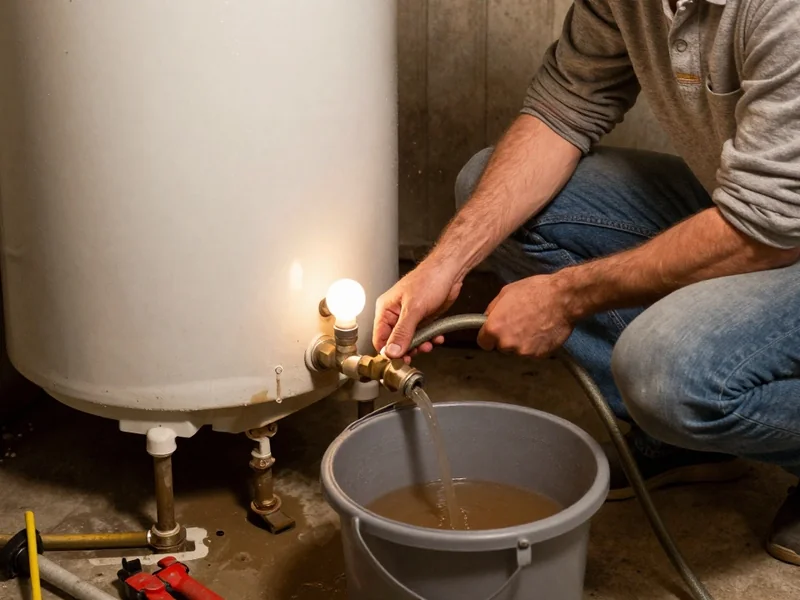
That little spigot at the base of your water heater — the drain valve — does more work than any other fitting on the tank, and in Ravenel, SC 29470, it fails more often than most homeowners expect. It drips. It seizes. It clogs with sediment until the annual flush becomes impossible. When any of that happens to the heater in a utility room, shed, or crawlspace, the fix is a drain valve replacement: a focused, affordable service that restores full flushing ability and stops the weep for good.
We replace failed plastic and corroded brass drain valves with full-port brass ball valves — the kind that actually open when you need them and seal tight when you don't. Most replacements in Ravenel take under two hours, and your heater never has to leave a utility room, shed, or crawlspace.
This page explains how to tell your drain valve is failing, exactly what our replacement involves, why Lowcountry water is so hard on these valves, and what a proper valve means for the remaining life of your heater.
Signs Your Drain Valve Is Failing in Ravenel
Rumbling, popping, or banging from the tank during heating cycles is the drain valve's indirect distress signal. Those sounds are steam bubbles fighting through a thick sediment blanket at the tank bottom — the same sediment that's clogging your valve. When homeowners in the Lowcountry describe their heater as 'making noise,' the drain valve is almost always part of the problem and part of the solution.
Water pooling at the base of the heater with no obvious source deserves a close look at the drain valve first. Slow valve weeps run down the tank's curve and collect at the bottom, mimicking a tank rupture. We've saved many Ravenel homeowners from an unnecessary full replacement by tracing a 'tank leak' back to a five-dollar valve failure — diagnosis before dollars, every time.
The classic symptom is the slow, endless drip from the valve spout — a few drops an hour that never quite stop, no matter how firmly you close it. That drip means the valve's internal seal has failed, usually from sediment grinding against it or mineral scale preventing a full close. It's also quietly wasting hot water around the clock, which shows up on the energy bill long before most homeowners connect the two.
A valve that won't open is just as failed as one that won't close. Factory plastic drain valves seize when sediment packs around the stem, and older brass gate valves freeze when mineral scale welds the gate in place. If your valve hasn't been opened in five-plus years — the norm, not the exception — assume it's seized until proven otherwise. Forcing it is how plastic valve bodies snap off at the tank threads, turning a service call into an emergency.
In Ravenel, wells and septic are common outside town, and iron plus sediment are typical of the local groundwater. — which is exactly why drain valves here fail the way they do. Sandy water grinds seals, mineral-heavy water scale-welds gates, and iron-rich water packs valves into concrete. When we diagnose your valve, we're reading those local signatures, not just looking at the drip.
How We Replace a Water Heater Drain Valve
Every replacement starts with a safe shutdown: the cold-water inlet closed, the fuel source off — gas control to PILOT/OFF or the electric breaker switched off — and the tank allowed to cool if it's been actively heating. Working on a pressurized, scalding-hot tank is how injuries happen; the fifteen minutes of patience here is non-negotiable, and it's built into every job we do.
With the tank safe, we drain it through the old valve if it still flows, or through the T&P relief valve line with a pump if the drain valve is fully clogged. Draining matters because the new valve threads into the tank at its lowest point — you can't cleanly swap a valve under forty gallons of water. We run the drain to a floor drain, utility sink, or outside, protecting floors along the way.
Removing the old valve is the surgical part. Plastic valves get carefully backed out; corroded brass valves may need controlled heat and the right wrench technique to break the thread seal without twisting the tank's welded spud. This is where DIY attempts go wrong — too much torque on a corroded valve can crack the tank fitting and total the heater. Our technicians have done this hundreds of times and know exactly how much persuasion a fitting can take.
The new valve is a full-port brass ball valve — not another plastic spigot, not a gate valve. Full-port means the opening is the full diameter of the pipe: sediment actually exits during a flush instead of packing against a restriction, and the quarter-turn ball mechanism seals positively every time. We wrap the threads with high-temperature sealant, torque to spec, and orient the handle for easy access.
Ravenel installations keep us adaptable: older frame homes, manufactured housing, and modest ranches, with heaters in utility rooms, sheds, and crawlspaces. We carry the hose routing, lighting, and compact tooling for a utility room, shed, or crawlspace jobs, and we protect floors and finishes along the whole drain path — because a service that fixes a valve but stains a carpet isn't a service done right.
Why Lowcountry Water Destroys Drain Valves in Ravenel
Neglect multiplies every factor above. The drain valve is the one component that needs periodic operation to survive — opening it yearly clears sediment before it packs solid. But industry-wide, maybe one heater in twenty gets flushed on schedule. In Ravenel, where the sediment load runs high, a never-flushed valve is essentially a countdown timer, and its failure usually announces the tank's own decline.
Water chemistry varies street by street here, which is why replacement is only half the service. When we install your new valve, we assess what your water is actually doing to the tank — sediment depth, scale severity, anode condition — and give you a flushing schedule matched to it. A valve replacement without that context is just a part swap; with it, it's a life-extension plan.
Sediment is the primary killer. Lowcountry water — whether municipal or well — carries fine sand, mineral scale, and rust particles that settle into a permanent bed at the tank's lowest point, exactly where the drain valve lives. Every heating cycle stirs that bed against the valve's seal and stem. Plastic valves get ground down from the inside; brass valves get packed until they can't move. It's a slow abrasion that no valve design fully escapes, but full-port brass survives it years longer.
Mineral scale is the second attacker, and it's worse on well water. Dissolved calcium, magnesium, and iron precipitate out as water heats, coating the valve's internal passages with rock-hard deposits. Gate-style valves are especially vulnerable — scale welds the gate to its seat until the handle snaps before the valve moves. Ball valves resist this far better because the wiping action of the ball shears deposits with each quarter-turn.
The local water report for Ravenel 29470: Wells and septic are common outside town, and iron plus sediment are typical of the local groundwater. Every valve we install here is chosen, and every flushing schedule we set is calibrated, against that reality — not against a generic national average.
What a New Full-Port Drain Valve Does for Your Heater
Future service gets cheaper and simpler. A working full-port valve means the next flush is a DIY-friendly ten-minute job instead of a service call, and it means we — or you — can actually drain the tank if a bigger repair ever comes up. The valve is infrastructure: unglamorous, and the thing everything else depends on when it matters.
It pairs naturally with an anode rod check. While the tank is drained for the valve swap, inspecting the anode rod — the sacrificial component that actually prevents tank rust — takes minutes and can reveal whether the tank deserves more investment. If the rod is gone and the tank is twelve years old, we'll tell you straight that the valve is a bridge to a planned replacement, not a resurrection.
The math favors the valve on any tank with real life left. A drain valve replacement costs a fraction of a new heater and, combined with annual flushing, routinely adds years to a mid-life tank. On a tank that's already rusting through at the base, we'll say so honestly and quote the replacement instead — we'd rather lose a valve job than sell you false hope.
The immediate win is a working flush. With a full-port ball valve, a proper tank flush takes minutes and actually moves sediment — you'll see the water run cloudy, then sandy, then clear. That single maintenance act, done yearly, removes the insulating sediment blanket that forces burners and elements to overwork. Less overwork means less steel fatigue, which means more years before the tank itself fails.
For a Ravenel heater sitting in a utility room, shed, or crawlspace, a working drain valve changes the maintenance math completely. The flush goes from an impossible service call to ten minutes with a garden hose — and in 29470's water conditions, that difference is what decides whether your tank reaches its full lifespan or dies of sediment at year nine.
Local Insight
Ravenel's iron-and-sediment well water treats drain valves the way Hollywood's does: dense orange sediment that immobilizes valves and masks tank condition. Rural homeowners here often run the same heater for fifteen-plus years without a single flush, then wonder why the valve disintegrates at the first touch. The honest guidance for Ravenel wells: annual flushing, full-port brass valve, and an anode check every few years. That trio costs little and routinely doubles the practical life of a tank in this water.
A final practical note for this area: never force a stuck valve. Every year we get calls where a homeowner snapped a plastic valve body trying to flush before guests arrived, converting a $200-range service into an emergency. If the valve won't turn with moderate hand pressure, stop — that's the valve telling you it needs replacement, not persuasion.