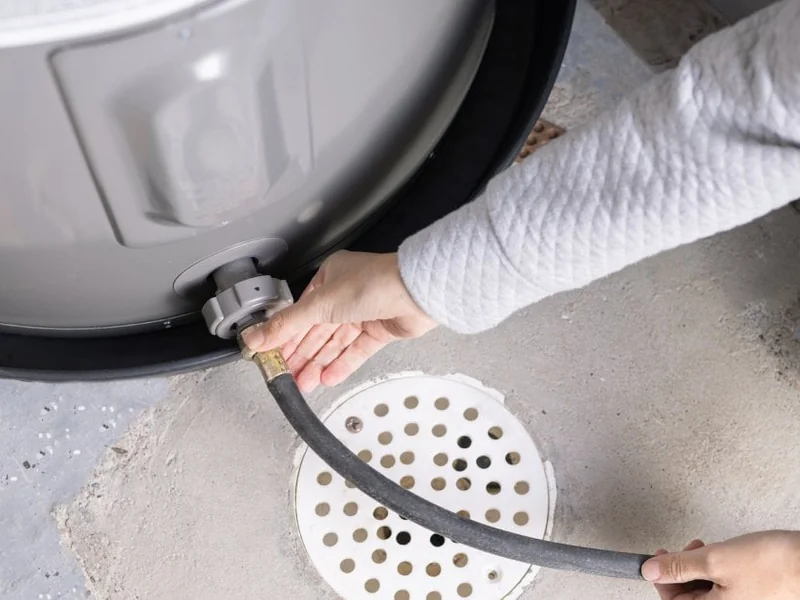
That little spigot at the base of your water heater — the drain valve — does more work than any other fitting on the tank, and in James Island, SC 29412, it fails more often than most homeowners expect. It drips. It seizes. It clogs with sediment until the annual flush becomes impossible. When any of that happens to the heater in a crawlspace beneath a ranch home or a garage, the fix is a drain valve replacement: a focused, affordable service that restores full flushing ability and stops the weep for good.
We replace failed plastic and corroded brass drain valves with full-port brass ball valves — the kind that actually open when you need them and seal tight when you don't. Most replacements in James Island take under two hours, and your heater never has to leave a crawlspace beneath a ranch home or a garage.
This page explains how to tell your drain valve is failing, exactly what our replacement involves, why Lowcountry water is so hard on these valves, and what a proper valve means for the remaining life of your heater.
Signs Your Drain Valve Is Failing in James Island
A valve that won't open is just as failed as one that won't close. Factory plastic drain valves seize when sediment packs around the stem, and older brass gate valves freeze when mineral scale welds the gate in place. If your valve hasn't been opened in five-plus years — the norm, not the exception — assume it's seized until proven otherwise. Forcing it is how plastic valve bodies snap off at the tank threads, turning a service call into an emergency.
Visible corrosion tells the story before the leak starts. Green-white crust on a brass valve, rust streaks running down from the valve body, or a plastic valve that's gone brittle and discolored from heat — all of it means the valve's remaining life is measured in months. In salt-air zones, we've seen exterior corrosion eat through valve handles while the tank itself was still sound.
Sediment-clogged valves announce themselves during a flush attempt: you open the valve and get a trickle, or nothing at all, while the tank clearly holds forty-plus gallons. That clog is the sediment bed — sand, mineral scale, and rust particles — packed against the valve opening. A clogged valve doesn't just prevent flushing; it traps the sediment that's actively shortening your tank's life.
Rumbling, popping, or banging from the tank during heating cycles is the drain valve's indirect distress signal. Those sounds are steam bubbles fighting through a thick sediment blanket at the tank bottom — the same sediment that's clogging your valve. When homeowners in the Lowcountry describe their heater as 'making noise,' the drain valve is almost always part of the problem and part of the solution.
In James Island, high water table and marsh proximity keep ground moisture constant, and the municipal supply carries moderate mineral content that builds sediment over the years. — which is exactly why drain valves here fail the way they do. Sandy water grinds seals, mineral-heavy water scale-welds gates, and iron-rich water packs valves into concrete. When we diagnose your valve, we're reading those local signatures, not just looking at the drip.
How We Replace a Water Heater Drain Valve
The new valve is a full-port brass ball valve — not another plastic spigot, not a gate valve. Full-port means the opening is the full diameter of the pipe: sediment actually exits during a flush instead of packing against a restriction, and the quarter-turn ball mechanism seals positively every time. We wrap the threads with high-temperature sealant, torque to spec, and orient the handle for easy access.
Refill and recommissioning close out the job. We open the cold-water inlet with a hot tap open elsewhere in the house to purge air, verify the tank fills completely before restoring heat — firing a dry electric element destroys it in seconds — then relight or re-energize and check every connection. The final step is a live test-flush through the new valve, proving it opens fully and seals drip-tight.
Before we leave, we show you the new valve and walk through a proper flush: how often for your water conditions, how long to run it, and what healthy versus concerning sediment looks like. Most James Island homeowners have never been shown this, and that five-minute lesson is what makes the new valve actually pay off over the heater's remaining life.
Every replacement starts with a safe shutdown: the cold-water inlet closed, the fuel source off — gas control to PILOT/OFF or the electric breaker switched off — and the tank allowed to cool if it's been actively heating. Working on a pressurized, scalding-hot tank is how injuries happen; the fifteen minutes of patience here is non-negotiable, and it's built into every job we do.
James Island installations keep us adaptable: 1960s–80s subdivisions of brick ranch and split-level homes on slabs and crawlspaces. Many original-footprint homes are on their second or third water heater by now. We carry the hose routing, lighting, and compact tooling for a crawlspace beneath a ranch home or a garage jobs, and we protect floors and finishes along the whole drain path — because a service that fixes a valve but stains a carpet isn't a service done right.
Why Lowcountry Water Destroys Drain Valves in James Island
Water chemistry varies street by street here, which is why replacement is only half the service. When we install your new valve, we assess what your water is actually doing to the tank — sediment depth, scale severity, anode condition — and give you a flushing schedule matched to it. A valve replacement without that context is just a part swap; with it, it's a life-extension plan.
Sediment is the primary killer. Lowcountry water — whether municipal or well — carries fine sand, mineral scale, and rust particles that settle into a permanent bed at the tank's lowest point, exactly where the drain valve lives. Every heating cycle stirs that bed against the valve's seal and stem. Plastic valves get ground down from the inside; brass valves get packed until they can't move. It's a slow abrasion that no valve design fully escapes, but full-port brass survives it years longer.
Mineral scale is the second attacker, and it's worse on well water. Dissolved calcium, magnesium, and iron precipitate out as water heats, coating the valve's internal passages with rock-hard deposits. Gate-style valves are especially vulnerable — scale welds the gate to its seat until the handle snaps before the valve moves. Ball valves resist this far better because the wiping action of the ball shears deposits with each quarter-turn.
Heat cycling fatigues cheap materials. The drain valve sits at the hottest, most sediment-buried point of the tank, cycling through expansion and contraction thousands of times a year. Factory plastic valves go brittle under that thermal punishment — we've removed plastic valves in the Lowcountry that crumbled like chalk. Brass handles the cycling; plastic merely endures it for a while.
The local water report for James Island 29412: High water table and marsh proximity keep ground moisture constant, and the municipal supply carries moderate mineral content that builds sediment over the years. Every valve we install here is chosen, and every flushing schedule we set is calibrated, against that reality — not against a generic national average.
What a New Full-Port Drain Valve Does for Your Heater
It pairs naturally with an anode rod check. While the tank is drained for the valve swap, inspecting the anode rod — the sacrificial component that actually prevents tank rust — takes minutes and can reveal whether the tank deserves more investment. If the rod is gone and the tank is twelve years old, we'll tell you straight that the valve is a bridge to a planned replacement, not a resurrection.
The math favors the valve on any tank with real life left. A drain valve replacement costs a fraction of a new heater and, combined with annual flushing, routinely adds years to a mid-life tank. On a tank that's already rusting through at the base, we'll say so honestly and quote the replacement instead — we'd rather lose a valve job than sell you false hope.
The immediate win is a working flush. With a full-port ball valve, a proper tank flush takes minutes and actually moves sediment — you'll see the water run cloudy, then sandy, then clear. That single maintenance act, done yearly, removes the insulating sediment blanket that forces burners and elements to overwork. Less overwork means less steel fatigue, which means more years before the tank itself fails.
Energy efficiency recovers measurably. A sediment-buried tank can take significantly longer to heat the same water, because heat has to punch through inches of mineral insulation first. Homeowners routinely notice faster hot-water recovery after a proper flush through a new valve — the heater isn't working less hard by magic, it's finally heating water instead of heating rock.
For a James Island heater sitting in a crawlspace beneath a ranch home or a garage, a working drain valve changes the maintenance math completely. The flush goes from an impossible service call to ten minutes with a garden hose — and in 29412's water conditions, that difference is what decides whether your tank reaches its full lifespan or dies of sediment at year nine.
Local Insight
James Island's second-and-third-generation heaters are where valve neglect compounds: each replacement tank inherited the last one's never-flushed habits, and the original plastic valve often got reused or replaced with the cheapest available. By the time we see these heaters at 10–12 years, the valve is a formality — packed solid, weeping, or both. The island's high water table keeps crawlspace installations damp, which rots valve exteriors while sediment kills the interiors. A full-port brass valve and a real flush is the reset these heaters needed years ago.
The broader Lowcountry lesson: drain valves are wear items here, not lifetime parts. Between sediment, minerals, heat cycling, and humidity, even good valves have a finite life — and the cheap factory plastic valves have a short one. Budget for a replacement every 5 to 8 years, flush annually, and the valve stops being a failure point and starts being what it was designed to be: a maintenance tool.