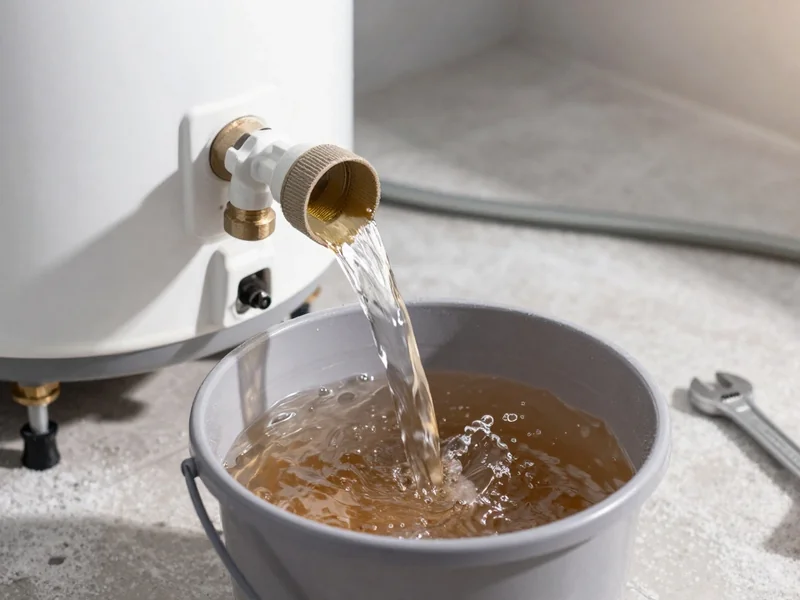
The drain valve is the small spigot at the base of your water heater — meant for flushing sediment and draining the tank. In Huger, that valve lives two very different lives: in the old forest properties, it is a decade-old plastic spigot in a camp shed, frozen shut by iron sediment and never touched; in new Cainhoy builds, it is a brand-new plastic spigot that will follow the exact same path. The water — aggressive forest-soil well water — does not care about the tank's age.
The failure pattern across the 29450 is consistent. Iron and tannin sediment pack the valve's narrow passage until flushing produces a trickle. The plastic handle strips or freezes. The body cracks with age and heat cycling, starting the slow drip. Or scale welds the valve shut entirely — and the tank can never be properly drained again.
We come out to Huger with full-port brass ball valves — for the old camp tanks and the new Cainhoy ones alike. The straight-through brass opening flows sediment freely, the metal body will not crack, and the lever works positively for decades. Every replacement includes a full tank flush, because a new valve deserves a clean tank behind it.
How Huger Well Water Defeats Valves, Old Tanks and New
Huger's well water attacks drain valves with the same chemistry that eats its anode rods: iron, tannins, sulfur, and low pH. The factory plastic valve — narrow passage, twist handle, minimal cost — fails in a sequence we see across the entire 29450, from forest sheds to new garages.
Clogging comes first, as iron sediment packs the narrow passage. In camp properties where the valve has sat untouched for a decade, freezing follows — scale cements the internals shut. Stripping happens when someone finally forces the frozen handle. Cracking finishes it: heat-cycled plastic in an unconditioned shed eventually splits, and the slow drip begins onto the shed floor.
Why brass wins across Huger's age spectrum
A full-port brass ball valve replaces the narrow twist passage with a straight-through opening nearly the pipe's full diameter — iron sediment that would pack plastic flows straight through. The metal body does not crack, the lever does not strip, and quarter-turn operation stays positive for decades. On an old camp tank, brass restores maintainability; on a new Cainhoy tank, it prevents the decline from ever starting. Same valve, same water, same correct specification.
- Iron and tannin sediment: pack plastic passages until they seal
- Decade-untouched valves: freeze solid in camp sheds and pump houses
- Heat cycling: cracks aging plastic bodies
- New builds: face the same aggressive water as the old camps
The Replacement Process: From Camp Sheds to New Garages
Replacing a drain valve means draining the tank — and in Huger, the job adapts to the installation: a forest pump house with a sediment-buried tank, or a Cainhoy garage with a young one. Our process handles both.
We shut off the energy and close the cold-water inlet, then open the old valve and drain through a hose, opening a hot tap elsewhere to break the vacuum. On old forest-property tanks, this is slow work — the valve trickles, sediment slurries out in pulses, and we work the port as needed. On young Cainhoy tanks, it is usually straightforward.
Swap and flush, matched to the tank
Once the tank is down, the old valve threads out, the port threads are cleaned and inspected, and the brass ball valve threads in with proper sealant. Then the flush — restorative on an old tank, with repeated fill-and-drain cycles until the water runs clear; routine on a young one. Either way, we flush fully through the new full-port valve to prove it flows. The tank refills, air purges, heat is restored, and the water is back the same visit.
After the Swap: Maintainability Restored — or Preserved
A new brass valve changes the trajectory of a Huger water heater regardless of its age. On an old forest-property tank, it restores the maintainability the tank lost a decade ago — annual flushing becomes a five-minute job, the sediment blanket stops growing, and the tank's remaining years are its best years. On a new Cainhoy tank, it prevents the decline entirely — the valve never clogs, flushing happens on schedule from year one, and the young tank lives its full designed life.
That five-minute annual flush is the real prize. A tank flushed yearly through a working brass valve sheds its iron sediment before it can insulate the tank bottom and accelerate corrosion. On Huger's aggressive well water, flushing frequency is the single biggest determinant of tank life — bigger than tank brand, bigger than installation quality. The brass valve does not just replace a part; it unlocks the maintenance that determines everything.
The valve that outlives the tank
Brass ball valves last decades — longer than any tank they serve. When an old Huger tank eventually ages out, its brass valve threads right into the replacement. It is a buy-once improvement, which suits both ends of Huger's spectrum: the camp owner who repairs rather than replaces, and the Cainhoy owner who buys quality once.
Valve Problem or Tank Problem? The Honest Huger Diagnosis
Not every drip at the tank base is the drain valve — and in Huger, where tank ages range from thirty years to three, we diagnose carefully. A drip can come from the drain valve, but also from the temperature-pressure relief valve, a weeping fitting, or the tank seam. Each points to a different verdict.
Replace the valve when: it drips from the valve body or spout, the handle is stripped or frozen, flow is restricted to a trickle, or the plastic shows cracks or heavy scale — and the tank itself is sound. On a healthy tank of any age, the brass upgrade plus a flush is the best value in water heater service.
Look deeper when: the tank shell shows base rust, flush water runs persistently rusty even after clearing, sediment will not clear, or moisture appears at the tank seam. Those point to tank failure, not valve failure — and on an old camp tank, we are candid that a new valve cannot change the outcome. We will show you the evidence and give you the straight call: valve and flush if the tank deserves it, replacement math if it does not.
Local Insight
Huger is a ZIP of contrasts: decades-old hunting camps and farmhouses tucked into the Francis Marion National Forest, and the fast-growing Cainhoy development rising along the Cooper River. The well water unites them — forest-soil groundwater loaded with iron, tannins, and sulfur that hits drain valves at full strength. The factory plastic valve, with its narrow twist passage, is a sediment trap by design, and Huger's water keeps it well supplied.
In the forest properties, the story is neglect compounded by time. Camp sheds and pump houses hold water heaters that have never been flushed — the valve clogged early, nobody fought it open, and a decade of iron sediment now buries the tank bottom. The valves we remove from these properties are often the most defeated we see: frozen solid, handles stripped, bodies cracked. In Cainhoy, the story is the same valve at the beginning of the same decline — new plastic, same narrow passage, same aggressive water, same eventual outcome.
That split makes the brass upgrade valuable at both ends of Huger's age spectrum. On an old camp tank, brass plus a restorative flush can buy real remaining years — and the valve will outlive the tank, threading into its replacement. On a new Cainhoy tank, brass installed early prevents the entire decline: the valve never clogs, the tank gets flushed on schedule, and the young tank lives its full designed life. One part, two timelines, same correct answer.