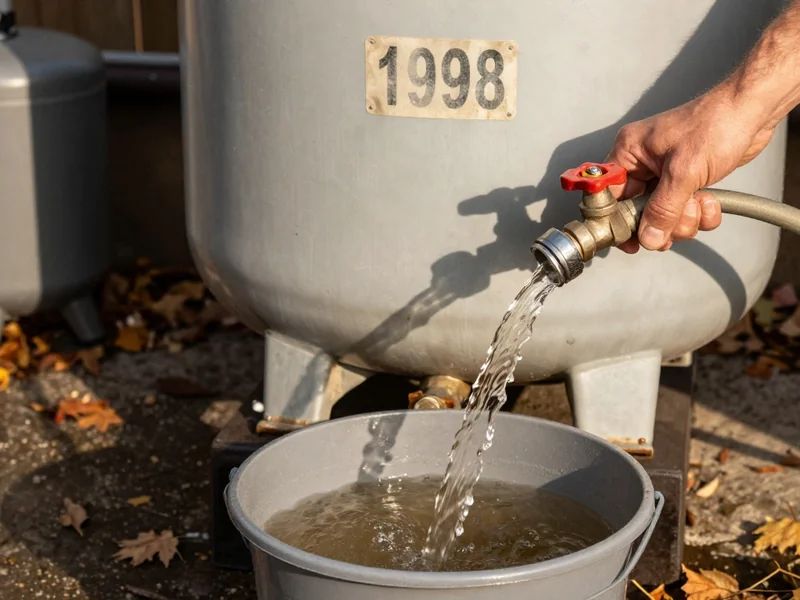
The drain valve is the small spigot at the base of your water heater — the one the manual says to use for annual flushing, and the one almost nobody in West Ashley has ever touched. On the 29407's aging tanks, that neglect has a physical form: a factory plastic valve, frozen shut by a decade of mineral scale, guarding a tank bottom buried in sediment it was supposed to prevent.
The failure pattern in West Ashley's 1960s-through-1980s subdivisions is consistent. The plastic valve's narrow passage clogs with sediment early. The handle strips or freezes when someone finally tries it. The body cracks with age and heat cycling, starting the slow drip onto the garage floor. And because the valve never worked, the tank never got flushed — which is precisely why these tanks die young.
We replace drain valves across West Ashley with full-port brass ball valves — the upgrade that breaks the cycle. The straight-through brass opening flows sediment freely, the metal body will not crack, and the lever works positively for years. Every replacement includes a full restorative flush, because on a long-neglected 29407 tank, that flush is the most valuable part of the visit.
The Vicious Circle: How Dead Valves Kill West Ashley Tanks
On West Ashley's aging tanks, the drain valve's failure is rarely sudden — it is a decade-long decline. The factory plastic valve starts life with a narrow, restrictive passage. Within a few years, sediment begins packing that passage. The first time anyone tries to flush — usually years late — the flow is weak. The handle gets forced, and the plastic stem strips or the valve freezes. From that point on, the tank is unflushable, and the sediment that the valve was meant to manage accumulates without check.
The end stages are familiar across the 29407: permanent clogging, where the passage is packed solid with mineral sediment. Stripped handles that spin uselessly. Cracked bodies from years of heat cycling in Lowcountry garages, weeping a constant drip. And frozen valves welded shut by scale — the most common condition we find, and the one that condemned the tank to a decade without flushing.
Why brass breaks the cycle
A full-port brass ball valve attacks every stage of this decline. The straight-through opening — nearly the pipe's full diameter — flows sediment that would pack a plastic valve, so flushing actually works. The brass body does not crack with age or heat cycling. The lever handle does not strip; quarter-turn operation is positive and permanent. Install brass on a 29407 tank and the valve stops being the reason the tank never gets flushed.
- Narrow plastic passage: packs with sediment within the first years
- Stripped/frozen handles: make the valve inoperable, ending all flushing
- Unflushed decade: buries the tank bottom in efficiency-killing sediment
- Cracked bodies: drip constantly onto garage floors
The Replacement Process: Draining a Decade of Neglect
Replacing a drain valve means draining the tank — and on a West Ashley tank that has never been flushed, the drain-down is the main event. Our process accounts for a decade of sediment.
We shut off the energy and close the cold-water inlet, then open the old valve and drain through a hose, opening a hot tap elsewhere to break the vacuum. On long-neglected 29407 tanks, this is slow: the old valve trickles, sediment slurries out in pulses, and patience matters more than force. We work the port as needed to keep things moving — clearing the blockage at the valve opening so the tank can actually empty.
The restorative flush
Once the tank is down, the old valve threads out, the port is cleaned and inspected, and the brass ball valve threads in with proper sealant. Then comes the part that matters most on these tanks: a thorough flush through the new full-port valve — repeated fill-and-drain cycles until the water runs clear. On a twelve-year-neglected tank, this takes time, and it is transformative. We have seen flush water go from chocolate milk to clear, and heating performance recover measurably. Then the tank refills, air purges, heat is restored, and the new valve is proven flowing before we leave.
After the Swap: The Five-Minute Flush That Extends Tank Life
The new brass valve's real value on a West Ashley tank is not the part — it is the restored ability to flush. With the factory plastic valve frozen, flushing was impossible, and the tank paid for it every year in efficiency and lifespan. With a full-port brass ball valve, flushing becomes a five-minute annual job: attach the hose, open the lever, watch the sediment run out, close the lever.
That annual five minutes is what determines whether a 29407 tank reaches fifteen years or dies at eleven. Sediment flushed yearly never becomes the insulating blanket that overheats the tank bottom and accelerates corrosion. The heating system runs as designed. The tank lives the life it was built for — instead of the shortened one its frozen valve imposed.
A maintenance plan for aging tanks
For West Ashley's 10-to-15-year-old tanks, we recommend the brass valve plus annual flushing as the standard care plan. It will not make a tank immortal — nothing does — but it removes the single biggest accelerant of premature failure in this suburb. And when the tank eventually does age out, the brass valve has a second life: it threads right into the replacement tank, continuing to serve.
Valve Problem or Tank Problem? The Honest West Ashley Diagnosis
On an older 29407 tank, we diagnose carefully before recommending a valve — because a new valve on a dying tank is money misspent. A drip at the tank base can come from the drain valve, but it can also come from the temperature-pressure relief valve, a weeping fitting, or the tank seam itself. Each points to a different verdict.
Replace the valve when: it drips from the valve body or spout, the handle is stripped or frozen, flow is restricted to a trickle, or the plastic shows cracks or heavy scale — and the tank itself is sound. On a healthy mid-life tank, the brass upgrade plus a restorative flush is the best value in water heater service.
Look deeper when: the tank shell shows base rust, flush water runs persistently rusty even after clearing, sediment will not clear, or moisture appears at the tank seam. Those point to tank failure, not valve failure. We will show you the evidence — the old valve, the flush water, the shell — and give you the straight call: valve and flush if the tank deserves it, replacement math if it does not.
Local Insight
The 29407 is West Ashley — Charleston's big mid-century suburb, all brick ranches and split-levels from the 1960s through the 1980s, and a water heater fleet to match. A huge share of 29407 tanks are second-generation units installed in the 2000s, now 10 to 18 years old — the exact age where the drain valve's condition determines whether the tank gets maintained or merely runs until it fails. And on most of these tanks, the factory plastic valve failed years ago.
The mechanism is a vicious circle, and West Ashley is where we see it most clearly. The plastic valve clogs or seizes early in the tank's life. Because the valve does not work, nobody flushes. Because nobody flushes, sediment accumulates into a deep insulating blanket on the tank bottom — forcing the heating system to work harder, accelerating bottom corrosion, and shortening the tank's life. Because the tank is dying faster, the valve's failure matters more. Round and round, for a decade.
Breaking that circle is what a brass ball valve does. It is not just a part swap; it is restoring the tank's maintainability. A 29407 tank at year eleven with a working brass valve and a fresh flush has a genuine shot at year fifteen. The same tank with a frozen plastic valve is simply running out its remaining time. In a suburb where tanks are aging in unison, that difference — multiplied across thousands of homes — is the story of West Ashley water heaters.