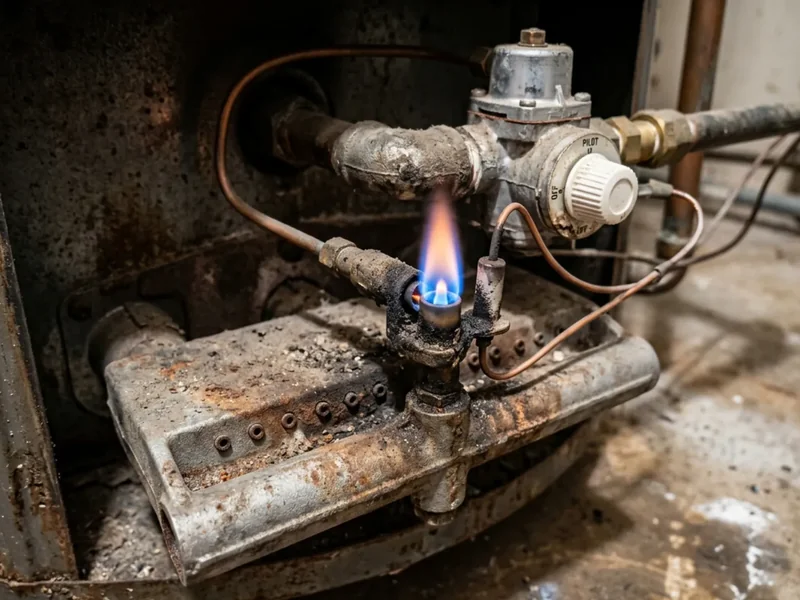
Few household frustrations match the dying pilot light — you relight it, enjoy hot water for a day, and wake up to a cold shower. Then you relight it again. And again. The good news: pilot problems have a short list of usual causes — a worn thermocouple, a clogged pilot orifice, drafts, gas supply hiccups — and most are inexpensive to fix once properly diagnosed. The critical skill is knowing which situation you're in: a simple relight you can safely do yourself, a repair that needs a technician's diagnosis, or the smell of gas that means you should leave the house instead of touching anything. This guide covers all three for Goose Creek homeowners: how the pilot system works, why pilots go out, the safe relighting procedure step by step, how technicians diagnose the real cause, and the fall seasonal pattern that drives most local pilot calls.
How the Pilot Light System Works
On a gas water heater with a standing pilot, a tiny flame burns continuously at the base of the unit. A sensor called the thermocouple sits in that flame; heated, it generates a small electrical current that holds the gas valve open. If the flame goes out, the thermocouple cools, the current stops, and the valve snaps shut — a safety design that prevents unburned gas from accumulating. Modern units may use electronic ignition instead, but plenty of Goose Creek homes still run standing-pilot heaters.
Why Pilot Lights Go Out
- Failed thermocouple. The #1 cause. Thermocouples wear out every few years; when they can't generate enough current, the valve won't stay open and the pilot dies seconds after you release the button.
- Dirty or clogged pilot orifice. The pilot burner opening is tiny, and Lowcountry garages are dusty — spider webs, lint, and dust clog it, producing a weak yellow flame that lifts off and dies.
- Drafts. Heaters in garages with doors opening and closing, or near attic vents, get gusts that blow the pilot out. Missing or damaged burner compartment doors make this worse.
- Gas supply issues. A partially closed gas valve, a kinked flex line, or utility work in the area can starve the pilot.
- Faulty gas control valve. If a new thermocouple and clean orifice don't fix it, the valve's internal magnet assembly may be failing.
- Thermal cutoff tripped. Some units have a one-time thermal fuse that kills the pilot circuit if the combustion chamber overheated — often from lint blockage or a failing vent.
Relighting Safely: The Right Way
If your heater has relighting instructions on its label, follow those exactly. The general safe procedure:
- Turn the gas control knob to OFF and wait a full five minutes for any gas to dissipate.
- Turn the knob to PILOT, press and hold it down.
- Light the pilot with the built-in igniter button (or a long lighter through the access panel on older units).
- Keep holding the knob down for 30–60 seconds after the flame catches, then release slowly. If it stays lit, turn the knob to ON.
- If it won't stay lit after two or three attempts, stop — something needs repair, not more relighting.
Never relight if you smell gas. If there's any rotten-egg odor, leave the house and call the gas utility's emergency line from outside. And if the pilot goes out repeatedly, that's a symptom to diagnose — not a ritual to repeat weekly. Our water heater repair technicians handle pilot problems as one of the most common gas-heater service calls in Goose Creek.
Diagnosing the Real Cause
A technician works through pilot problems methodically:
- Flame inspection. A healthy pilot flame is mostly blue and envelops the thermocouple tip. A weak, yellow, or lifting flame means a dirty orifice or gas pressure issue.
- Thermocouple test. A multimeter reading of the thermocouple's millivolt output tells immediately whether it's generating enough current.
- Draft check. Looking for missing compartment doors, nearby vents, or garage-door drafts.
- Valve test. If thermocouple and orifice check out, the gas control valve is tested — see our gas control valve guide for the full picture.
Seasonal Pattern: Fall Pilot Problems
Pilot issues spike in fall across the Lowcountry. The heater sat through a low-demand summer, dust and webs accumulated in the burner compartment, and the first cool stretch brings heavier cycling that exposes a marginal pilot. A fall burner-compartment cleaning — vacuuming dust, checking the orifice, confirming the compartment door seals — prevents most of these calls. If your heater is in a garage, keeping the area around it clear of stored items also reduces both dust intake and draft problems.
When the Pilot Problem Means a New Heater
A single thermocouple replacement on a mid-life heater is routine maintenance. But if you're relighting monthly on a 12+ year-old tank, or if pilot problems come bundled with rust, leaks, or poor recovery, the heater is telling you it's done. At that point, each repair dollar is better saved toward replacement.
The Post-Storm Pilot Outage Pattern
Goose Creek sees a predictable spike in pilot problems after major summer storms — and the causes are distinctively local. Power flickers and outages let the burner compartment cool; when utility crews restore gas service after storm-related shutoffs, air in the lines can make relighting tricky for a day. More commonly, high winds drive rain and debris into garage installations, and rapid pressure changes around flue terminations snuff marginal pilots that were barely hanging on. After any significant storm, check your gas heater: is the pilot lit? Is the burner compartment dry? Is the vent termination outside clear of debris? If the pilot is out and relights normally with a strong blue flame, it was likely the storm's doing — but keep an eye on it for a week. If it goes out again, the storm exposed a weakness (weak thermocouple, partially clogged orifice) that was already developing. And if there was any flooding around the unit, don't relight at all — submerged gas controls must be replaced, not restarted. Call (833) 713-2101 for a post-storm check.
Coastal Humidity and Pilot Lights in Goose Creek
Goose Creek's Lowcountry climate is quietly hard on pilot assemblies. Humid, salt-tinged air accelerates corrosion on thermocouples and pilot tubing, especially for heaters installed in garages or outdoor utility closets where they breathe unconditioned air year-round. A thermocouple that would last a decade inland can weaken years sooner here, producing the classic symptom: a pilot that lights fine but will not stay lit once you release the button.
South Carolina brings another classic culprit — spiders. Tiny webs inside the pilot orifice are one of the most common causes of weak or yellow pilot flames we see each fall, when spiders seek warmth as nights cool. Drafts from garage doors and attic vents can also lift the flame off the thermocouple. If relighting fails twice, stop and call (833) 713-2101 rather than forcing it: repeated attempts with a compromised assembly waste gas and risk delayed ignition. And remember — any pilot problem after flooding means the gas controls need replacement, not another relight attempt.