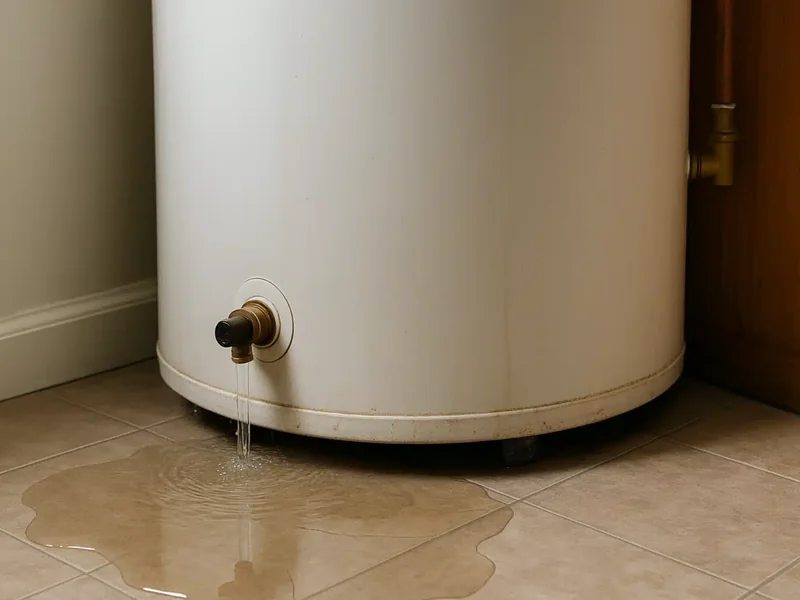
When a water heater leaks in a Goose Creek home, the homeowner mops up and calls for repair. When one leaks in a business, the math changes completely. A restaurant on Red Bank Road that loses hot water on a Friday night is not just facing a plumbing bill — it is facing a dining room it may not legally be able to operate, staff standing around on the clock, and a weekend of lost revenue. An office building with a flooded utility room is dealing with damaged flooring, potential mold, and tenant complaints. A church discovering a failed heater the morning of a big fellowship dinner has hours, not days, to solve the problem. Commercial water heaters are bigger, work harder, answer to stricter codes, and fail at the worst possible moments — which is why businesses need a different playbook than homeowners. This guide covers how commercial leaks differ, the warning signs your staff should know, the South Carolina code requirements that apply, how to keep downtime to a minimum when failure strikes, and what a proper commercial maintenance plan looks like.
Why Commercial Leaks Are a Different Animal
Start with the workload. A residential water heater serves one household and might run a few heating cycles a day. A restaurant water heater can see the hot-water demand of thirty households — dishwashers running constantly, hand sinks in use all shift, mop sinks, prep sinks — and cycle dozens of times daily. More cycles mean more thermal expansion and contraction, faster anode rod consumption, faster sediment accumulation, and faster wear on every gasket, valve, and seam. Commercial units are built heavier to take it, but they still age on a compressed timeline: a commercial tank that would last 10–12 years in a home might be tired at 6–8 in a busy kitchen. Then there is the installation reality. Commercial heaters often live in cramped mechanical rooms, above occupied spaces, or in locations where a leak does maximum damage — a tank on the second floor of an office building leaking into the ceiling below is a five-figure problem before anyone touches the heater itself. And unlike a homeowner who can take a cold shower for a day, a business often cannot operate without hot water at all, which turns every failure into an emergency by definition.
Where Goose Creek Businesses Get Hit
Walk the commercial corridors of Goose Creek and you will see every scenario:
- Restaurants along Red Bank Road and Highway 52. The highest-stakes category. Constant hot-water demand for dishwashing and sanitation, grease-laden environments that corrode nearby piping, and health-code rules that make hot water a legal requirement, not a comfort. A failed heater here is a closure risk.
- Offices and professional buildings. Usually lower demand — restrooms and break rooms — but leaks cause disproportionate property damage because heaters sit near finished spaces, IT closets, and stored records. Tenants notice, and landlords get the call.
- Churches and fellowship halls. Intermittent but intense use: quiet all week, then a full kitchen and restrooms for Wednesday suppers, weddings, and funerals. Heaters that sit idle between events corrode quietly, then get hammered — a pattern that hides problems until the big day.
- Daycares and schools. Steady demand for handwashing, cleaning, and laundry, plus the strictest safety expectations. Scalding protection (tempering valves) matters as much as leak prevention, and any water damage near children's spaces triggers immediate remediation.
- Salons, laundromats, and car washes. High-volume, high-temperature demand that ages heaters fast. Laundromats in particular run commercial heaters near-continuously — maintenance intervals here are the shortest of all.
- Medical and dental offices. Hot water for sterilization-adjacent cleaning and hand hygiene, with zero tolerance for downtime during patient hours.
Each of these has a different demand profile, but they share one truth: the cost of the failure is always larger than the cost of the maintenance that would have prevented it.
Warning Signs Your Staff Should Know
Most commercial leaks are discovered by employees, not owners — which means the staff on shift needs to know what to look for and what to do. Post this list in the mechanical room or manager's office:
- Water on the floor around the heater. Any moisture that was not there yesterday is worth reporting immediately, not "keeping an eye on."
- Rust streaks or mineral trails on the tank. The same visual clues as residential leaks, but on bigger tanks they are easier to miss in a cluttered mechanical room.
- Hot water running out or running cooler. In a restaurant, the dish crew notices this first. Do not let staff "work around it" for days — report it.
- Unusual noises. Rumbling, banging, or hissing from the mechanical room. Sediment sounds the same on a 100-gallon commercial tank as a 50-gallon residential one, just louder.
- The TPR discharge pipe dripping. That pipe should be dry during normal operation. Dripping means pressure or temperature problems that need diagnosis.
- Higher gas or electric bills. A commercial heater working overtime against sediment or a failing element shows up fast on utility bills.
Just as important: every shift supervisor should know where the water shutoff, gas shutoff, and breaker for the heater are. In an active leak, the first five minutes — shutting off water and energy before the flooding spreads — matter more than anything a technician does later. Label the valves. It costs nothing.
Code Considerations in South Carolina
Commercial water heater work in Goose Creek falls under the South Carolina-adopted International Plumbing Code, and the requirements are stricter than residential. The ones that matter most for leak prevention and liability:
- TPR valve discharge. The temperature-and-pressure relief valve must discharge through an approved pipe that terminates in a safe, visible location — not capped, not reduced, not discharging where it can scald someone or flood hidden spaces. A surprising number of older commercial installations fail this.
- Drain pans. Code requires a drain pan under heaters where a leak could cause damage — which describes nearly every commercial installation. The pan must drain to an approved location. We see plenty of commercial tanks sitting directly on concrete with no pan; the first leak becomes a flood instead of a contained drip.
- Thermal expansion control. Closed commercial plumbing systems need expansion tanks or equivalent control. Without it, pressure spikes stress every joint and the tank itself, accelerating leaks.
- Combustion air and venting. Gas commercial units need proper venting and adequate combustion air. Corroded venting in a humid Lowcountry mechanical room is a carbon-monoxide risk, not just an efficiency issue.
- Permits. Water heater replacement in commercial buildings in Berkeley County generally requires a permit and inspection. Skipping it can void insurance coverage if a failure later causes damage.
- Food-service hot water rules. South Carolina DHEC's food regulations require specific hot water temperatures — generally 100°F minimum at handwashing sinks and 110°F or higher for warewashing, with sanitizing rinse temperatures higher still. If your heater cannot maintain these, the kitchen cannot legally operate. This is the rule that turns a plumbing problem into a closure.
If your building's heater predates current code or was installed without permits, a proactive code-compliance review is cheap insurance. It is far better to add a drain pan and correct a TPR discharge on a calm Tuesday than to explain to an inspector — or an insurance adjuster — why neither existed after a flood.
Minimizing Downtime When Failure Strikes
Even well-maintained heaters eventually fail. The businesses that survive it calmly are the ones that planned for it:
- Have a 24/7 service number posted. Not in the owner's phone — on the wall in the mechanical room and in the manager's office. When the night-shift dishwasher finds water spreading across the floor at 10 p.m., "call (833) 713-2101" needs to be visible, not remembered.
- Know your shutoffs in advance. Water, gas, and power — labeled, accessible, and known to every supervisor. The difference between a contained leak and a flooded building is often just how fast someone finds the valve.
- Consider redundancy. Businesses that cannot tolerate any hot-water interruption — restaurants, laundromats, daycares — should seriously consider manifolded multiple smaller units instead of one giant tank. One unit fails, the others carry the load while repairs happen. It costs more upfront and saves enormously the first time it matters.
- Replace proactively at end of life. A commercial tank at year 8 of an expected 8-year life is not "still working fine" — it is a scheduled replacement waiting for a calendar slot. Swapping it during a planned slow period costs a fraction of an emergency replacement during peak season, and you choose the timing instead of the tank choosing it for you.
- Ask about temporary solutions. For critical operations, portable temporary water heaters can bridge a day or two while a replacement is sourced and installed. Knowing this option exists before you need it changes the conversation from panic to planning.
- Schedule major work off-hours. Replacement and repiping can often happen overnight or on closed days. A good commercial plumber works around your schedule, not the other way around.
What a Real Commercial Maintenance Plan Includes
| Quarterly | Visual inspection: leaks, corrosion, venting, clearances; TPR valve test; check drain pan and discharge routing |
| Twice yearly | Sediment flush (commercial demand = faster buildup); expansion tank pressure check; anode rod inspection |
| Annually | Full combustion and venting inspection (gas); tempering/mixing valve verification; code-compliance review; thermostat calibration |
| End of life | Proactive replacement planning — budget and schedule before failure, not after |
The intervals are deliberately shorter than residential — that is the whole point. A restaurant heater accumulates in six months what a home heater accumulates in a year or more. Documentation matters too: keep a log of every inspection, flush, and repair. Maintenance records support manufacturer warranty claims, satisfy health inspectors who ask about hot-water reliability, and give your insurance carrier exactly what they want to see if a failure ever causes a claim. We service commercial accounts across Goose Creek, Hanahan, North Charleston, and Moncks Corner on exactly this kind of schedule — the businesses on plans are the ones we almost never see on emergency calls, and that is not a coincidence.
The True Cost of Ignoring It
Add it up honestly and prevention always wins. A commercial tank replacement, planned and scheduled, is a known, budgetable expense. An emergency replacement is that expense plus after-hours labor, plus the revenue lost while closed or impaired, plus water damage remediation — dried drywall, replaced flooring, mold treatment in a Lowcountry climate where mold colonizes damp materials within days — plus potential health-department complications for food service, plus the reputational cost if customers see "closed for plumbing emergency" on the door. For offices, add tenant disruption and potential lease disputes. One prevented emergency typically funds years of a maintenance plan. Business owners insure against fires they will probably never have; maintaining the water heater is insuring against the flood that, statistically, far more buildings will see. Call (833) 713-2101 and put the plan in place before the tank makes the decision for you.