James Island sits just south of downtown Charleston across the marsh, a suburban island of oak-lined streets where 1950s ranch homes neighbor new infill construction along the Folly Road corridor. McLeod Plantation's historic grounds, the sprawling James Island County Park, and tidal creek views give the island a character all its own, minutes from both downtown and Folly Beach.
The island's water heaters tell two stories. Mid-century homes run tanks installed decades ago, now aging out together with sediment-heavy bottoms and depleted anode rods. Newer infill brings modern high-efficiency units with their own maintenance needs. Add a high water table and regular flooding on low-lying streets, and James Island service calls demand both lifecycle knowledge and flood awareness. We bring both.
Water Heater Challenges in James Island, SC 29412
James Island water heaters face a split personality: aging equipment in a wet environment. The island's mid-century housing stock is hitting replacement age just as flood exposure keeps testing every low installation.
Aging tanks across the island
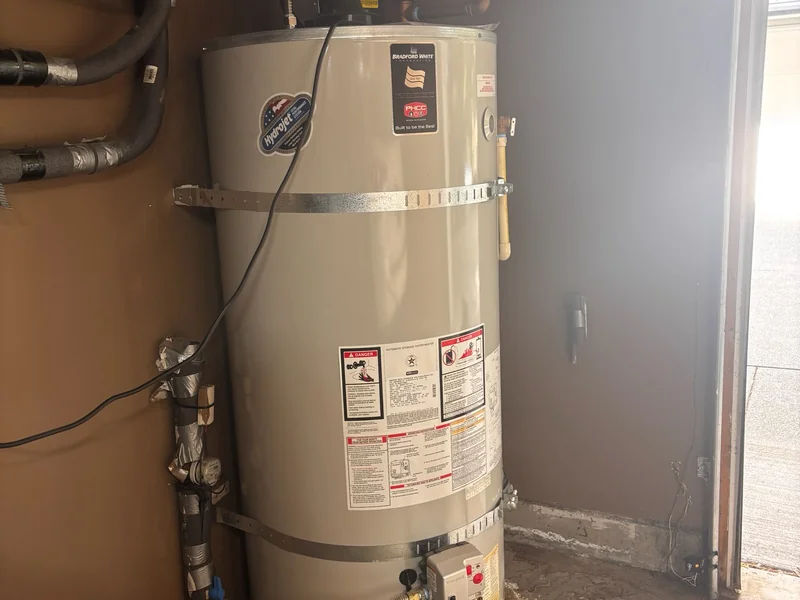
The 1950s-1970s ranch homes that define much of James Island received their water heaters during construction booms decades ago, and a large share of those tanks are now 15 to 30 years old. The failure pattern is textbook: anode rods depleted a decade back, sediment built into thick bottom layers, rumbling during heating cycles, shrinking hot-water capacity, then a base leak or fitting failure. Sediment is the accelerant here. Even on soft municipal water, decades without flushing leave inches of mineral sludge and rust scale that insulate the burner or element, overheat the tank bottom, and burn out electric lower elements years early.
Water, water everywhere
James Island's high water table and low-lying streets flood regularly, from king tides to tropical downpours to overwhelmed drainage on Folly Road. Crawl-space installations sit in the damp zone year-round, hiding weeping valves and slow drips for months while subfloor rots. Ground-level garages and utility areas take standing water in heavy events. A submerged electric heater is a total safety loss requiring replacement; gas units need professional inspection before relighting. Even without submersion, chronic dampness corrodes jackets, fittings, and electrical connections faster than in drier suburbs.
Closed systems and missing protections
Much of the island's municipal supply runs through pressure-reducing valves, creating closed plumbing systems where heated water needs expansion control. Missing or waterlogged expansion tanks drive our TPR-drip calls. Original installations commonly lack drain pans, so leaks reach flooring and drywall before discovery. Factory drain valves, brittle with age, crack when finally used. Infill construction adds modern tankless units that need annual descaling many owners skip, leading to error codes and efficiency loss.
- Decades-old tanks aging out across mid-century neighborhoods.
- High water table and flooding threatening low installations.
- Closed-system pressure causing chronic TPR weeping.
- Skipped tankless maintenance in newer infill homes.
James Island rewards planned, flood-aware replacement: modern equipment with proper protections, installed before the old tank fails on its own schedule.
Our Water Heater Services in James Island, SC 29412
Our twelve services cover the island's full range. Most island calls begin with water heater leak detection, which pinpoints whether moisture comes from a fitting, a valve, or a failed shell before we recommend anything, a step that matters enormously where water travels through damp crawl spaces. Tank water heater leak repair fixes serviceable issues on conventional island units, and emergency water heater leak repair handles urgent failures: burst lines, flooded garages, and actively leaking tanks.
Component work extends the life of tanks worth saving. Anode rod replacement protects mid-life tanks on chloraminated municipal water. Heating element replacement and thermostat replacement bring electric units back: no more short hot-water supply or wild temperature swings from sediment-burdened island tanks. We restore reliable burner operation with gas control valve replacement, and we upgrade brittle factory drain valves to full-port brass for effective flushing.
Safety and modernization suit the island. Relief valves stay functional through TPR valve replacement, combined with expansion-tank service since closed-system pressure drives the island's chronic weeping. Water heater pan installation with drains or alarms is the smart standard for island garages, laundry rooms, and any installation near finished space. Tankless water heater leak repair serves the high-efficiency units in infill and renovated homes, with descaling and condensate service. And water heater replacement delivers a right-sized modern tank or tankless system with expansion control, a protective pan, and venting up to current code.
Local Water Quality and Your Water Heater on James Island
James Island receives Charleston Water System retail service: treated Edisto River surface water from the Hanahan Water Treatment Plant. It is consistent municipal water, generally soft to moderately hard and disinfected with chloramine. For water heaters, this is a forgiving supply; scale builds slowly and anode rods last near rated life.
Island water-quality issues come from age and environment, not the utility. Decades of water sitting in aging tanks leave sediment layers, rust scale from old connections, and long-depleted anode rods. In flood-prone installations, past water exposure accelerates jacket and fitting corrosion. Long hot-water runs in sprawling ranch floor plans mean first-draw discoloration until stagnant water clears. And in the island's low-lying pockets, damp crawl-space air keeps everything corroding faster than the water chemistry alone would suggest.
The island maintenance list: flush annually, check anode rods on schedule, verify expansion-tank charge yearly, and inspect low installations for flood and corrosion damage. Hot water problems on James Island? Call (833) 713-2101 and we will find the real cause.
| City | James Island, SC |
| ZIP Code | 29412 |
| Housing | Mix of 1950s-1970s ranch homes, newer infill construction, and townhome communities. Water heaters typically sit in garages, laundry rooms, or vented crawl spaces, with many original-era tanks now well past prime. |
| Water | Charleston Water System retail service. Treated Edisto River surface water from the Hanahan plant, generally soft to moderately hard with chloramine disinfection. Consistent municipal quality. |
| Landmarks | McLeod Plantation Historic Site, James Island County Park, the Folly Road commercial corridor, and marsh views along the island's creeks. |