Saint Stephen is a small town with deep roots — a former mill community on the edge of Lake Moultrie, where the housing stock runs older than almost anywhere else in our service area. Water heaters here are often the oldest we see: original-era tanks in mid-century homes, long-neglected rods, installations that have not been touched in fifteen years. And the water — mineral-heavy lake-area groundwater, mostly from private wells — is not kind to them.
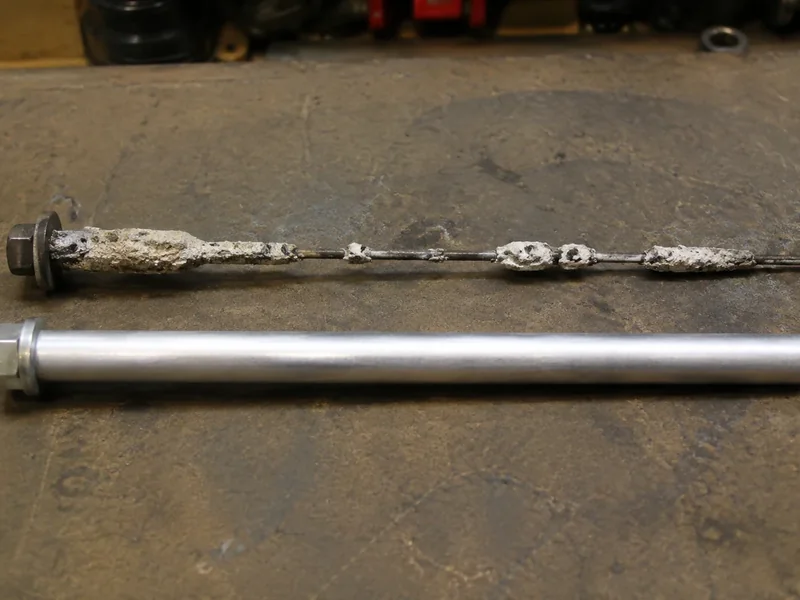
The anode rod is the sacrificial metal rod inside your tank that corrodes so the steel shell does not. On Saint Stephen's well water, a standard magnesium rod is often gone in two to three years. In a town where tanks routinely go a decade without service, that means most are running unprotected — with corrosion working on the tank itself the entire time.
We come out to Saint Stephen regularly, and we arrive prepared: segmented flexible rods for tight old-house installations, tooling for seized fittings, and the honest verdict these old tanks deserve. Because here, the rod question is almost always really the tank question.
Saint Stephen's Aging Tanks: Verdict First, Rod Second
Saint Stephen's tanks are old — often the oldest we service — and that age changes the anode rod conversation. A fifteen-year-old tank with an original rod has been running unprotected for over a decade. The question is no longer just when to replace the rod; it is whether the tank underneath it is still worth the investment.
The water does not help. Lake-area groundwater here is mineral-heavy and often slightly acidic, dissolving standard magnesium rods in two to three years. On town water — where it reaches — the pace is gentler, three to four years. Either way, the rods in Saint Stephen's aging tanks died many years ago, and every year since has been unprotected corrosion on shells and linings that were already middle-aged.
The verdict-first approach
In Saint Stephen, we lead with the tank verdict, not the rod. Before recommending anything, we inspect the shell for base rust, check the fittings, assess the flush water, and read the sediment. If the tank is sound — and some of these old tanks are remarkably sound — a fresh zinc-aluminum rod plus a full flush can still buy real years. If it is compromised, we say so plainly and discuss replacement math instead of selling a rod into a dying tank. In a town of working budgets, that honesty matters.
- Oldest housing stock: tanks often 12–20+ years, original rods
- Lake-area well water: dissolves magnesium rods in 2–3 years
- Long neglect: decade-plus unprotected operation is common
- Rural distance: failures become expensive emergencies
Sulfur Odor in Saint Stephen's Old Tanks: Honest Diagnosis
The sulfur smell is a Saint Stephen staple — hot water that reeks of rotten eggs while the cold runs clean, in tanks nobody has serviced in years. Sulfate-reducing bacteria colonize the warm tank and react with the long-depleted magnesium anode, producing hydrogen sulfide gas. In the town's older homes, where tanks sit in damp crawl spaces and utility rooms, the problem is especially entrenched.
A fresh zinc-aluminum rod plus a full tank flush resolves this for most Saint Stephen homes within a week or two of normal use — provided the tank itself is still sound. The alloy changes the tank chemistry the bacteria feed on, and the flush clears the bacterial film and years of sediment they shelter in.
When odor means the tank is done
In Saint Stephen, we are candid about a pattern we see often: sulfur odor arriving alongside rusty water or rumbling sediment in a tank past twelve years. That combination usually means the rod has been gone so long the tank is compromised — and a new rod will freshen the smell for a while without changing the outcome. We test both taps, assess the tank, and give you the straight call: rod and flush if the tank deserves it, replacement math if it does not.
Tight Old Houses and the Most Seized Fittings We See
Saint Stephen's mid-century homes hide their water heaters in the era's tightest spots — low crawl spaces, cramped utility rooms, back-porch enclosures, manufactured-home compartments — frequently with inches of clearance above the tank. A rigid three-foot anode rod physically cannot install in most of these spaces.
Segmented flexible rods are standard on our Saint Stephen calls. The linked sections bend as they feed into the tank, needing only a few inches of headroom, and protect exactly like a rigid rod once seated. Old-house tight quarters are the norm here, not the obstacle.
Seized fittings in the oldest tanks we see
A rod untouched for fifteen years in a damp Saint Stephen crawl space will have its hex head fused to the tank nipple — this is the most seized-fitting-heavy territory we serve. We break them free with penetrating treatment, dwell time, and controlled leverage — never brute force on an old tank, where a twisted spud or cracked nipple ends the tank's life on the spot. If a fitting will not come free safely, we say so honestly and discuss what that means for the tank's remaining service, rather than forcing a repair that creates an emergency.
We also drain several gallons before breaking the old rod loose, so the work area stays dry. On these old installations, careful water handling is not just courtesy — it is protection for the house itself.
Rod or Tank? The Honest Verdict for Saint Stephen
In Saint Stephen, the rod-or-tank question is the whole job — nearly every tank is old enough that the answer is genuinely uncertain. Here is our honest framework.
Replace the rod when: the tank's shell is sound with no base rust, the fittings are serviceable, flush water runs clear to moderately cloudy, and the unit shows no weeping. Even at twelve or fourteen years, a sound old tank with a fresh zinc-aluminum rod and a full flush can deliver more years — and we have seen Saint Stephen tanks do exactly that.
Replace the tank when: there is base rust, rusty flush water, sediment that will not clear, weeping fittings, or a nipple too corroded to seal a new rod. A new rod cannot rebuild breached lining or thinning steel. We will show you exactly what we find — the old rod, the flush water, the shell — and walk through the replacement math plainly. In this town, spending rod money on a dying tank is a disservice, and we will not do it.
Respect for old tanks and working budgets
Saint Stephen's homeowners tend to keep things running — it is a town of repair, not replace. We respect that instinct and work with it: if the tank can be saved responsibly, we will save it and prove why. If it cannot, we will show you why and help you plan the replacement on your schedule, not at emergency rates on a rural road.
Local Insight
Saint Stephen sits at the northern edge of Lake Moultrie in Berkeley County — a small, historic town built around the textile mill era, with streets of mid-century homes that have housed generations of the same families. It is one of the oldest housing stocks we serve: 1950s and 60s wood-frame houses, many on private wells, many with water heaters installed in the era's typical tight spots — low crawl spaces, cramped utility rooms, back-porch enclosures.
The lake-area groundwater is mineral-heavy — iron, sulfur, and hardness that dissolve standard magnesium anode rods in two to three years. Combined with the town's maintenance reality — tanks that have not been serviced in a decade or more — the result is the most aged-out water heater fleet in our territory. We routinely pull original rods from fifteen-year-old Saint Stephen tanks: consumed within three years, with a dozen years of unprotected corrosion behind them.
Distance compounds everything. Saint Stephen is a genuine drive from the metro's service shops, which means a failed tank here is not a quick swap — it is emergency scheduling, rural delivery, and days without hot water. For a town of long-term homeowners on working budgets, preventive maintenance is not a luxury; it is the only economical strategy. A scheduled rod inspection every couple of years costs little and prevents the emergency that costs so much.