North Charleston's 29406 is one of the metro's most varied ZIP codes — Park Circle's historic bungalows, mid-century subdivisions, apartment communities, and neighborhoods serving Joint Base Charleston, all sharing the same municipal water and the same maintenance reality: water heaters that run for a decade with nobody ever checking the anode rod.
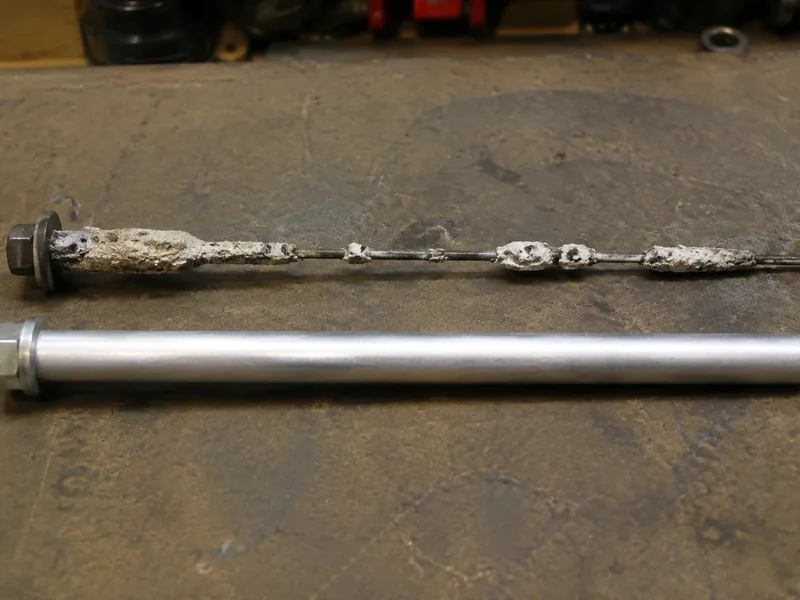
The anode rod is the sacrificial metal rod inside your tank that corrodes so the steel shell does not. On North Charleston's municipal supply — moderately hard, not aggressive — a magnesium rod lasts three to four years. In the 29406, where rentals are common and homeowners are busy, most tanks are running on rods that died years ago, with corrosion quietly working on the tank itself.
We replace anode rods across North Charleston, from Park Circle to the subdivisions along the rivers. Every visit includes a full tank health check and an honest recommendation — because in a community where every dollar counts, the straight answer is the only acceptable one.
North Charleston's Real Problem Is Not the Water
North Charleston's water is not the problem — its maintenance reality is. The municipal supply is moderately hard and treats a magnesium anode rod at a predictable three-to-four-year pace. But in a ZIP heavy with rentals and busy working families, nobody checks. A rod installed in 2014 was consumed by 2018; the tank has been running unprotected ever since.
Long neglect changes what a rod replacement accomplishes. On a maintained tank, a fresh rod resets the corrosion clock. On a 29406 tank that has run unprotected for eight years, a fresh rod stops further corrosion — but cannot undo what already happened to the lining and shell. The inspection matters more than the rod: we need to see whether those unprotected years left the tank sound or compromised.
The rental-property rule
For North Charleston's many landlords, the rod belongs on the owner's calendar, not the tenant's to-do list. Tenants report leaks and smells — they do not report depleting rods, because there is nothing to notice until the damage is done. A rod inspection every three to four years with a flush costs little and prevents the outcomes landlords dread: emergency replacements and water damage claims. We service rental tanks across the 29406 on standing schedules.
- Rental density: rods neglected for a decade-plus is the norm
- Park Circle bungalows: older tanks in tight historic spaces
- Mid-century subdivisions: second-generation tanks in the decision window
- Moderate municipal water: rods last 3–4 years when anyone checks
Years of Sediment: Why Every 29406 Rod Job Includes a Flush
In 29406 homes where the rod has been gone for years, sediment has usually been building just as long. Hard-water minerals settle to the tank bottom, forming an insulating blanket that forces the burner or elements to work harder — and that sediment traps moisture against the steel, accelerating bottom corrosion from below while the dead rod leaves the rest unprotected from within.
Every North Charleston rod replacement includes a full flush, not just a rod swap. Draining the tank clears years of accumulated sediment, restores heating efficiency, and removes the corrosive blanket at the tank bottom. On a mid-life tank, a fresh rod plus a clean tank genuinely resets the clock — we see 29406 tanks reach 13 to 15 years with this service versus 10 to 12 without it.
What heavy sediment tells us
The flush is diagnostic. Clear water with moderate sediment says the tank has been coping. Thick, rusty sludge says the bottom has been corroding for a long time — and on a tank past ten years, that can mean a rod is no longer enough. We show you what comes out of your tank and explain what it means, because you deserve the full picture before spending a dollar.
Tight Spaces and Seized Rods Across North Charleston
North Charleston's housing was built in the era of the tucked-away water heater — bungalow crawl spaces, garage corners boxed in by storage, utility closets with shelving overhead, apartment-style compartments. A rigid three-foot anode rod needs three feet of clearance above the tank, and many 29406 installations do not have it.
Segmented flexible rods solve this completely. The linked sections bend as they feed into the tank, installing with just inches of headroom, and protect exactly like a rigid rod once seated. We carry them on every North Charleston call because tight layouts are the norm here.
Seized rods in long-neglected tanks
A rod untouched for twelve years in a humid garage or damp Park Circle crawl space often has its hex head fused to the tank nipple. We break seized heads free with penetrating treatment and controlled leverage — never brute force, which risks twisting internal fittings or cracking the nipple. Then we inspect the threads before seating the new rod, because a damaged nipple will not seal properly. We also drain several gallons first so the work area stays dry when the old rod breaks loose.
Rod or Tank? The Straight Answer for North Charleston
At the 29406's housing age, every rod call carries the same question: rod or tank? We give the straight answer. Here is our framework.
Replace the rod when: the tank is under ten years old, the shell is clean with no base rust, flush water runs clear, and the symptoms are odor or a known-depleted rod. A fresh rod plus a flush in a sound mid-life tank can add three to five years — the best value in water heater service.
Replace the tank when: the unit is past twelve years with base rust, rusty flush water, rumbling sediment, or moisture at the bottom seam. A new rod cannot rebuild breached lining or thinning steel. We will show you exactly what we find — the old rod, the flush water, the shell condition — and walk through the replacement math honestly. Spending rod money on a dying tank helps no one.
Plain dealing
Our North Charleston customers are plain-spoken people, and we return the favor: if the tank has life left, we say so and prove it. If it does not, we show you why. Either way, you get the evidence and an honest recommendation — never a guess, never a pitch.
Local Insight
The 29406 covers a broad swath of North Charleston — from the Park Circle historic district with its 1940s and 50s bungalows, through mid-century subdivisions, to apartment communities and neighborhoods tied to Joint Base Charleston. It is a working ZIP: military families, tradespeople, first-time buyers, and a heavy rental presence. The housing stock is correspondingly mixed — bungalows on crawl spaces, brick ranches on slabs, multi-unit buildings — but the water heater story is remarkably consistent: long-neglected anode rods.
In a rental-heavy market, water heaters live anonymous lives. Tenants do not schedule rod replacements; many landlords do not either, until something smells or leaks. We routinely pull original rods from twelve-year-old 29406 tanks — consumed within four years, with eight years of unprotected corrosion behind them. Park Circle's older bungalows add a wrinkle: tanks in low crawl spaces and tight historic utility areas, where damp air corrodes fittings and clearances defeat rigid rods.
The housing age puts much of the 29406 in the decision window. Second-generation tanks from the 2000s are now 10 to 18 years old — the exact age where a rod either buys meaningful extra years or is money wasted on a dying tank. An honest inspection is the only way to tell which. We give North Charleston customers the straight answer every time: if the tank has life left, we prove it; if it does not, we show why and discuss replacement math instead of selling a rod.