Moncks Corner wears several hats: Berkeley County seat, historic railroad town, gateway to Lake Moultrie, and one of the Lowcountry's fastest-growing suburbs. That variety runs straight through its water heaters. Homes near the old town core may be on wells or older municipal lines; new subdivisions on the outskirts run on newer infrastructure; lake-area properties deal with mineral-heavy groundwater. The anode rod schedule that fits one Moncks Corner home may not fit the next.
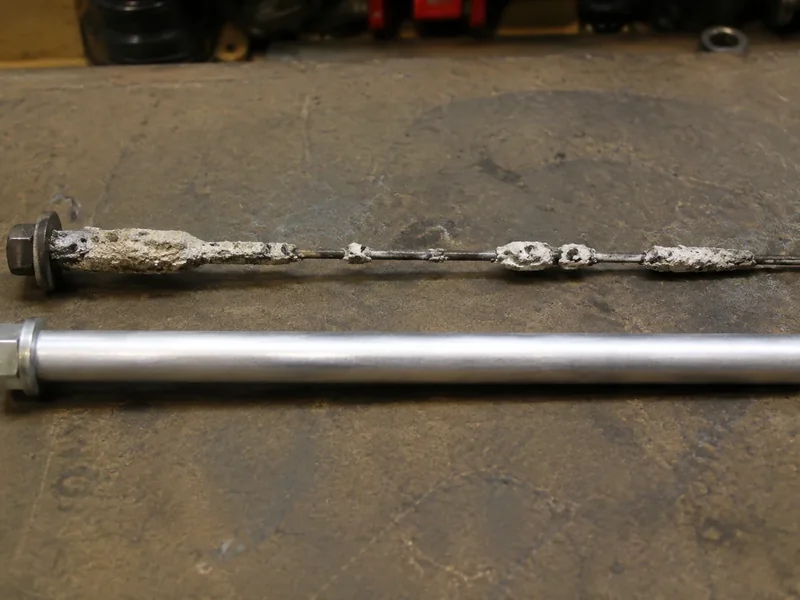
The anode rod is the sacrificial metal rod inside your tank that corrodes so the steel shell does not. On town water, a magnesium rod lasts three to four years; on a private well, two to three. Once it is consumed, corrosion turns on the tank itself — first odor and rusty water, then leaks. Across the 29461, most rods are never checked at all.
We replace anode rods throughout Moncks Corner, from the historic streets near the railroad to the new builds rising toward the lake. Every visit starts with identifying your water source and inspecting the actual rod — because here, the right answer depends on your specific situation.
Three Water Realities, Three Rod Schedules in One Town
Moncks Corner's variety is its defining service challenge. We see three distinct water situations across the 29461, each with its own anode rod logic. Town-core homes on municipal supply get the textbook treatment: magnesium rods, three-to-four-year inspections, predictable wear. Well-water homes — common outside the core and around the lake — need zinc-aluminum alloy rods on a two-to-three-year schedule, because sulfur and iron dissolve magnesium fast. Lake-area part-time properties add the idle-tank bacterial cycle on top of aggressive water.
Getting the diagnosis right starts with identifying the source. We check the supply, test both taps on odor calls, and inspect the old rod — which is a direct record of water aggressiveness. A rod eaten to the wire in two years writes its own maintenance plan regardless of what the manual suggests.
The growth factor
Moncks Corner's building boom adds a wrinkle: construction stirs sediment in municipal lines, and new subdivisions can see discolored water for months after build-out. That sediment settles in water heater tanks and accelerates bottom corrosion. For new-build homeowners, we recommend a first rod inspection at year two or three paired with a full flush — cheap insurance that also establishes your water's baseline. And for lake-area weekend properties, the stagnant-tank bacterial cycle means the calendar, not usage, should drive the schedule.
- Town water: magnesium rods, 3–4 year inspections
- Well water: zinc-aluminum rods, 2–3 year inspections
- Lake-area part-time homes: calendar-based schedule regardless of occupancy
- New subdivisions: early flush and inspection to clear construction sediment
Sulfur Odor Across Moncks Corner: Diagnosis Before Dollars
The sulfur smell is Moncks Corner's most common water heater complaint — hot water that reeks of rotten eggs while the cold runs clean. The mechanism is consistent: sulfate-reducing bacteria colonize the warm tank and react with a depleted magnesium anode, producing hydrogen sulfide gas. Well-water homes get it most; lake-area part-time properties get it worst, thanks to the idle-tank bacterial incubator effect.
A fresh zinc-aluminum rod plus a full tank flush resolves this for most Moncks Corner homes within a week or two of normal use. The alloy feeds odor bacteria far less than magnesium, and the flush clears the bacterial film and sediment they shelter in.
Ruling out the source
We test both taps on every odor call. Hot-side-only odor means the heater is the culprit and the rod is the fix. If the cold water smells too, the problem is in the well or supply — and a new rod will not fix it. In Moncks Corner's well-water pockets, where well treatment is a separate specialty and expense, getting this diagnosis right before spending money matters. For lake-area weekend homes, we also recommend flushing on return from long vacancies before judging the water.
Replacing Rods From Railroad-Era Homes to New Subdivisions
Moncks Corner's installations reflect its layered history: older homes near the railroad with tanks in cramped utility areas, manufactured homes and rural sheds on the outskirts, lake cottages with tight quarters — and new-construction garages and closets in the subdivisions. The older installations rarely have the three feet of clearance a rigid anode rod needs; some of the newer ones do not either.
Segmented flexible rods are standard on our Moncks Corner calls. The linked sections bend as they feed into the tank, installing with just inches of headroom, and protect exactly like a rigid rod once seated. Whatever the era of the installation, the rod goes in.
Seized fittings, old and new
In the older homes, rods untouched for a decade in humid utility areas usually have hex heads fused to the tank nipple — we break them free with penetrating treatment and controlled leverage, never brute force. In the new subdivisions, even young tanks can have stubborn fittings thanks to Lowcountry humidity. Either way, we inspect the nipple threads before seating the new rod, and we drain several gallons first so the work area stays dry when the old rod breaks loose.
Rod or Tank? The Honest Call for Moncks Corner Homeowners
In a town where tanks range from decades old to brand new, the rod-or-tank question needs an honest inspection every time. Here is our framework.
Replace the rod when: the tank is under ten years old, the shell is clean with no base rust, flush water runs clear, and the symptoms are odor or a known-depleted rod. In a young subdivision tank, a fresh rod is pure prevention. In a healthy older tank, it can still add three to five years.
Consider replacing the tank when: the unit is past twelve years with base rust, rusty flush water, rumbling sediment, or weeping fittings. A new rod cannot rebuild breached lining or thinning steel. For Moncks Corner's settled, long-term homeowners, we lay out the math plainly: the cost of the rod service, the tank's likely remaining life with it, and what a planned replacement looks like — so the decision is informed, not pressured.
What the old rod tells us
We always show you the rod we remove. A Moncks Corner rod eaten to the wire in two years confirms aggressive well water and sets a two-year inspection schedule. A rod with life left at year four says town water is treating it kindly. Either way, you get the evidence and a straight recommendation — the kind of honest service a county-seat town expects.
Local Insight
Moncks Corner is the seat of Berkeley County, and its identity is layered. The old town grew up around the railroad — Biggin Church's ruins nearby testify to centuries of settlement — with modest historic homes and mid-century neighborhoods near the core. Then came Lake Moultrie, and with it the lake-area communities: fishing cottages, weekend properties, and homes on mineral-heavy well water. Now comes the suburban wave: new subdivisions spreading in every direction as Berkeley County booms, bringing thousands of new water heaters onto municipal supply.
That layering is what makes anode rod work here interesting. A 1960s home near downtown may run on a well with sulfur-rich water that eats magnesium rods in two years. A 2021 build in a new subdivision runs on treated municipal water where the same rod lasts four. A lake-area cottage deals with both mineral-heavy groundwater and the idle-tank bacterial cycle of a part-time residence. Three homes, three maintenance schedules, one ZIP code.
The county-seat dynamic adds a practical note: Moncks Corner is where Berkeley County does its business, and its homeowners tend to be settled — county employees, lake people, multi-generation families. These are not transient owners; they are people who will live with their water heater decision for a decade. An honest inspection and the right rod, matched to the actual water, is exactly what a long-term owner needs.