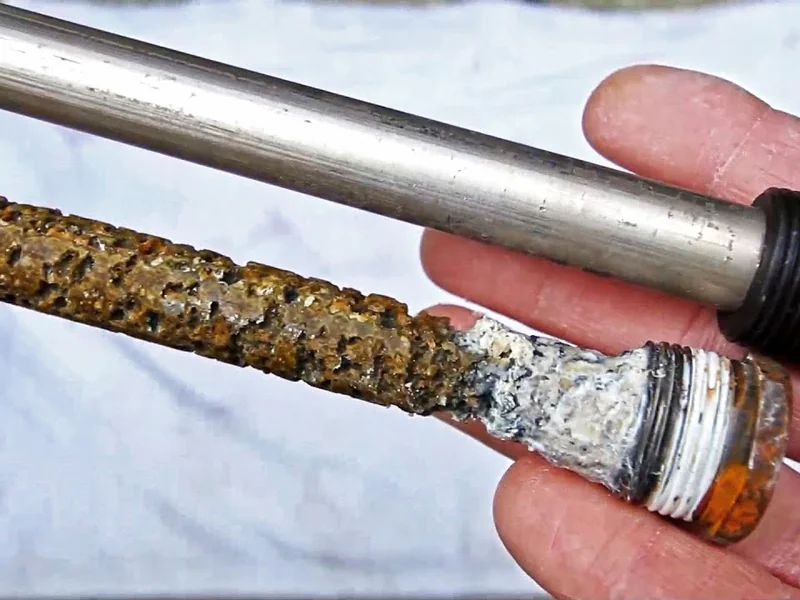
Isle of Palms is the Lowcountry's premier barrier-island address — oceanfront estates, luxury rentals, and second homes where the water heater is the last thing on anyone's mind. That inattention is expensive here, because the island is the most corrosion-hostile environment in our service area. Salt air attacks every exposed fitting from the outside while the water consumes the anode rod from the inside, and vacant months let bacteria and sediment do their quiet work undisturbed.
The anode rod is the sacrificial metal rod inside your tank that corrodes so the steel shell does not. On Isle of Palms, the standard three-to-five-year replacement guidance does not apply — the island demands a two-to-three-year schedule, with the exterior fittings inspected on the same visits. A rod with life left inside is useless if its hex head has fused solid to a salt-corroded nipple.
We replace anode rods across Isle of Palms, from oceanfront homes to the neighborhoods along the Intracoastal. Every visit covers both fronts of the island's corrosion war — and we treat the finished spaces around the work with the care a luxury property expects.
Salt Air vs. Anode Rods: The Island's Two-Front Corrosion War
On the mainland, anode rod failure is mostly an interior story. On Isle of Palms, it is a two-front war — and the exterior front often fails first. Salt air attacks the hex head and nipple relentlessly, and we regularly find island tanks where the rod still had life inside but the hex head had fused solid to the nipple. At that point the rod is unserviceable: it cannot be inspected, cannot be replaced, and the tank is running on borrowed time regardless of what remains inside.
This changes the maintenance logic. On the island, a rod inspection is also a fitting inspection — hex head, nipple, dielectric unions, and top fittings all get eyes on them every visit. Catching exterior corrosion early means the next rod replacement is a routine swap instead of a seized-fitting extraction, and the difference in cost and risk is enormous.
The island replacement schedule
We recommend a two-to-three-year rod schedule for Isle of Palms — a full step more aggressive than the mainland. The municipal water itself is not especially hostile, so interior consumption runs near normal. It is the exterior that compresses the schedule: every year of salt exposure makes the next service harder and riskier. Regular visits keep fittings serviceable, which is the whole ballgame on a barrier island.
- Salt air: fuses hex heads and nipples from the outside, often before the rod is consumed
- Flood-prone enclosures: submerge fittings and accelerate all corrosion
- Vacant months: stagnant tanks breed odor bacteria and sediment undisturbed
- Luxury finishes: demand careful workmanship around the service area
Second Homes, Rentals, and the Idle-Tank Corrosion Cycle
Isle of Palms runs on second homes and luxury rentals, and those water heaters live a peculiar life: slammed during guest stays, then sitting hot and idle for weeks or months. That cycle is brutal for anode rods. Heavy use consumes the rod steadily; idle stretches let sulfate-reducing bacteria colonize the warm, still tank and attack the magnesium anode, producing the hydrogen sulfide behind rotten-egg complaints.
For property owners, the rod schedule is non-negotiable maintenance. A zinc-aluminum alloy rod resists both the bacterial odor cycle and the island's conditions better than magnesium, and pairing it with a full flush on a regular schedule keeps guest complaints from ever starting. One rod service costs a fraction of a single ruined stay or a bad review mentioning smelly water.
The vacancy problem
Between visits, stagnant hot water is a bacterial incubator — and on the island, between visits can mean months. We recommend island owners flush the tank on return from any long vacancy before judging the water, and keep the rod on a strict calendar schedule regardless of occupancy. The tanks we see on standing maintenance schedules simply last longer and cause fewer emergencies than the ones serviced only when something smells or leaks.
Seized Fittings and Tight Spaces on a Barrier Island
Isle of Palms installations reflect the island's architecture: ground-level enclosures under elevated homes, tight utility rooms in luxury builds, outdoor-adjacent closets, and low crawl spaces — frequently with minimal clearance and always with maximum salt exposure. A rigid three-foot rod cannot install in most of these spaces, and the finishes around them demand protection.
Segmented flexible rods are standard on our island calls. They install with just inches of headroom and protect exactly like rigid rods once seated. But the island's real specialty is seized fittings: hex heads fused by years of salt air, nipples corroded into the tank top, unions untouched since installation.
Freeing what the salt air has claimed
We treat every island hex head as seized until proven otherwise — penetrating treatment, dwell time, controlled leverage, impact technique, in that order, with patience. Force is the last resort, never the first: a twisted tank spud or cracked nipple in a luxury property turns maintenance into an emergency. We work with drop cloths and finish protection throughout, because on Isle of Palms, how the work is done matters as much as the work itself. When a fitting truly will not come free without risking the tank, we say so honestly and discuss the options.
Rod or Tank? The Honest Call for Isle of Palms Owners
On Isle of Palms, exterior condition can condemn a tank the interior would have saved. Here is our honest framework for island owners.
Replace the rod when: the tank is under ten years old, the shell is sound, flush water runs clear, and the fittings are serviceable or recoverable. A fresh zinc-aluminum rod plus a flush in a sound island tank can add three to five years — and on a rental property, those are revenue-producing years.
Consider replacing the tank when: the shell shows base rust or weeping, the nipple is too corroded to seal a new rod, the tank has an uninspected flood history, or flush water runs rusty. We are blunt about flood exposure: a submerged tank's remaining life is a gamble, and a new rod does not change the odds. On a luxury property, gambling with the water heater is poor asset management.
The inspection that covers both fronts
Every island rod visit includes the full two-front assessment: rod condition inside, fitting and shell condition outside, flush water clarity, and flood-history questions. We show you the old rod and the state of the fittings, and give you a straight recommendation with the evidence in your hands. On a barrier island, guessing about corrosion is not a strategy.
Local Insight
Isle of Palms is a barrier island in the full sense — bordered by the Atlantic on one side and the Intracoastal Waterway on the other, with salt spray as a permanent atmospheric condition rather than a weather event. That defines water heater service here completely. The marine air condenses on every cool metal surface, and the anode rod's hex head, tank nipple, dielectric unions, and connections corrode from the outside at a pace that shocks mainland homeowners. We have pulled rods from six-year-old island tanks whose exterior fittings looked fifteen.
The island's property profile multiplies the challenge. Isle of Palms is heavy with second homes and luxury vacation rentals — properties where water heaters run hard during guest stays and sit hot and idle for weeks or months between them. That cycle is ideal for sulfate-reducing bacteria and sediment accumulation, and since nobody lives with these tanks day to day, problems advance far before detection. A failed tank discovered by arriving guests is a hospitality disaster; a leak discovered after months vacant is a property disaster.
Elevation and flood history add another layer. Many island homes are elevated, with tanks in ground-level enclosures that have taken water in past storms. A submerged tank's fittings, controls, and anode port all need professional assessment — running a flooded tank on assumption is a gamble with a luxury property. For island owners, scheduled rod maintenance is not just tank protection; it is asset protection.