Huger is a place of contrasts: decades-old hunting camps and farmhouses tucked into the Francis Marion National Forest on one hand, and the fast-growing Cainhoy development rising along the Cooper River on the other. What unites them is water — nearly all of the 29450 runs on private wells, and that well water is some of the most anode-hostile in the Lowcountry.
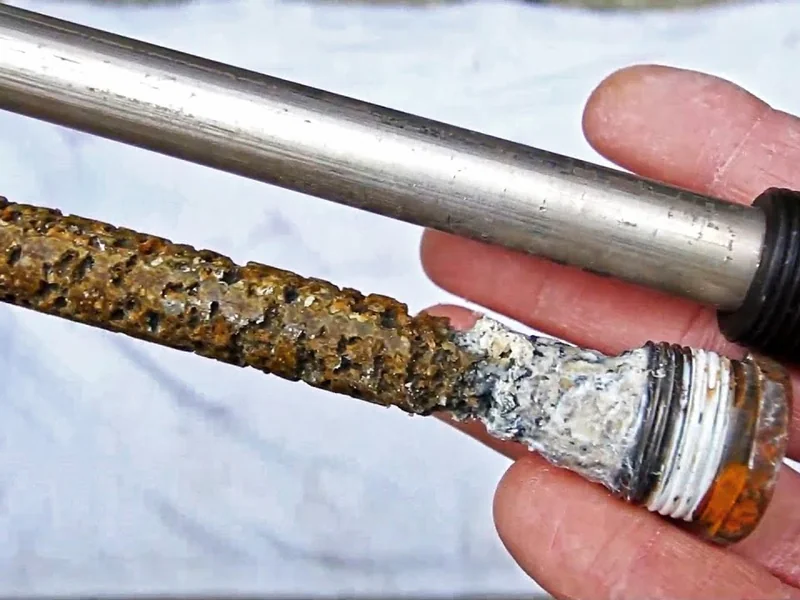
The anode rod is the sacrificial metal rod threaded into the top of your tank. It corrodes so the steel tank does not. Once it is consumed, corrosion turns on the tank itself — first the rotten-egg smell and rusty water, then pinhole leaks. On Huger well water, a standard magnesium rod is often gone in two to three years, whether the tank is a 1990s camp unit or a 2020 Cainhoy install.
We replace anode rods across Huger, from the forest roads to the new subdivisions. Every visit includes a tank health check, because in a ZIP where tanks range from thirty years old to three, knowing whether the tank deserves a rod or a replacement is the real question.
Huger Well Water vs. Anode Rods: Old Camps and New Builds Alike
Huger's well water does not care how old your tank is. The groundwater here — flavored by the Francis Marion's organic soils — carries sulfur, tannins, iron, and often a low pH, and it dissolves a standard magnesium anode rod in two to three years. That means a 2022 Cainhoy tank and a 2005 camp-house tank can be in exactly the same condition: running unprotected, with corrosion working on the tank itself.
Magnesium is the most reactive common rod material, which makes it excellent protection in mild water and a fast-burning fuse in aggressive water. For Huger wells, we usually recommend a zinc-aluminum alloy rod instead. The alloy corrodes more slowly in sulfur-rich water and feeds odor-causing bacteria far less enthusiastically than magnesium — a meaningful benefit in a ZIP where sulfur odor complaints are constant.
The new-construction blind spot
Cainhoy homeowners get a special warning: new does not mean protected. Builders install whatever rod the tank ships with — almost always standard magnesium — and nobody mentions that Huger's well water will consume it in two to three years. We recommend every new Cainhoy home get its first rod inspection at year two or three. Finding a depleted rod in a three-year-old tank is not a defect; it is just local water chemistry. Replacing it then is the cheapest warranty your tank will ever get.
- Forest-soil groundwater: sulfur, tannins, and low pH dissolve magnesium fast
- New Cainhoy tanks: face the same aggressive water as old camp units
- Water softeners: raise conductivity and shorten rod life further
- Idle camp properties: stagnant tanks breed odor bacteria between visits
Sulfur Odor in Huger Tanks: Camps, Wells, and Diagnosis
The most common Huger service call is the sulfur smell — hot water that reeks of rotten eggs while the cold runs clean. Sulfate-reducing bacteria, common in Lowcountry well water, colonize the warm tank and react with a depleted magnesium anode to produce hydrogen sulfide gas. In Huger's older forest properties, where tanks may sit unused between camp visits, the problem is especially pronounced.
A fresh zinc-aluminum rod plus a full tank flush resolves this for most Huger homes within a week or two of normal use. The alloy changes the tank chemistry the bacteria feed on, and the flush clears the bacterial film and sediment they shelter in.
Ruling out the well
We test both taps on every odor call. Hot-side-only odor means the heater is the source and the rod is the fix. If the cold water smells too, the problem is in the well itself — and a new rod will not fix it. In Huger's rural reaches, where well treatment is a separate specialty and a separate expense, getting this diagnosis right before spending money matters. For camp properties that sit vacant, we also recommend flushing before long idle stretches: stagnant hot water is a bacterial incubator, and a depleted rod makes it worse.
Replacing Rods From Forest Sheds to Cainhoy Garages
Huger's installations span the full rural spectrum: camp sheds and pump houses in the forest properties, manufactured-home compartments, low crawl spaces — and, in Cainhoy, new-construction garages and utility closets. The older installations rarely have the three feet of clearance a rigid anode rod needs; the newer ones sometimes do not either.
Segmented flexible rods are standard on our Huger calls. The linked sections bend as they feed into the tank, installing with just inches of headroom, and protect exactly like a rigid rod once seated. Whether the tank is in a 1980s pump house or a 2023 garage, the rod goes in.
Seized fittings, old and new
In the forest properties, rods untouched for a decade-plus in humid sheds usually have hex heads fused to the tank nipple. We break them free with penetrating treatment and controlled leverage — never brute force, which risks twisting internal fittings or cracking the nipple. In Cainhoy, even young tanks can have stubborn fittings thanks to the area's damp air. Either way, we inspect the nipple threads before seating the new rod, and we drain several gallons first so the work area stays dry when the old rod breaks loose.
Rod or Tank? The Honest Call for Huger Homeowners
In a ZIP where tanks range from thirty years old to three, the rod-or-tank question needs an honest inspection every time. Here is our framework.
Replace the rod when: the tank is under ten years old, the shell is clean with no base rust, flush water runs clear, and the symptoms are odor or a known-depleted rod. In a young Cainhoy tank, a fresh rod is pure prevention — it resets the corrosion clock at minimal cost. In a healthy older tank, it can still add three to five years.
Consider replacing the tank when: the unit is past twelve years with base rust, rusty flush water, rumbling sediment, or weeping fittings. A new rod cannot rebuild breached lining or thinning steel. On a dying camp-house tank, rod money just delays the inevitable — and you want that replacement planned, not sprung on you during hunting season.
What the old rod tells us
We always show you the rod we remove. A Huger rod eaten to the wire in two years confirms aggressive water and sets your inspection schedule at every two years. A rod with life left at year three says your well is kinder than most. Either way, you get the evidence and a straight recommendation — because in a ZIP this spread out, guessing is expensive.
Local Insight
Huger sits in the northeastern corner of Charleston County, where the Francis Marion National Forest meets the Cooper River and the Cainhoy peninsula. The older half of the 29450 is classic rural Lowcountry: hunting camps, farmhouses, and manufactured homes on large wooded lots, most on private wells, many with water heaters in sheds and pump houses. The newer half is Cainhoy — master-planned development bringing thousands of new homes, new wells or community systems, and new water heaters to what was recently timberland.
The well water across both halves carries the forest's signature: sulfur compounds, tannins from organic soils, iron, and often a slightly acidic pH. It dissolves standard magnesium anode rods in two to three years with depressing reliability. The irony of the new construction is that brand-new tanks are facing the same aggressive water as the old camp units — a 2023 tank in Cainhoy with an original magnesium rod may already be running unprotected.
The housing split creates two distinct service patterns. In the older forest properties, we find long-neglected rods in tight rural installations — seized fittings, low clearances, tanks well past their prime. In Cainhoy, we find young tanks whose owners assume everything is fine because everything is new — and whose rods are quietly dissolving on schedule. Both need the same thing: an inspection, the right replacement rod, and an honest read on the tank.