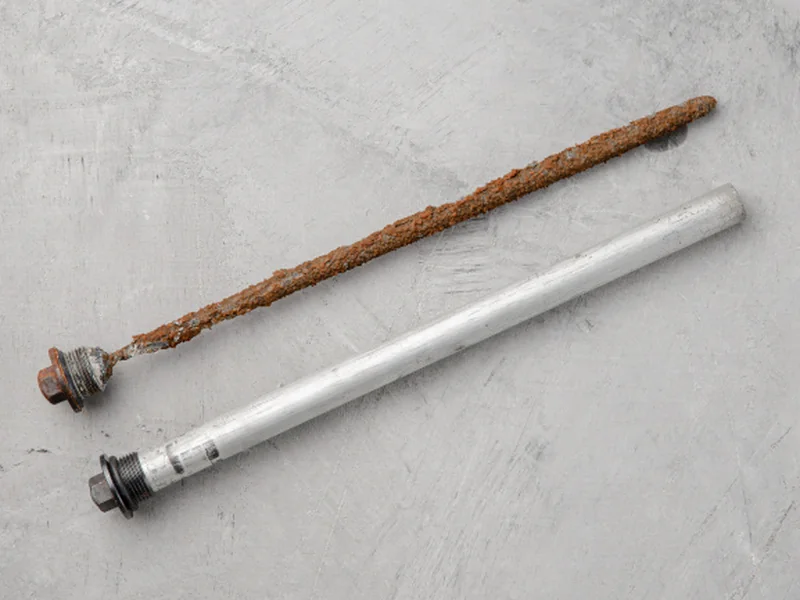
Folly Beach is the Edge of America — a barrier island where everything metal fights a losing battle with salt air. Water heaters here take corrosion from both directions: the water inside consumes the anode rod while the marine air outside attacks the hex head, nipple, and every exposed fitting. It is the most corrosion-hostile environment in our entire service area.
The anode rod is the sacrificial metal rod inside your tank that corrodes so the steel shell does not. On Folly, the standard three-to-five-year replacement guidance does not apply — the island's conditions demand a two-to-three-year schedule, and the exterior fittings need inspection on the same visits. A rod with life left inside the tank is useless if its hex head has fused solid to a corroded nipple.
We replace anode rods across Folly Beach, from beachfront rentals to cottages along the back streets. Every visit covers both fronts of the island's corrosion war: the rod inside and the fittings outside.
Salt Air vs. Anode Rods: Folly's Two-Front Corrosion War
On the mainland, anode rod failure is mostly an interior story — water chemistry dissolves the rod. On Folly Beach, it is a two-front war, and the exterior front often fails first. Salt air attacks the hex head and nipple relentlessly, and we regularly find Folly tanks where the rod still had life inside but the hex head had fused solid to the nipple. At that point the rod is unserviceable: it cannot be inspected, cannot be replaced, and the tank is running on borrowed time regardless of what is left inside.
This changes the maintenance logic completely. On Folly, a rod inspection is also a fitting inspection — hex head, nipple, dielectric unions, and the tank's top fittings all get eyes on them every visit. Catching exterior corrosion early means the next rod replacement is a routine swap instead of a seized-fitting extraction.
The island replacement schedule
We recommend a two-to-three-year rod schedule for Folly Beach — a full step more aggressive than the mainland. The water itself is municipal and not especially hostile, so interior consumption runs near normal. It is the exterior that compresses the schedule: every year of salt exposure makes the next service harder. Regular visits keep fittings serviceable, which is the whole ballgame on a barrier island.
- Salt air: fuses hex heads and nipples from the outside, often before the rod is consumed
- Flood-prone enclosures: submerge fittings and accelerate all corrosion
- Rental turnover: heavy use plus idle stretches breed odor bacteria and sediment
- Outdoor closets: fully expose tanks and fittings to marine air
Vacation Rentals and the Idle-Tank Corrosion Cycle
Folly Beach runs on vacation rentals, and rental water heaters live a peculiar life: slammed during guest turnover, then sitting idle and hot between bookings. That cycle is brutal for anode rods. Heavy use stirs sediment and consumes the rod steadily; idle stretches let sulfate-reducing bacteria colonize the warm, still tank and attack the magnesium anode, producing the hydrogen sulfide that becomes a guest complaint about rotten-egg water.
For rental owners, the rod schedule is non-negotiable maintenance. A zinc-aluminum alloy rod resists both the bacterial odor cycle and the island's conditions better than magnesium, and pairing it with a full flush on a regular schedule keeps guest complaints from ever starting. The cost of one rod service is a rounding error against a single bad review mentioning smelly water.
What rental owners should watch
Between services, the telltales are guest comments about odor or discolored hot water, and any moisture around the tank enclosure. Because nobody lives with these tanks day to day, problems advance further before detection — which is exactly why the calendar, not symptoms, should drive the maintenance schedule. We work with several Folly property managers on standing rod-and-flush intervals, and the tanks on those schedules simply last longer.
Seized Fittings and Tight Spaces on a Barrier Island
Folly Beach installations are shaped by the island's flood reality and its cottage architecture. Tanks live in ground-level enclosures under elevated homes, outdoor utility closets fully exposed to weather, cramped beach-cottage corners, and low crawl spaces — frequently with minimal clearance and always with maximum salt exposure.
Segmented flexible rods are standard equipment on our Folly calls. They install with just inches of headroom in the tightest enclosures and protect exactly like rigid rods once seated. But the island's real specialty is seized fittings: hex heads fused by years of salt air, nipples corroded into the tank top, unions that have not moved since installation.
Freeing what the salt air has claimed
We treat every Folly hex head as seized until proven otherwise. Penetrating treatment, dwell time, controlled leverage, and impact technique — in that order, with patience. The cardinal rule of barrier-island rod work is that force is the last resort, not the first: a twisted tank spud or cracked nipple on an island property turns maintenance into an emergency. When a fitting truly will not come free without risking the tank, we say so honestly and discuss the options, including what the tank's remaining life looks like with the rod left in place.
Rod or Tank? The Honest Call for Folly Beach Owners
On Folly Beach, the rod-or-tank question has an extra dimension: exterior condition can condemn a tank the interior would have saved. Here is our honest framework for island homeowners.
Replace the rod when: the tank is under ten years old, the shell is sound, flush water runs clear, and the fittings are serviceable or recoverable. A fresh zinc-aluminum rod plus a flush in a sound island tank can add three to five years — and on a rental property, those are revenue-producing years.
Consider replacing the tank when: the shell shows base rust or weeping, the nipple is too corroded to seal a new rod, the tank has survived a flood submersion without inspection, or flush water runs rusty. On Folly, we are blunt about flood history: a submerged tank's remaining life is a gamble, and a new rod does not change the odds.
The inspection that covers both fronts
Every Folly rod visit includes the full two-front assessment: rod condition inside, fitting and shell condition outside, flush water clarity, and flood-history questions. We show you the old rod and the state of the fittings, and give you a straight recommendation with the evidence in your hands. On a barrier island, guessing about corrosion is not a strategy.
Local Insight
Folly Beach is a true barrier island — a narrow strip of sand between the Atlantic and the Folly River, where salt spray is not a weather event but a permanent condition. That defines everything about water heater service here. The marine air condenses on every cool metal surface, and the anode rod's hex head, the tank nipple, dielectric unions, and gas or electrical connections all corrode from the outside at a pace mainland homeowners would not believe. We have pulled rods from five-year-old Folly tanks whose exterior fittings looked fifteen.
The island's built environment multiplies the challenge. Folly is dense with vacation rentals and second homes — properties where water heaters run hard during guest turnover and sit idle between bookings, the worst combination for odor bacteria and sediment. Elevated homes put tanks in ground-level enclosures that flood; older cottages tuck them into outdoor utility closets fully exposed to the elements; and the island's flood history means more than a few tanks have been submerged and kept running without proper inspection.
Then there is the rental factor. In a vacation rental, nobody is watching the water heater. Rods go a decade without inspection, sediment builds undisturbed, and the first sign of trouble is a guest complaint or a leak — both expensive in a rental context. For Folly Beach property owners, scheduled rod maintenance is not just tank protection; it is revenue protection.