Daniel Island is one of the Lowcountry's newest communities — master-planned, built out from the late 1990s through today, with water heaters to match. Most 29492 tanks are under fifteen years old, many still inside their warranty periods. That makes anode rod maintenance here a different conversation than in older neighborhoods: it is not about rescuing a dying tank, it is about protecting a young one and keeping its warranty intact.
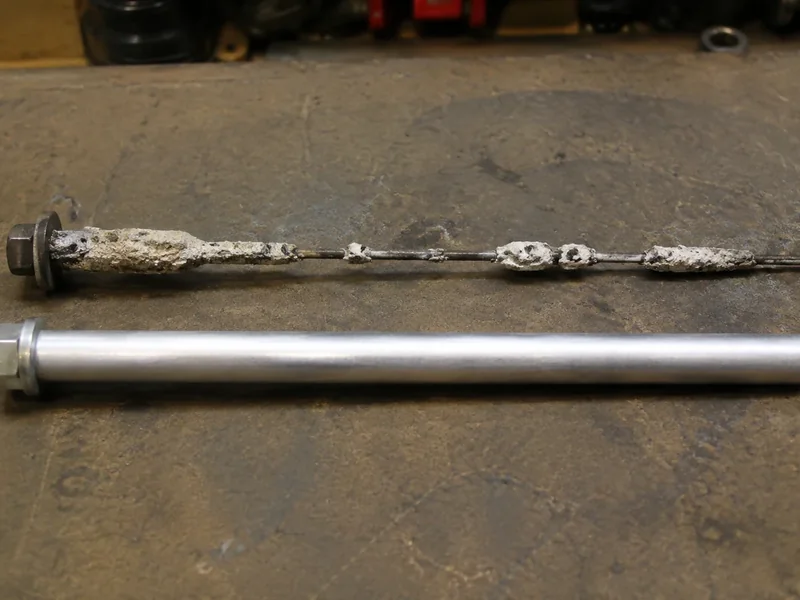
The anode rod is the sacrificial metal rod inside your tank that corrodes so the steel shell does not. On Daniel Island's municipal supply — moderately hard, reasonably treated — a magnesium rod typically lasts three to four years. But almost nobody checks, which means plenty of eight-year-old Daniel Island tanks are running on rods that died years ago, quietly voiding the corrosion protection the warranty assumed.
We service anode rods across Daniel Island, from the older sections near the Wando River to the newest construction. Every visit includes a documented tank health check — useful both for your maintenance records and for any future warranty claim.
Protecting Young Tanks and Warranties on Daniel Island
Most Daniel Island water heaters are between five and fifteen years old — the sweet spot for anode rod maintenance. The original magnesium rod in a 2015 tank was likely consumed by 2019, which means the tank has been running without sacrificial protection for years. The good news: at this age, the tank's glass lining is usually still intact, so a fresh rod genuinely resets the corrosion clock rather than merely slowing a terminal decline.
This is also the warranty window. Most tank warranties run six to twelve years, and they assume normal maintenance — including anode rod service. A Daniel Island homeowner who has the rod replaced at year six or seven and keeps the documentation is in a far stronger position if the tank fails at year nine than one who never touched it. We document every rod service with the date, rod type, and tank condition notes.
Matching the rod to island water
Daniel Island's municipal supply is moderately hard but not aggressive — standard magnesium rods perform at their textbook three-to-four-year pace here. We default to magnesium unless there is a reason not to: a sulfur odor complaint calls for zinc-aluminum, and a home with a water softener needs the shorter inspection interval that softened water demands. The island's water does not punish rods the way rural well water does, which means a replacement here buys the full expected service life.
- Young tank fleet: most 29492 tanks are prime candidates for preventive rod service
- Warranty protection: documented maintenance strengthens any future claim
- Moderate water: replacement rods deliver their full expected lifespan
- Softener homes: need inspection every 2 to 3 years instead of 3 to 4
Vacation Gaps and Sulfur Odor in Daniel Island Tanks
Daniel Island homes are travel-heavy — second homes, frequent travelers, and families gone for weeks at a time. When a water heater sits hot and unused for two or three weeks, sulfate-reducing bacteria multiply in the stagnant tank and react with the magnesium anode, producing hydrogen sulfide. The result is the classic return-from-vacation greeting: hot water that smells like rotten eggs.
The fix is a zinc-aluminum alloy rod plus a full tank flush. The alloy feeds odor bacteria far less than magnesium, and the flush clears the bacterial film. Most homeowners notice the smell fading within a week or two of normal use after the service.
The vacation-home protocol
For Daniel Island's part-time residences, we recommend a simple routine: on return from any trip longer than two weeks, run every hot tap for several minutes to clear stagnant water before judging the smell. If the odor fades with flushing and stays gone, the rod is probably fine. If it persists past a week of normal use — hot-side-only — the rod is depleted and bacterial film has established itself, and a replacement plus service flush is the answer. We test both hot and cold taps on every odor call to confirm the heater is the source before recommending anything.
Servicing Rods in Finished Garages and Tight Island Spaces
Daniel Island's upscale construction creates its own access puzzle. Water heaters sit in finished garages where the floor is epoxy-coated and the walls are drywalled, in attic-adjacent closets with inches of headroom, and in under-stair compartments designed for aesthetics rather than service. A rigid three-foot anode rod cannot install in most of these spaces — and the finishes around them demand protection during the work.
We carry segmented flexible rods on every Daniel Island call. The linked sections feed into the tank with just inches of clearance and protect exactly like a rigid rod once seated. And we treat the workspace like the finished space it is: drop cloths, shoe covers, and careful water handling, because a maintenance visit should never mark an epoxy garage floor or a drywalled closet.
Seized fittings on young tanks
Even on newer tanks, the island's humid, lightly salty air can corrode a hex head over six or eight years. We treat every fitting as potentially stubborn: penetrating treatment, controlled leverage, and patience. The goal is always the same — break the old rod free and seat the new one without disturbing the tank's fittings or the finished space around it. On Daniel Island, how the work is done matters as much as the work itself.
Rod or Tank? The Honest Call for Daniel Island Homeowners
On Daniel Island, the rod-or-tank question usually has a happier answer than in older neighborhoods — but it still deserves an honest inspection. Here is our framework.
Replace the rod when: the tank is under ten years old, the shell is clean, flush water runs clear, and the issue is a depleted rod, odor, or scheduled maintenance. In a young, sound tank, a fresh rod is pure prevention — it resets the corrosion clock and protects the remaining warranty years. This is the highest-value rod replacement there is.
Consider replacing the tank when: the unit is past twelve years with base rust, rusty water, or weeping fittings. Even on Daniel Island, tanks age out. A new rod cannot rebuild breached lining, and at that point the money belongs in the replacement fund.
What documentation you get
Every Daniel Island rod service includes written notes: the date, the rod type installed, the condition of the old rod, and the tank's overall health assessment. Keep it with your home records. If the tank ever fails inside its warranty period, that documentation shows the maintenance the warranty assumed — and it gives any future technician an honest baseline for what your water does to a rod.
Local Insight
Daniel Island is a master-planned island community between the Wando and Cooper rivers, developed from the late 1990s onward — which makes its housing stock among the youngest in the Charleston metro. The homes are upscale: traditional Lowcountry architecture, high-end finishes, three-car garages, and water heaters installed in garages, attic-adjacent closets, and under-stair compartments. The tanks themselves are correspondingly young, and that youth changes the anode rod conversation completely.
The island setting adds environmental texture. Daniel Island is surrounded by marsh and tidal rivers, and the marine air — while gentler than the open-ocean exposure of the barrier islands — still carries enough salt to corrode exposed fittings over time. The high water table and sandy soil mean crawl spaces and low installations stay damp, and summer humidity is relentless. Exterior corrosion on hex heads and nipples is a real factor even on young tanks.
The defining local trait, though, is expectations. Daniel Island homeowners maintain their homes meticulously, keep records, and expect the same from service providers. Anode rod service here comes with documentation: what we found, what we installed, and what the tank's condition means for its remaining life. And because many tanks are still under manufacturer warranty, we flag the maintenance angle explicitly — a documented rod service history is exactly what a warranty claim wants to see.