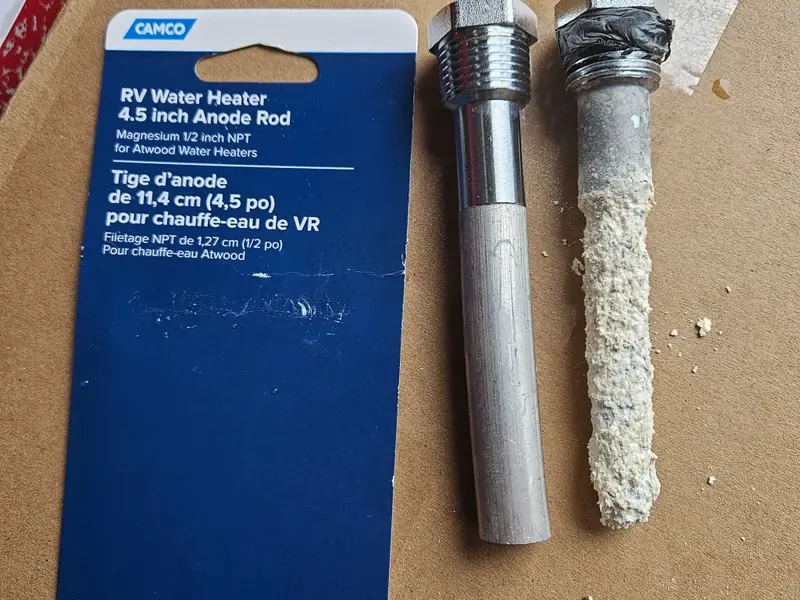
Cross is about as rural as Berkeley County gets — scattered homes along Highway 6 and the forest roads, deep inside the orbit of the Francis Marion National Forest. Out here, nearly every home runs on a private well, and that well water is the whole story when it comes to water heaters. Sulfur, iron, and low-pH groundwater dissolve a standard anode rod in two to three years, sometimes faster.
The anode rod is the sacrificial metal rod threaded into the top of your tank. Its job is to corrode so the steel tank does not. Once it is consumed, corrosion turns on the tank itself — first the rotten-egg smell and rusty water, then pinhole leaks. On Cross well water, a tank can go from protected to unprotected without any visible warning.
Distance is the other half of the Cross equation. When a tank fails out here, it is not a quick afternoon swap — it is a long drive, a rural delivery, and emergency pricing. A scheduled anode rod replacement is the cheapest insurance a Cross water heater can get, and we come to you anywhere in the 29436.
Why Cross Well Water Destroys Anode Rods So Fast
On a private Cross well, a standard magnesium anode rod is a fast-burning fuse. The groundwater here carries dissolved sulfur, iron, and often a low pH — a combination that dissolves magnesium aggressively. Pull a rod from a three-year-old Cross tank and you may find a bare steel wire with a few crusty nubs where the magnesium used to be. At that point the rod has been doing nothing for months, and every day since has been unprotected corrosion on the tank itself.
Magnesium is the most reactive common rod material, which is why it protects so well in mild water — and why it disappears so fast in aggressive water. For Cross wells, we usually recommend a zinc-aluminum alloy rod instead. The alloy corrodes more slowly in sulfur-rich water, and it feeds odor-causing bacteria far less enthusiastically than magnesium does.
Softened well water: the hidden accelerator
Many Cross homes soften their well water to control iron and hardness. What the softener salesman may not have mentioned: softened water is more electrically conductive, and conductivity drives the galvanic corrosion the anode exists to absorb. A rod that survives three years on raw well water may last barely two on softened water. If your Cross home has a softener upstream of the heater, treat the rod as a two-year maintenance item.
- Sulfur and iron: dissolve magnesium rods fastest; zinc-aluminum lasts longer
- Low-pH groundwater: attacks rod and tank lining simultaneously
- Water softeners: raise conductivity, shorten rod life further
- No municipal treatment: raw well chemistry hits the rod at full strength
Rotten-Egg Hot Water on a Cross Well: Diagnosis First
The classic Cross service call starts with a smell: hot water that reeks of rotten eggs while the cold runs clean. Sulfate-reducing bacteria live in many Lowcountry wells, and they thrive in the warm, stagnant environment of a water heater — reacting with a depleted magnesium anode to produce hydrogen sulfide gas.
A fresh zinc-aluminum rod plus a full tank flush resolves this for most Cross homes within a week or two of normal use. The alloy changes the tank chemistry the bacteria feed on, and the flush clears the bacterial film and sediment they shelter in.
Ruling out the well
The critical test: run both taps. Hot-side-only odor means the heater is the source and the rod is the fix. If the cold water smells too, the problem is in the well itself — and a new rod will not fix it. Out here, where well treatment is a separate specialty and a separate expense, getting this diagnosis right before spending money matters enormously. We test both taps on every odor call, no exceptions.
For Cross homes that sit vacant between visits — hunting camps, weekend properties — we recommend flushing the tank before long idle stretches. Stagnant hot water is a bacterial incubator, and a depleted rod makes it worse.
Replacing Rods in Sheds, Pump Houses, and Tight Rural Spaces
Rural Cross installations are where textbook procedures go to die. Water heaters live in sheds, pump houses, manufactured-home compartments, and crawl spaces with inches — not feet — of clearance above the tank. A rigid three-foot anode rod physically cannot install in most of these spaces.
That is why we carry segmented flexible anode rods on every Cross call. The linked sections bend as they feed into the tank, needing only a few inches of headroom, and protect just like a rigid rod once seated. We have replaced rods in Cross pump houses you have to duck to enter — tight quarters are the norm, not the obstacle.
Seized fittings in the damp
A rod that has sat for eight or ten years in an unconditioned Cross shed — humid nine months of the year — usually has its hex head fused to the tank nipple by corrosion. Breaking it free takes penetrating treatment and controlled leverage. Brute force risks twisting the tank's internal fittings or cracking the nipple, and out here, a cracked nipple on a Friday afternoon is a real problem. We free seized heads carefully, inspect the threads, and only then seat the new rod.
We also drain several gallons first to drop the water level below the rod port. The moment a seized rod breaks loose, any water above that port comes with it — a mess we avoid by draining first, every single time.
New Rod or New Tank: The Straight Call for Cross Homeowners
Every Cross rod call comes with the honest question: is this tank worth saving? Out here, the answer carries extra weight, because a tank replacement involves rural delivery and real money. Here is our straight framework.
Replace the rod when: the tank is under eight years old, the shell is clean with no base rust, flush water runs clear, and the symptoms are odor or a known-depleted rod. A fresh zinc-aluminum rod plus a flush in a healthy mid-life tank can add three to five years — excellent value against the cost of a rural tank swap.
Save for a replacement when: the tank is past ten years with base rust, rusty flush water, rumbling sediment, or weeping fittings. A new rod cannot rebuild breached lining or thinning steel. On a dying tank, rod money just delays the inevitable — and out here, you want that replacement planned on your schedule, not at emergency rates.
Reading your water in the old rod
We always show you the rod we pull out. A Cross rod eaten to the wire in two years tells us your water is extremely aggressive — and sets your inspection schedule at every two years going forward. A rod with life left at year three says your well is kinder than most. Either way, you get the evidence and a straight recommendation, because out here, guessing wrong is expensive.
Local Insight
Cross sits in the rural heart of Berkeley County, where Highway 6 threads between the Francis Marion National Forest and farmland toward the Santee. This is well-water country in the truest sense — municipal supply does not reach most of the 29436, and the private wells here pull from an aquifer flavored by the forest's organic soils: sulfur compounds, iron, tannins, and often a slightly acidic pH. It is some of the most anode-hostile water in the Lowcountry.
The housing stock is rural Southern: manufactured homes, older wood-frame houses, hunting camps turned full-time residences, and newer homes on large wooded lots. Water heaters end up in sheds, pump houses, low crawl spaces, and outdoor-adjacent utility rooms — installations that would make a suburban code inspector wince, but that are simply how things work out here. Lowcountry humidity and long wet seasons corrode exterior fittings from the outside while the well water attacks from within.
Then there is the tyranny of distance. Cross is a genuine drive from every direction, which changes the economics of water heater service completely. A failed tank here means emergency scheduling, rural delivery surcharges, and a home without hot water for longer than anyone wants. Preventive maintenance — a rod inspection every couple of years — is not just good practice in Cross; it is the only economical strategy.