Drive through West Ashley and you will see street after street of brick ranches and split-levels from the 1960s, 70s, and 80s — solid homes, many still running their second water heater. That puts a huge share of 29407 tanks squarely in the 8-to-14-year window: old enough that the original anode rod is long gone, young enough that a fresh rod can still add meaningful life.
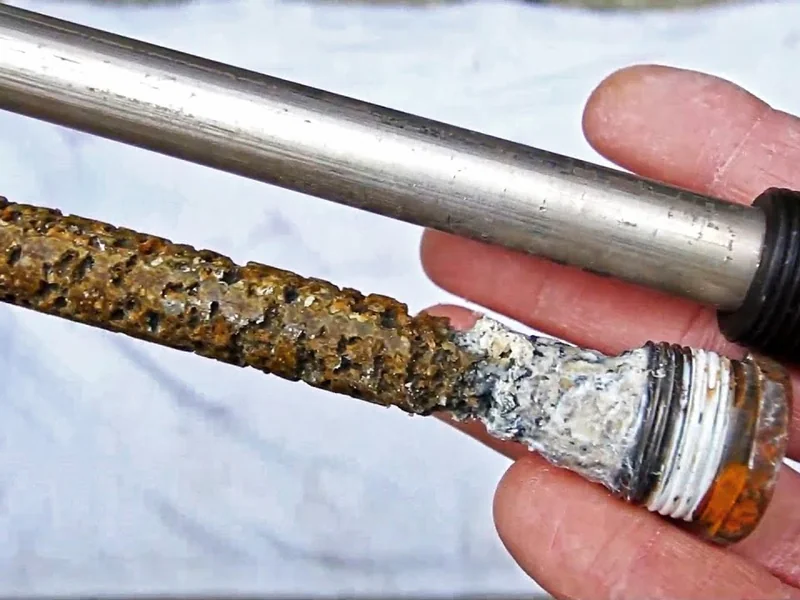
The anode rod is the sacrificial metal rod inside your tank that corrodes so the steel shell does not. On Charleston Water System supply — moderately hard, not wildly aggressive — a magnesium rod typically lasts three to four years. Which means a ten-year-old West Ashley tank has likely been running unprotected for years, with corrosion quietly working on the tank itself.
We replace anode rods across West Ashley, from Avondale and Byrnes Down to the subdivisions along Ashley River Road and Bees Ferry. Every visit includes a full tank health check, because at this housing age, knowing whether the tank deserves a rod or a replacement is the real question.
Why West Ashley's Tank Age Makes Rod Replacement Pay Off
West Ashley's housing age creates a specific anode rod story. A water heater installed in 2012 — typical for a 29407 home on its second tank — has an original magnesium rod that was likely consumed by 2016. That means the tank has spent the better part of a decade with its sacrificial protection gone, and the corrosion the rod was absorbing has been going into the tank's glass lining and steel shell instead.
This is the age window where rod replacement pays off most dramatically. A tank at year eight or nine with no visible damage is a strong candidate: the lining may be stressed but intact, and a fresh rod halts further galvanic corrosion from the day it goes in. We see West Ashley tanks regularly reach 13 to 15 years with a mid-life rod replacement and flushing — versus 10 to 12 without.
The softener factor in 29407
Many West Ashley homes run water softeners, and softened water deserves a special note. Ion-exchange softening replaces calcium and magnesium with sodium, making the water more electrically conductive — and conductivity is what drives the galvanic corrosion the anode rod exists to absorb. A rod that lasts four years on unsoftened Charleston water may last barely two on softened water. If your 29407 home has a softener upstream of the heater, your rod schedule should be aggressive: inspect every two years, replace as needed.
- Second-generation tanks (2005–2015 installs): prime candidates for mid-life rod replacement
- Water softeners: common in 29407, shorten rod life significantly
- Garage installations: humid salt air corrodes hex heads externally
- Original 1990s tanks still running: inspect carefully — may be past saving
Sulfur Smells in West Ashley Hot Water: Diagnosis and Fix
The most common West Ashley service call we get is not a leak — it is a smell. Hot water that reeks of rotten eggs while the cold runs clean, in a tank that is otherwise working fine. The cause is sulfate-reducing bacteria colonizing the warm tank and reacting with a depleted magnesium anode, producing hydrogen sulfide gas.
The fix is straightforward: a zinc-aluminum alloy rod plus a full tank flush. The alloy feeds odor bacteria far less than magnesium, and the flush clears the bacterial film and sediment layer where they shelter. Most 29407 homeowners notice the smell fading within a week or two of normal hot water use.
Confirming the heater is the source
Before recommending a rod, we run both taps. Hot-side-only odor means the heater is the culprit and the rod is the fix. If the cold water smells too, the source is upstream — the supply or a well — and a new rod will not solve it. That five-minute test saves West Ashley homeowners from paying for the wrong fix, and we run it on every odor call without exception.
One caution for older 29407 tanks: if sulfur odor arrives alongside rusty water or tank rumbling, the rod may have been gone so long that the tank itself is compromised. We will tell you honestly when the symptoms point past the rod to the tank.
Tight Closets and Seized Rods in Mid-Century West Ashley Homes
Mid-century West Ashley homes were not built with anode rod service in mind. Tanks sit in garage corners boxed in by storage, utility closets with shelving overhead, low crawl spaces, and laundry-room nooks — frequently with far less than the three-plus feet of headroom a rigid rod needs to slide in.
Segmented flexible rods are the answer, and we carry them on every 29407 call. The linked sections bend as they feed into the tank, installing with just inches of clearance, and protect exactly like a rigid rod once seated. Tight 1960s and 70s layouts are routine for us, not a problem.
Seized rods in decade-old tanks
The bigger challenge in West Ashley is age. A rod that has been in place for ten-plus years in a humid garage often has its hex head corroded fast to the tank nipple. Breaking it free requires penetrating treatment and controlled leverage — brute force risks twisting the tank's internal fittings or cracking the nipple. We free seized heads carefully and inspect the nipple threads before seating the new rod, because a damaged nipple will not seal properly no matter how carefully the replacement is threaded.
We also drain several gallons before breaking the old rod loose, dropping the water level below the rod port. Skip that step and the work area floods the moment the rod breaks free — a mistake we see in DIY attempts across the Lowcountry.
Rod or Tank? The Honest Call for West Ashley Homeowners
At West Ashley's housing age, every rod call carries the same underlying question: rod or tank? Here is the honest framework we use.
Replace the rod when: the tank is under ten years old, the shell is clean with no base rust or weeping fittings, flush water runs clear, and the symptoms are odor or a known-depleted rod. A fresh rod plus a flush in a sound mid-life tank can realistically add three to five years — and on a 29407 home where the tank is otherwise healthy, that is money well spent.
Replace the tank when: the unit is past twelve years with base rust, rusty flush water, rumbling sediment, or moisture at the bottom seam. A new rod cannot rebuild breached glass lining or thinning steel. Spending rod money on a dying tank just delays the inevitable by months.
The inspection that answers both questions
Every rod visit includes a tank health check: exterior condition, fitting integrity, flush water clarity, sediment level, and the condition of the rod we remove. We show you the old rod — what is left of it tells the story of your water — and give you a straight recommendation with the evidence in your hands. If the tank has life left, we will say so. If it does not, we will show you exactly why.
Local Insight
The 29407 is West Ashley — Charleston's big mid-century suburb, built out from the 1960s through the 1980s as families moved across the Ashley River. The housing stock is overwhelmingly brick ranch, split-level, and early two-story suburban: slab foundations or low crawl spaces, attached garages, and utility rooms or garage-corner installations that were standard for the era. A remarkable number of these homes are on their second water heater — installed in the early 2000s — which is exactly why anode rod work is so relevant here right now.
Water comes from the Charleston Water System for most of the ZIP, with moderately hard water that treats magnesium rods at a fairly predictable pace. But West Ashley has a high penetration of water softeners — homeowners fighting hardness and spotting — and softened water is more conductive, which shortens anode life. It is a common local pattern: the softener protects the fixtures while quietly accelerating the rod's demise.
The Lowcountry climate does its part too. Garage-installed tanks breathe humid, salty air year-round, corroding hex heads and fittings from the outside. And West Ashley's mature tree canopy means many homes have shaded, damp utility areas where exterior corrosion runs faster than it would in a sun-baked new subdivision. At this housing age, the rod question and the tank-replacement question arrive together — and an honest inspection answers both.