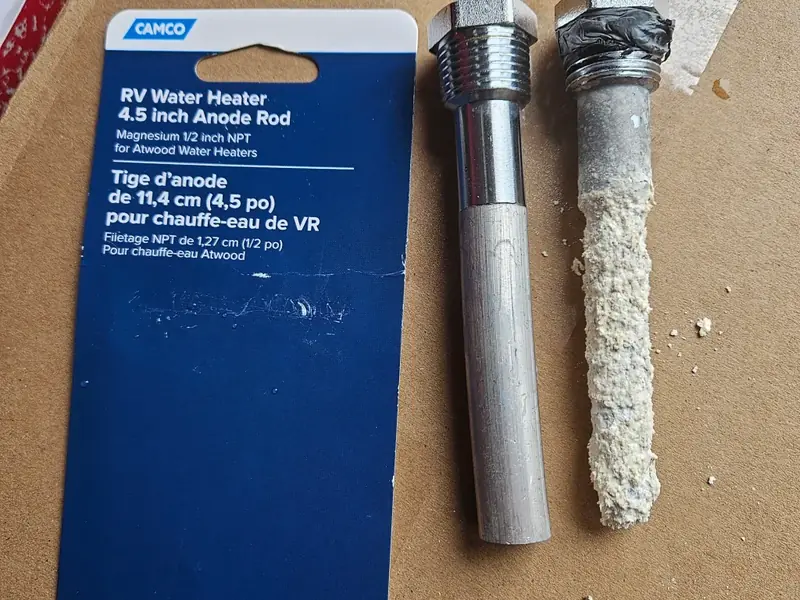
Below Broad and across the historic peninsula, water heaters live harder lives than their suburban cousins. Salt air drifts in from the harbor and the Ashley and Cooper rivers, corroding every exposed fitting. Many tanks sit in crawl spaces that flood, closets built for a different century, or carriage-house utility rooms with no clearance to spare. And the tanks themselves are often older, tucked into buildings where replacement is a logistical puzzle.
The anode rod — the sacrificial magnesium or aluminum rod threaded into the top of the tank — is the one component standing between your water and the steel shell. It corrodes so the tank does not. Once it is consumed, corrosion turns on the tank: rusty water, sulfur smells, pinhole leaks. In the 29401, exterior corrosion often attacks the rod's hex head and nipple at the same time interior chemistry consumes the rod itself.
We replace anode rods across downtown Charleston, from South of Broad mansions to Cannonborough cottages and East Side rentals. Every visit includes an inspection of the rod, the nipple, and the tank's overall condition — because in a historic building, knowing whether the tank is worth saving matters as much as the rod itself.
Salt Air vs. Anode Rods: Downtown's Two-Front Corrosion War
In most of the Lowcountry, the anode rod dies from the inside out — water chemistry dissolves it. Downtown, it is a two-front war. Charleston Water System supply is moderately hard but not especially aggressive, so interior rod consumption in the 29401 runs close to the textbook three-to-five-year pace. The problem is the exterior: salt-laden air off the harbor and rivers condenses on every cool metal surface, and the rod's hex head and the tank nipple corrode from the outside in.
That exterior attack creates the peninsula's signature service call: a rod with life remaining inside the tank that cannot be removed because its hex head is fused to the nipple. Force it wrong and you twist the tank's internal spud or crack the nipple — turning a maintenance visit into an emergency tank replacement in a building where getting a new tank through the door is its own project.
How we handle fused downtown fittings
We treat every downtown hex head as potentially seized until proven otherwise. Penetrating treatment, patience, and controlled leverage break most of them free; impact technique handles the stubborn ones. We inspect the nipple threads before the new rod goes in, because a damaged nipple will not seal a new rod properly no matter how carefully it is threaded.
There is a preventive lesson here for 29401 homeowners: a light coat of protection on exposed fittings and a rod inspection every three years costs almost nothing compared to a fused nipple on a ten-year-old tank. Salt air never sleeps, and the fittings it attacks are the ones you need working when maintenance day comes.
- Salt air: fuses hex heads and nipples from the outside
- Flood-prone crawl spaces: submerge fittings and accelerate all corrosion
- Older tanks: more likely to have original, never-serviced rods
- Rental properties: rods often neglected for a decade or more
Replacing Rods in Historic Closets and Low Crawl Spaces
Historic Charleston homes were not designed around water heater maintenance. The classic peninsula installation puts the tank in a closet under the stairs, a low crawl space, a carriage-house corner, or a pantry-adjacent nook with shelving built directly over the top. A standard rigid anode rod is over three feet long and needs that much clear space above the tank to install. In much of the 29401, that clearance simply does not exist.
Segmented flexible anode rods solve this. They arrive as linked sections that bend while feeding into the tank, needing only a few inches of headroom, and they protect exactly like a rigid rod once seated. We carry them on every downtown call because below Broad, tight access is the rule rather than the exception.
Working in historic spaces
Tight quarters change the technique, not just the parts. Breaking loose a seized hex head in a closet with six inches of wrench swing takes different tooling than the same job in an open garage. We plan the approach before we start — which fittings come off in what order, how the old rod extracts in sections, how the new one feeds in — because in a historic utility closet there is no room to improvise mid-job. Plaster walls, heart-pine floors, and original trim all demand the kind of careful work that keeps a maintenance visit from becoming a repair project for the house itself.
New Rod or New Tank: The Honest Call for Peninsula Homeowners
Downtown tanks skew older than the fleet average, which makes the replace-the-rod-or-replace-the-tank question especially common in the 29401. Here is our honest framework.
Replace the rod when: the tank is under ten years old, the shell is clean with no base rust or weeping fittings, the water runs clear, and the issue is a depleted rod or odor. In a sound mid-life tank, a fresh rod — magnesium for city water, zinc-aluminum if odor is the complaint — can add three to five years. On a historic property where tank replacement means navigating narrow stairs and tight doors, buying those years is genuinely valuable.
Consider replacing the tank when: the unit is past twelve years, there is rust at the base, the flush water runs rusty, fittings weep, or the tank has survived a flood event. A new rod cannot rebuild breached glass lining. And on the peninsula, planning a replacement on your schedule beats planning it at 10 p.m. when the tank lets go under a 200-year-old floor.
What the old rod tells us
We always show you the rod we remove. A rod with even wear and life left suggests your water is kind and your schedule can stretch. A rod eaten to the wire says the tank has been unprotected and needs a close look for early damage. Either way you get a straight recommendation with the evidence in your hands — never a guess.
Sulfur Smells in Hot Water: The Downtown Diagnosis
About a third of our downtown rod calls start with a smell complaint: hot water that reeks of rotten eggs while the cold runs fine. The mechanism is well understood — sulfate-reducing bacteria, present in trace amounts in many water supplies, colonize the warm tank and react with a magnesium anode to produce hydrogen sulfide gas.
The fix is a zinc-aluminum alloy rod plus a full tank flush. The alloy feeds the bacteria far less enthusiastically than magnesium, and the flush clears the bacterial film and sediment they shelter in. Most 29401 homeowners notice the improvement within a week or two of normal hot water use.
Ruling out the building
Downtown complicates the diagnosis because the building stock is so varied. In converted multi-unit buildings and older homes with complex plumbing, we verify the smell is truly hot-side-only before recommending a rod — running both taps, and sometimes checking at multiple fixtures. If cold water smells too, the source is upstream of the heater and a rod will not fix it. Getting this right matters because the two fixes cost very different amounts, and we would rather test for five minutes than sell you the wrong one.
Local Insight
The 29401 is Charleston's historic peninsula — three centuries of building stock stacked between two rivers and the harbor. That history shapes anode rod work in very specific ways. Water heaters here live in places modern installers would never choose: under-stair closets in 1840s single houses, low crawl spaces beneath raised foundations, carriage houses, and basement-level utility rooms in a city where basements and flooding have a complicated relationship.
Salt air is the defining environmental factor. The peninsula is surrounded by salt water, and the marine air corrodes exposed steel relentlessly — the anode rod's hex head, the tank nipple, the dielectric unions, all of it. We regularly find rods that still have life left inside the tank but whose hex heads are fused solid by exterior corrosion. That is a downtown-specific failure mode you rarely see ten miles inland.
Flooding adds another layer. Low-lying streets and crawl spaces take water in heavy rains and king tides, and a water heater that has been submerged — even briefly — needs its fittings, gas valve or electrical connections, and anode port inspected before anyone assumes it is fine. Finally, the housing mix matters: single-family historic homes, converted multi-unit buildings, and short-term rentals all share the 29401, and rental tanks in particular tend to run with depleted rods for years because nobody is watching them.