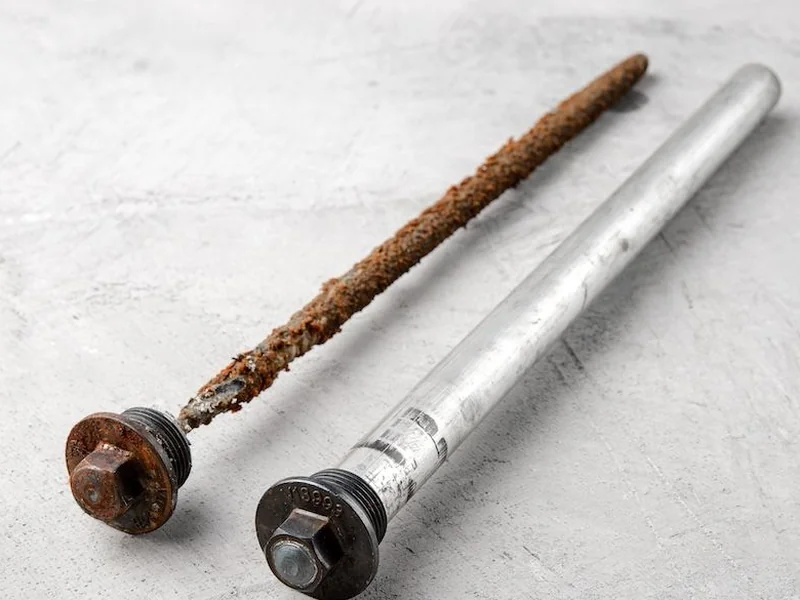
Bonneau sits on the western shore of Lake Moultrie, and the water here tells on itself. Private wells around the lake pull groundwater loaded with minerals, and the area's many weekend cottages and fishing retreats let water heaters sit hot and stagnant for days at a time. That combination — aggressive water plus idle tanks — destroys anode rods faster than almost anywhere else in the Lowcountry.
The anode rod is the sacrificial metal rod threaded into the top of your water heater tank. It corrodes so the steel tank does not. Once it is gone, corrosion attacks the tank itself: first the rotten-egg smell and rusty water, then pinhole leaks, then a failed tank. In Bonneau, a standard magnesium rod on lake-area well water is often consumed in two to three years.
Replacing the rod on schedule is the single cheapest way to extend a water heater's life — especially for Bonneau's part-time lake homes, where a tank failure discovered on a Friday arrival ruins the whole weekend. We service anode rods across the 29431, from lakefront cottages to homes along Highway 6, matching the rod to your water.
How Lake Moultrie Groundwater Burns Through Anode Rods
A standard magnesium anode rod is the most reactive common type, which makes it great protection in mild municipal water — and a fast-burning fuse in Bonneau's mineral-heavy well water. The dissolved iron, sulfur compounds, and elevated conductivity in lake-area groundwater dissolve magnesium aggressively. Pull a rod from a four-year-old Bonneau tank and you will often find a bare steel wire where the magnesium used to be.
That matters because the rod's job never pauses. The moment the sacrificial metal is gone, galvanic corrosion redirects itself to the next available metal: the steel tank shell and its glass lining. Every month a Bonneau tank runs with a dead rod is a month of unprotected corrosion, and lake-area water does not forgive.
Why zinc-aluminum rods suit Bonneau water
For the 29431, we usually install zinc-aluminum alloy rods instead of straight magnesium. The alloy corrodes more slowly in aggressive water, and it feeds odor-causing bacteria far less enthusiastically than magnesium does. For Bonneau's many part-time lake homes — where stagnant hot water already encourages bacterial growth — that second benefit is often the one homeowners notice first: the sulfur smell fades within a week or two of normal use after the swap.
One more local factor: water softeners. Plenty of Bonneau homes soften their well water to control iron and hardness, but softened water is more conductive and eats anodes faster. If your home has a softener upstream of the heater, treat the rod as a two-year maintenance item, not a five-year one.
- Mineral-heavy lake groundwater: dissolves magnesium rods in 2 to 3 years
- Idle weekend tanks: stagnant hot water breeds odor bacteria that attack rods
- Water softeners: raise conductivity and shorten rod life further
- Damp crawl-space installs: corrode hex heads and nipples from the outside
Weekend Lake Homes and the Stagnant-Tank Odor Problem
Weekend lake homes create a special anode rod problem. When a water heater heats a full tank and then sits unused from Sunday night to Friday afternoon, the water inside goes stagnant. Sulfate-reducing bacteria — common in Lowcountry well water — multiply in that warm, still environment, and they react with a magnesium anode to produce hydrogen sulfide: the rotten-egg smell that greets so many Bonneau arrivals on Friday evening.
A fresh zinc-aluminum rod changes the tank's internal chemistry enough that most homeowners notice the odor fading within a week or two of regular use. We pair every Bonneau rod replacement with a full hot-water flush, which clears the bacterial film and the sediment layer where bacteria shelter.
The Friday-night arrival test
Here is the practical check we teach Bonneau lake-house owners: run the hot tap for a full minute on arrival. If the smell is strong at first and fades, the heater and its rod are the source and a replacement will fix it. If the cold tap smells too, the well itself needs treatment and a new rod alone will not solve it. We run both tests before recommending anything, because the fix for a well problem is completely different from the fix for a heater problem.
For seasonal properties, we also recommend flushing the tank before any long vacancy and again on return — it denies bacteria the stagnant, sediment-rich environment they need.
Replacing Rods in Bonneau's Tight Crawl Spaces and Lake Cottages
Bonneau cottages were not built with anode rod replacement in mind. Water heaters end up in low crawl spaces under lake houses, cramped utility rooms, converted sheds, and compartments where a rigid three-foot rod cannot physically fit — the rod needs that much clearance above the tank to slide in.
We carry segmented flexible anode rods on every Bonneau call for exactly this reason. The linked sections bend as they feed into the tank, needing only a few inches of headroom, and they protect just like a rigid rod once seated. Tight quarters are common in lake country and never a reason to skip the work.
Seized hex heads in damp air
The second challenge is corrosion on the outside. A rod that has sat for eight or ten years in Bonneau's perpetually damp lake air often has its hex head fused to the tank nipple. Breaking it free takes penetrating treatment and controlled leverage — too much force in the wrong direction can twist internal fittings or crack the nipple, turning a maintenance visit into a tank replacement. We break seized heads free carefully and inspect the nipple threads before the new rod goes in.
We also drain several gallons first to drop the water level below the rod port. The moment a seized old rod breaks loose, any water above that port comes out with it — a mess we avoid by draining first, every time.
New Rod or New Tank: The Straight Call for Bonneau Homeowners
Every Bonneau rod replacement starts with an honest question: is this tank worth saving? Here is how we help homeowners decide.
Replace the rod when: the tank is under eight years old, the exterior is clean with no base rust, the water runs clear, and the symptoms are odor or a known-depleted rod. A fresh zinc-aluminum rod plus a flush in a healthy mid-life tank can realistically add three to five years — an excellent return on a maintenance visit.
Consider replacing the tank when: the unit is past ten years, there is rust at the base or around fittings, the flush water runs rusty, the tank rumbles from heavy sediment, or moisture shows at the bottom seam. A new rod cannot rebuild breached glass lining or thinning steel. On a dying tank, rod money is better saved toward the replacement.
Reading the old rod
We always show Bonneau homeowners the rod we pull out, because what is left of it tells the story of your water. A rod eaten to a wire in three years means aggressive water and a two-year inspection schedule going forward. A rod with life left at year four means your water is kinder than average. Either way, you get a straight recommendation with the reasoning — and if the tank is done, we will say so plainly and show you exactly what we are seeing.
Local Insight
Bonneau is lake country, and everything about water heater service here traces back to Lake Moultrie. The town grew up around the lake's western shore — fishing camps, weekend cottages, and now a growing number of full-time homes for people who work in Moncks Corner or Summerville but want lake life. That mix of part-time and full-time occupancy shapes anode rod work in a specific way: tanks that heat water and then sit unused for five days give sulfate-reducing bacteria a standing invitation, and the depleted magnesium rods in those tanks are exactly what the bacteria feed on.
The groundwater around the lake is mineral-heavy, and many Bonneau homes run private wells with iron and sulfur content that would make a city water manager wince. Add the area's sandy soil and high water table — water heaters in low crawl spaces and lake-house utility rooms sit in perpetually damp air — and exterior fittings corrode from the outside while the water attacks from within. Hurricane-season outages hit Bonneau hard too; after a storm, tanks sit cold and full for days, and the sulfur complaints we field every fall almost always trace to rods that were already on their last legs.
Distance matters here as well. Bonneau is a real drive from most shops, and a failed tank at a weekend property means either a ruined trip or an emergency call at lake-house rates. A scheduled rod replacement is cheap insurance by comparison.