 Water Heater Leak Repair Team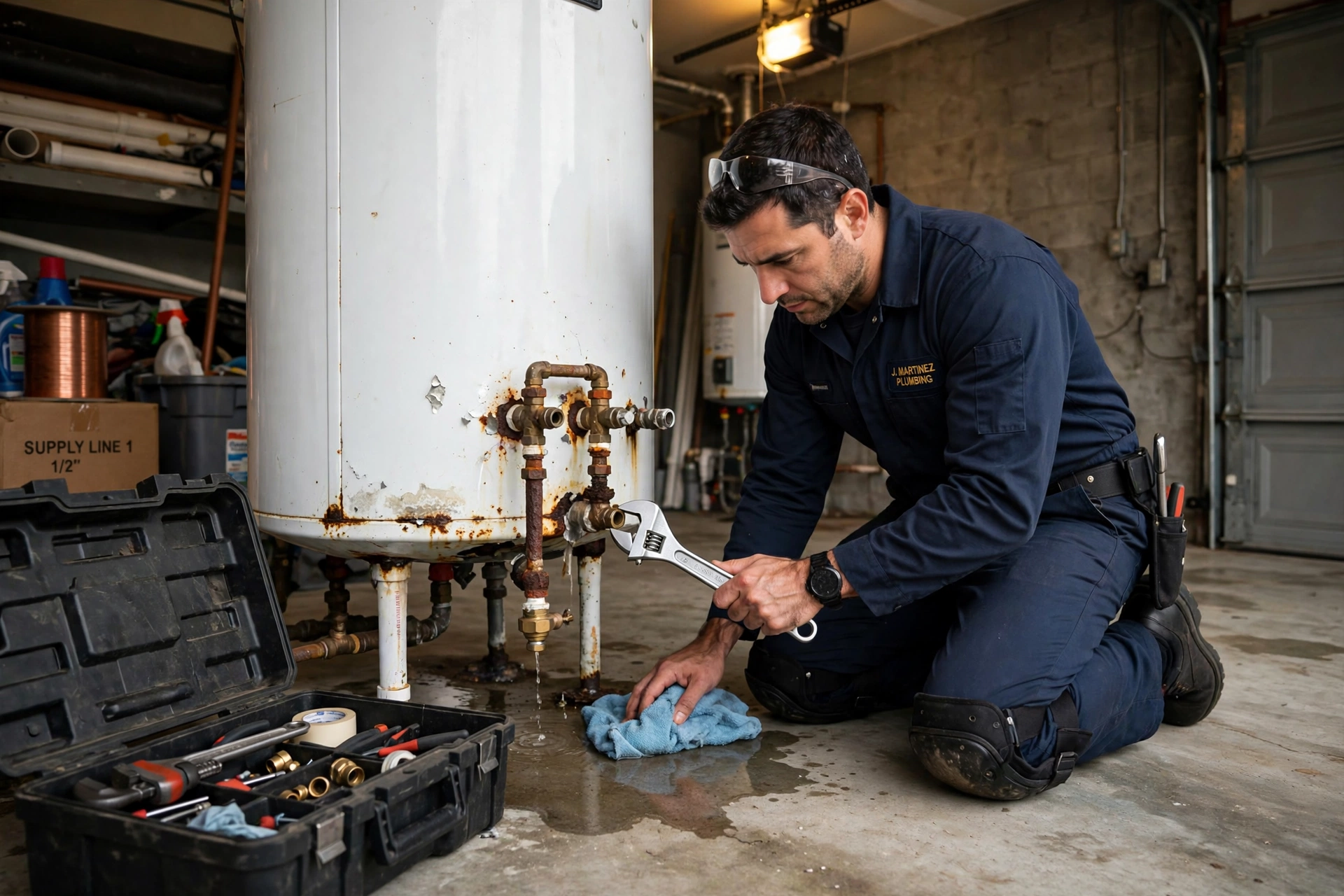
Goose Creek air routinely sits at humidity levels that make cold pipes sweat — and a sweating cold-water inlet pipe drips exactly where a leaking fitting would. Before you pay for a repair, it pays to know which one you are looking at. The distinction comes down to pattern, persistence, and proof.
On this page
Why condensation is so common here
Cold water entering the tank chills the inlet pipe well below the dew point of Lowcountry air, especially on summer mornings. Moisture condenses, runs down, and pools at the base — mimicking a leak. Newly installed or recently refilled heaters sweat the most, since the whole tank is cold.
The persistence test
Dry the area completely with towels, then wait two hours without running hot water. Condensation reappears as a fine, even film on cold pipes and dries when the tank warms. A true leak returns to the same spot, often with a visible drip rhythm, regardless of tank temperature.
Read the residue
Condensation leaves clean water and no trace. Leaks leave evidence: white or green mineral crust at joints, orange rust streaks below fittings, and damp drywall that never fully dries. Mineral trails are the leak's signature — condensation cannot make them.
Where each one appears
Condensation forms on the cold inlet pipe and sometimes the tank's upper exterior. Leaks appear at the T&P discharge outlet, the drain valve, inlet/outlet fittings, and tank seams — and they leave the telltale staining condensation never does.
When to stop guessing
If the moisture persists through the persistence test, shows any staining, or returns after you have insulated the inlet pipe, it is time for professional leak detection. Our visit proves the source with pressure and dye testing — (833) 713-2101.
Need a pro? Get Your Free Estimate Today
Same-day appointments across Goose Creek and the Lowcountry.
Prefer to read first? Browse our guides or contact us.
Frequently asked questions
Can insulating pipes stop the sweating?
Foam insulation on the cold inlet pipe usually eliminates condensation drips. If the puddle persists after insulating, you are looking at a leak, not sweat.
My new heater sweats a lot — is something wrong?
Probably not. A fresh tank full of cold water sweats heavily for the first day or two in humid weather, then settles as it reaches temperature. Give it 48 hours.
Does condensation damage the heater?
Chronic sweating keeps fittings damp and accelerates exterior corrosion over the years — another reason Lowcountry heaters benefit from pipe insulation as standard practice.