 Water Heater Leak Repair Team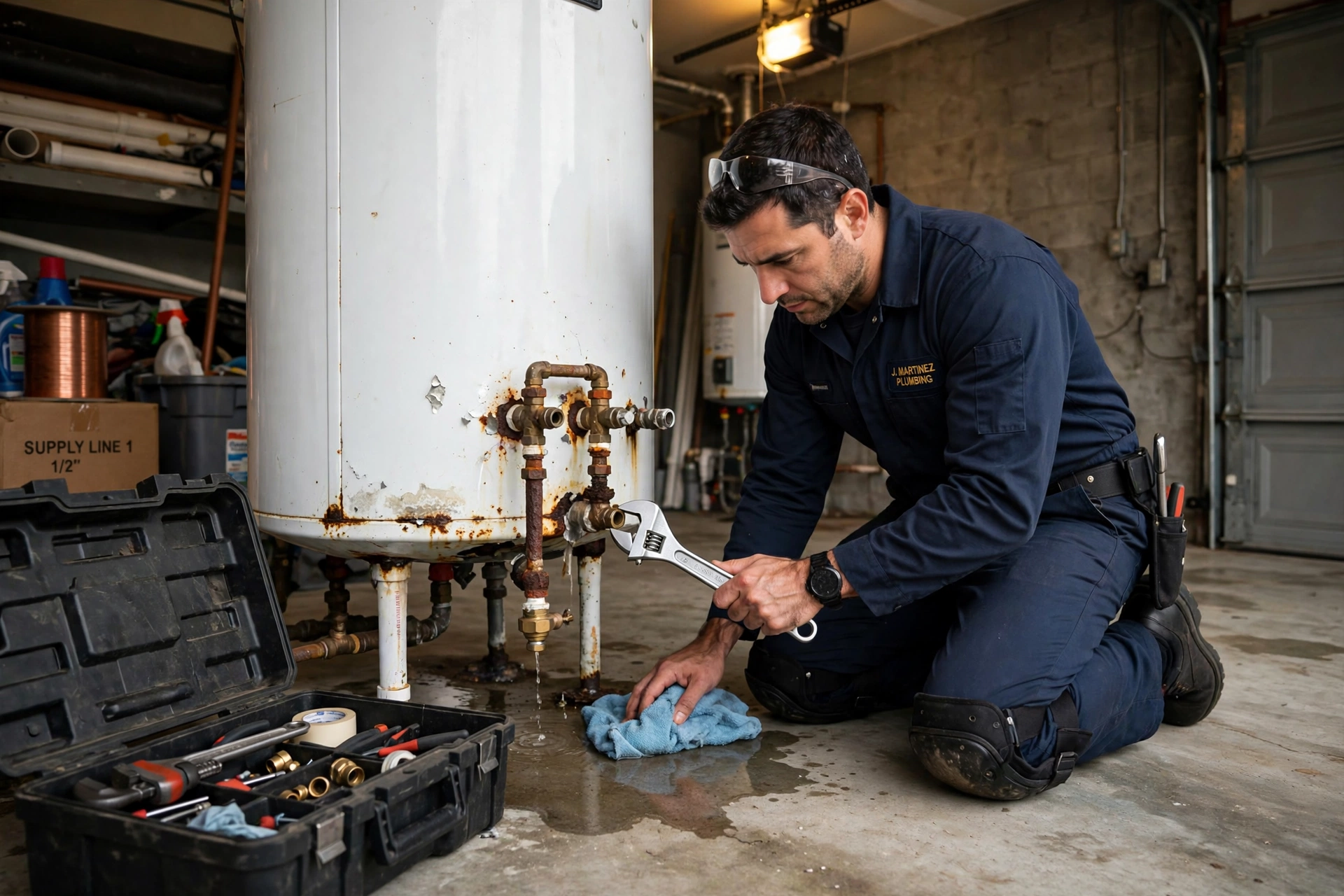
Water heaters rarely fail without warning. In Goose Creek, where humid air keeps every damp surface from drying, the early signs of a leak linger visibly — rust trails, mineral crust, musty closets — if you know where to look. Catch these seven signals early and you are looking at a valve replacement; miss them and you may be looking at new flooring.
On this page
1. Rust-colored water from hot taps
When only the hot side runs discolored, the corrosion is inside your tank — the anode rod is spent and the steel shell is rusting. This is the most urgent cosmetic sign: internal rust precedes pinhole leaks, sometimes by only weeks. Do not wait for the drip to appear.
2. Rust trails or streaks down the tank jacket
Damp air in Lowcountry garages makes these easy to spot: orange-brown streaks running from fittings, seams, or the jacket base. Streaks from a fitting suggest a repairable joint leak; streaks from a seam suggest the tank shell itself is weeping — a replacement signal.
3. Water pooling at the base
The classic sign, and the one most often misread. A small, recurring puddle that returns after mopping is an active leak, not condensation — condensation dries between cycles in a ventilated space. Mark the puddle's edge with tape; if it grows, call.
4. A musty smell in the utility closet
Goose Creek humidity already challenges closets, but a persistent musty odor localized around the heater means chronic moisture — a slow weep feeding mold behind or beneath the unit. Your nose finds leaks your eyes cannot.
5. Hissing, sizzling, or popping sounds
Hissing suggests water hitting a hot surface — a leak dripping onto the burner or element area. Popping and rumbling, meanwhile, signal heavy sediment, which overheats the tank bottom and accelerates the corrosion that causes leaks.
6. The T&P discharge pipe is wet
That copper pipe running down the side of the tank should be bone dry. Moisture at its end means the temperature-and-pressure relief valve is opening — from thermal expansion, overheating, or a failing valve. Any of the three deserves a professional look.
7. Hot water runs out faster than it used to
Sediment displaces water and insulates the bottom of the tank; a failing lower element compounds it. Shrinking hot-water capacity often travels with the sediment buildup that shortens tank life and precedes leaks.
Need a pro? Get Your Free Estimate Today
Same-day appointments across Goose Creek and the Lowcountry.
Prefer to read first? Browse our guides or contact us.
Frequently asked questions
How quickly can a small leak become a flood?
Faster than most owners expect. A pinhole in a pressurized tank can widen suddenly, and a failed fitting can let go all at once. Treat every confirmed leak as same-week urgency — call (833) 713-2101 for an assessment.
My tank is only 6 years old — can it really leak already?
In this climate, yes. Aggressive water plus neglected anodes can breach a tank well before the warranty's end. Age is a factor, but maintenance history matters more.
What is the first thing to check when I suspect a leak?
Dry the area thoroughly, then check back in an hour. Then look up: fittings and valves first, the T&P discharge second, the tank seams last. Our leak detection service does exactly this, methodically.