 Water Heater Leak Repair Team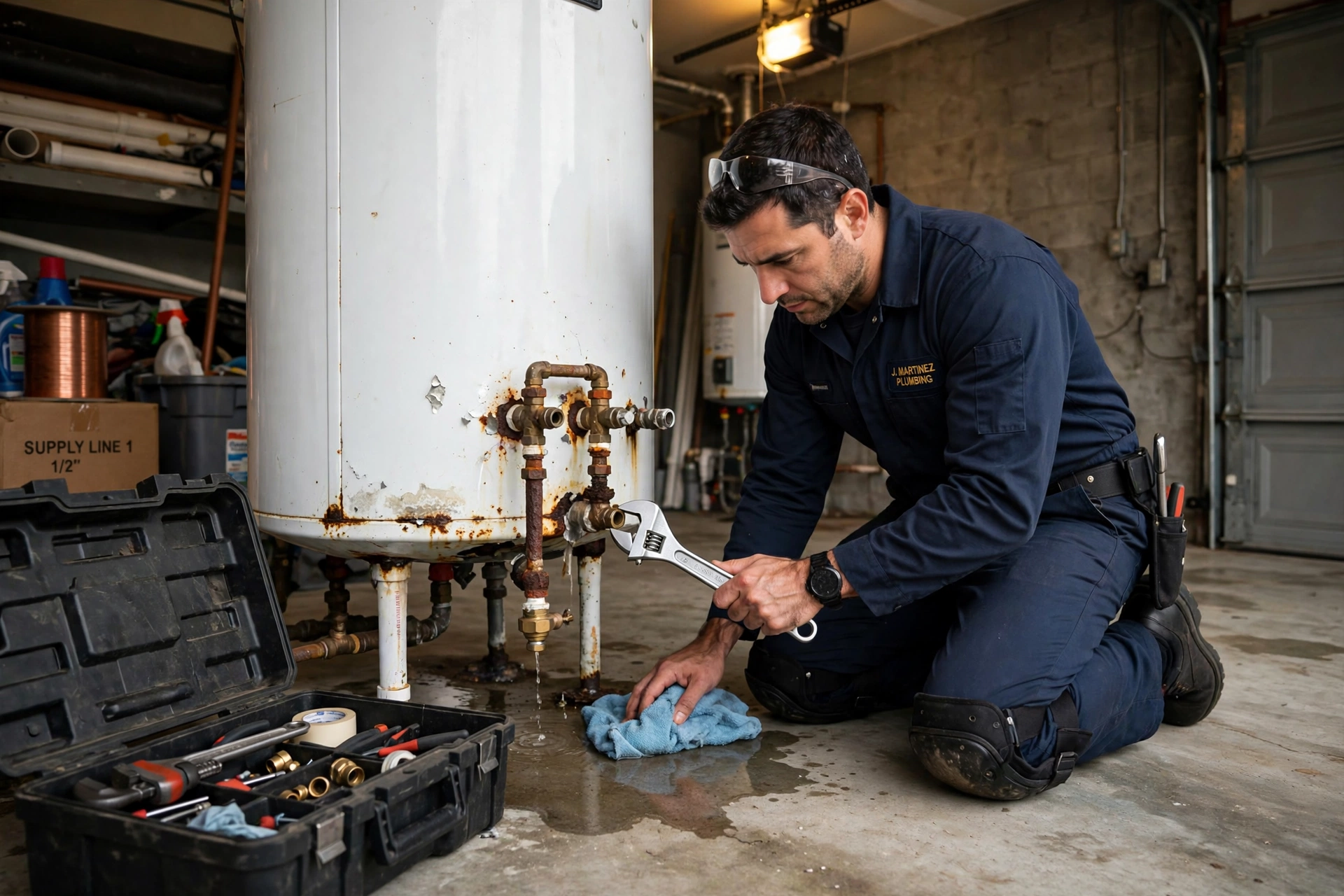
Here is the uncomfortable truth behind most leak calls we run: the failure was preventable, and the prevention was cheap. Water heaters do not demand much — they demand it on schedule, especially in a climate that corrodes from the outside while minerals attack from the inside. Nine strategies, roughly in order of payoff:
On this page
1. Replace the anode rod on the Lowcountry schedule
Every 3–5 years, not the 5+ the manual suggests for average water. The anode is the tank's corrosion shield; in our warm, mineral-bearing water it depletes fast. This one habit prevents more tank failures than all the others combined.
2. Flush sediment annually
A yearly flush keeps the tank bottom clean, the lower element alive, and interior corrosion slow. It takes 30 minutes and it is the highest-visibility maintenance you can do — you will see what comes out.
3. Install a drain pan with a real drain
A pan without a drain is a very short delay. A pan with a gravity drain to the exterior buys you the hours that turn emergencies into appointments — $250–$500 installed.
4. Add a water alarm
A Wi-Fi sensor in the pan texts your phone at the first drop. For closet, attic, and outbuilding installs — anywhere you will not see a leak — this is the best $30–$60 in home protection.
5. Upgrade builder-grade valves
Swap the plastic drain valve for brass ($150–$275) and keep the T&P valve fresh ($150–$300). The two cheapest leak points on the heater become the two most reliable.
6. Insulate the inlet piping
Foam sleeves stop condensation from keeping top fittings perpetually damp — cutting the exterior corrosion our humidity otherwise guarantees. Fifteen dollars, ten minutes.
7. Control system pressure
Verify pressure stays under 80 psi and that a working expansion tank absorbs thermal expansion. Pressure spikes find the weakest seal in the system, usually at the heater.
8. Set 120°F and leave it
Moderate temperature slows mineral scaling, reduces scalding risk, and eases thermal stress on the tank and valves. Hotter is not better — it is just more corrosive.
9. Schedule the annual inspection
A professional eye catches the weeping fitting, the tired anode, and the crusting valve a homeowner walks past. One visit a year — (833) 713-2101 — and the other eight strategies stay on track.
Need a pro? Get Your Free Estimate Today
Same-day appointments across Goose Creek and the Lowcountry.
Prefer to read first? Browse our guides or contact us.
Frequently asked questions
What is the single most effective prevention?
Anode replacement on schedule. It directly prevents the interior corrosion that kills tanks — everything else manages the consequences.
How much does full prevention cost per year?
Amortized, roughly $100–$200/year: an annual service visit plus periodic anodes and valves. Compare that to one $3,000+ flood remediation.
I just bought a house — where do I start?
A baseline inspection: we assess anode, valves, pan, pressure, and corrosion, then hand you a prioritized plan. Call (833) 713-2101 to schedule it.