Thermal Expansion Tanks: What They Do and Why Your Water Heater Needs One
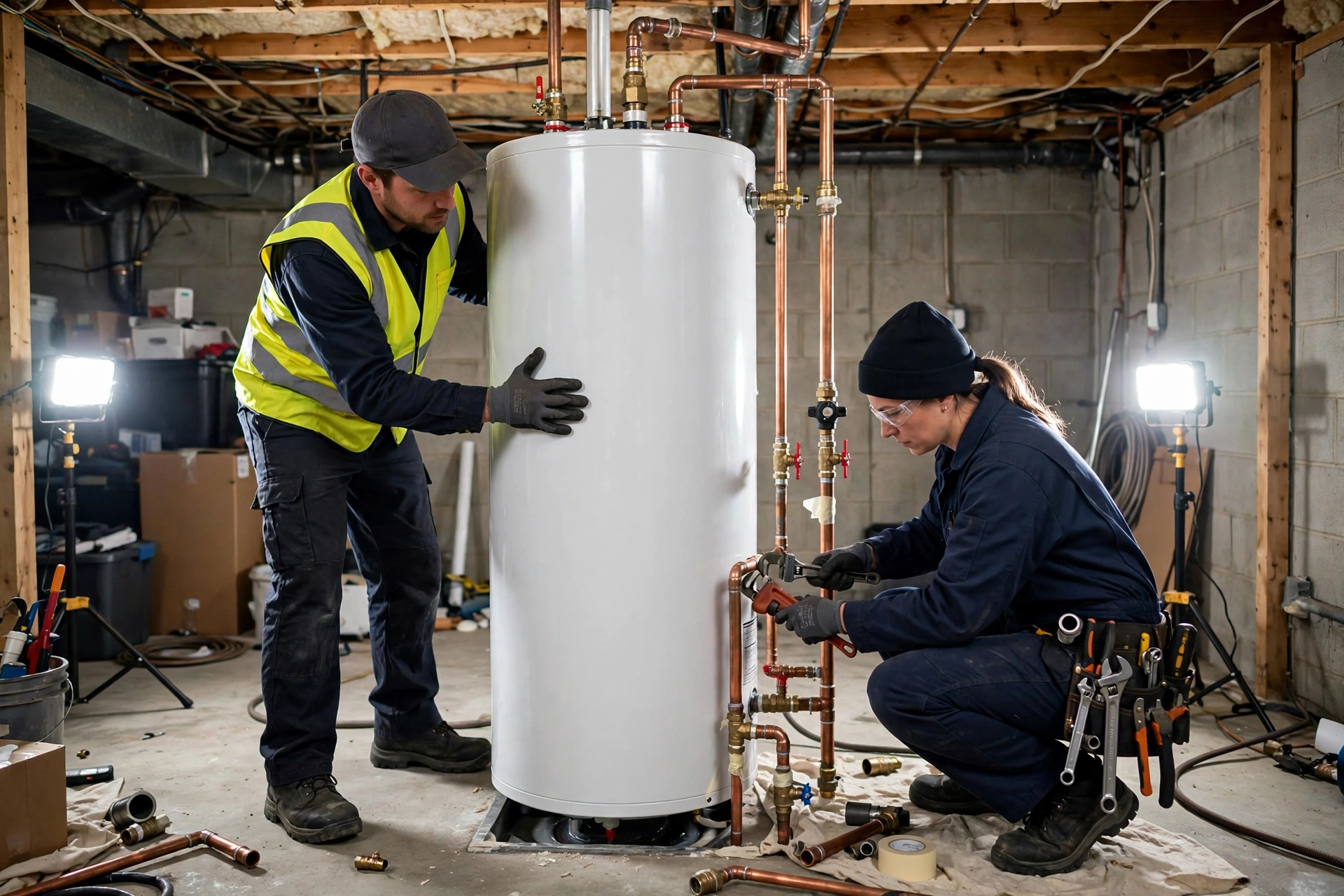
Water expands when heated — about 2-4% in volume from cold to hot. In older "open" plumbing systems, that extra volume pushed back into the municipal main. But modern systems with check valves, pressure regulators, or backflow preventers are "closed": the expanded water has nowhere to go, so pressure spikes instead. The expansion tank is the engineered answer.
What high pressure does to your system
Repeated pressure spikes stress everything: the water heater tank, the T&P relief valve (which starts weeping or discharging), supply lines, washing machine hoses, faucet cartridges, and toilet fill valves. Chronic high pressure is a quiet killer of plumbing components — and a frequent hidden cause of "mystery" T&P discharge that gets misdiagnosed as a bad valve.
How an expansion tank works
It's a small tank (typically 2 gallons residential) with a rubber bladder: air charge on one side, system water on the other. When heated water expands, it pushes into the tank against the air cushion instead of spiking system pressure. Simple, passive, effective — when sized and pressurized correctly.
Signs you need one (or yours failed)
- T&P valve dripping or discharging with no overheating — the classic symptom.
- Pressure gauge spikes — attach a gauge with a "lazy hand" to an outdoor spigot; if it reads 150+ PSI after heating cycles, you have thermal expansion pressure.
- You have a PRV or check valve and no expansion tank — that's a code violation in most areas and a problem waiting to happen.
- Existing tank feels waterlogged — tap it; a failed bladder means it's full of water and doing nothing. They typically last 5-10 years.
Installation notes
The tank mounts on the cold-water inlet near the heater, supported properly (a waterlogged 2-gallon tank is heavy), with the air charge set to match your house water pressure — usually 60 PSI, measured with a gauge. This matching step is the part most DIY installs get wrong; wrong charge pressure means the tank can't do its job.
How to Check Your Expansion Tank
You can test your expansion tank with a simple procedure. First, check the air pressure using a standard tire pressure gauge on the Schrader valve (it looks like a tire valve) on the tank. The pressure should match your home's water pressure — typically 40-60 PSI. If water comes out of the air valve instead of air, the internal bladder has ruptured and the tank needs replacement.
Another test: tap the tank with your knuckle. The top half should sound hollow (air) and the bottom may sound solid (water). If the entire tank sounds solid or feels unusually heavy, it's waterlogged and no longer functioning. A waterlogged expansion tank provides zero protection against thermal expansion.
Check annually as part of your water heater maintenance. Expansion tanks typically last 5-8 years — shorter than the water heater itself, so expect to replace it at least once during the water heater's life.
Proper Sizing and Installation
Expansion tanks come in different sizes, typically 2-gallon for residential water heaters up to 50 gallons, and 4.5-gallon for larger tanks or high-pressure systems. An undersized tank can't absorb enough expansion volume. Your plumber will size the tank based on your water heater capacity and incoming water pressure.
The tank must be installed on the cold water supply line, ideally within a few feet of the water heater. It needs proper support — a water-filled expansion tank is heavy, and unsupported weight can stress pipe connections. The air pre-charge must be set to match your home's static water pressure before installation for the tank to work correctly.
Expansion Tanks and Closed Systems
If your home has a pressure-reducing valve (PRV), backflow preventer, or check valve on the main water line, you have a "closed" plumbing system. In closed systems, thermal expansion has nowhere to go — it can't push back into the municipal supply. This makes an expansion tank not just recommended but essential. Without one, every heating cycle spikes your system pressure, stressing every pipe joint, valve, and appliance in your home.
Frequently Asked Questions
How urgent is this issue?
Any water heater problem involving leaks, unusual sounds, or inconsistent hot water warrants prompt attention. Small issues become major failures if ignored. When in doubt, have a professional assess the situation.
Can I fix this myself or should I call a professional?
Basic maintenance like flushing and visual inspections are DIY-friendly. Repairs involving gas, 240-volt electricity, or the tank itself should be left to licensed professionals for safety and code compliance.
How can I prevent this problem in the future?
Annual professional maintenance, regular DIY inspections, prompt attention to minor issues, and following manufacturer recommendations are the best prevention. Keep records of all maintenance performed.